Share:

- Women
- Men
- Kids & Baby
- Workwear
- Footwear
- Accessories
- Home & Living
- Health & Beauty
- Pet Supplies

A July night in a British home can make the bed feel like the wrong place to be. The sash window is cracked open, streetlight glow falls across the curtains, and by two in the morning you're pushing the duvet towards the foot of the bed, hoping the exposed sheet will feel cooler.
That discomfort rarely comes from the duvet alone. Your sheet, mattress protector, duvet cover and nightwear all sit between your skin and the room, so each layer affects how much heat and moisture stays close to your body. The most useful approach to lightweight bedding for summer is therefore modular: choose breathable layers, then add or remove them as the bedroom changes overnight.

A duvet can have a sensible summer rating and still feel too warm if it sits over dense sheets, a thick protector and a close-fitting cover. The sleeper experiences the combined effect of those layers, not the tog label in isolation. Natural fibres such as cotton and linen generally allow more air movement and handle moisture more effectively than synthetic fabrics, as UK bedding guidance notes in this guide to sheets for hot sleepers.
Think of the bed as a set of adjustable controls rather than one fixed product.
Practical rule: Change the layer that feels warmest first. Replacing a thick protector or dense cover may make a bigger difference than immediately buying another duvet.
This system also suits couples with different preferences. One person can sleep under the duvet while the other uses a folded sheet, without forcing both sleepers to choose the same level of insulation. For a warm flat, a loft room or a bedroom that doesn't cool well overnight, the ability to strip the bed back is often more useful than chasing a single “perfect” summer rating.
Bedding labels use two different measures. Tog measures thermal resistance, meaning how much heat a duvet helps retain. Thread count describes weave density, usually the number of threads per square inch in a sheet. One relates mainly to insulation, the other to how closely the fabric is woven.
A wardrobe comparison makes tog easier to judge. A 1.5 tog duvet is similar to a thin linen shirt, offering coverage with little insulation. A 4.5 tog duvet is closer to a light knit, while a 13.5 tog winter duvet resembles a chunky lambswool jumper. The room may be unchanged, but the bed's warmth can feel very different.
UK summer guidance spans roughly 1.0 to 4.5 tog, with some recommendations extending to 7.0 tog when room temperature and personal preference differ. Lower tog usually feels cooler because the duvet retains less heat. It does not directly describe physical thickness or weight, as explained in this UK duvet tog guide.
Use the rating as a starting point, then adjust the layers around it:
That approach turns tog into one control in a modular bed. The sheet changes the surface next to your skin, the duvet sets most of the insulation, and the protector and cover can affect how readily warmth escapes.
Thread count can sound like a quality score, but a larger number is not automatically cooler or better. UK bedding guidance commonly recommends 200 to 400 thread count percale for summer. Its relatively open plain weave supports air exchange and gives a crisp, cool feel, according to The Independent.
Very dense weaves can feel smooth, yet they may restrict airflow and hold more warmth. A moderate-count cotton percale can therefore suit summer better than a higher-count sheet with a tighter construction.
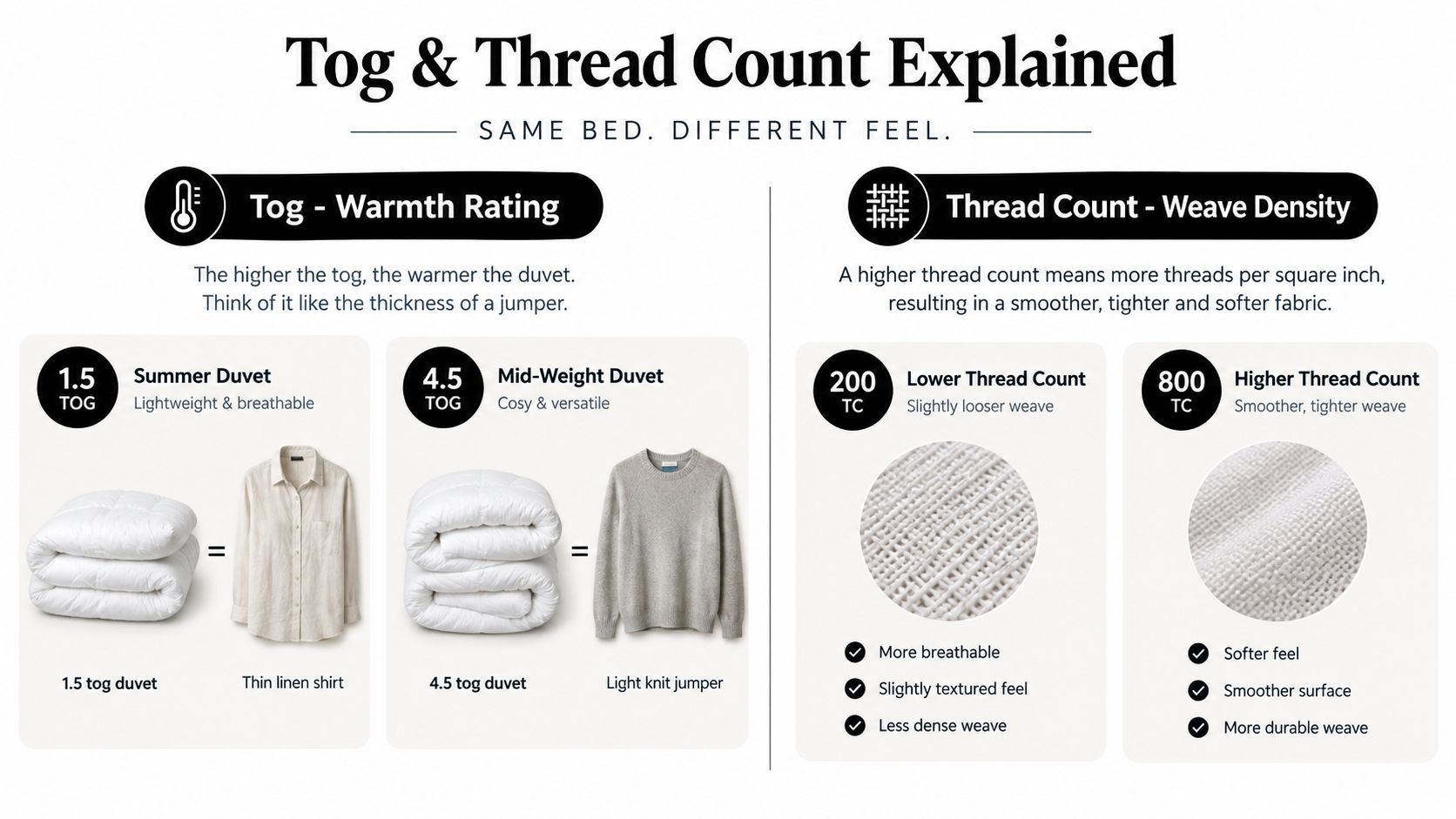
Labels still offer only part of the picture. Fabric type, weave, filling and the other layers on the bed all shape comfort. For more duvet-rating guidance, see this UK duvet buying advice.
A warm sleeper may still prefer a light duvet with a sheet that feels cool against the skin. The bed works as a small system: the sheet controls first contact, the protector adds another layer, and the cover affects how readily heat and moisture pass through.
| Fabric | Feel | Breathability & moisture | Best for | Care & durability |
|---|---|---|---|---|
| Cotton percale | Crisp, matte and cool to the touch | Airy plain weave, with natural moisture handling | Warm sleepers who like a hotel-sheet feel | Straightforward care, with a durable everyday construction |
| Linen | Textured, relaxed and increasingly soft | Very open-feeling and airy, with strong moisture handling | Very warm sleepers and relaxed bedrooms | Creases naturally, but suits regular washing and becomes softer over time |
| Bamboo viscose | Smooth, soft and fluid | Comfortable in humid conditions, with moisture-wicking qualities | Sleepers who dislike crisp sheets and want a soft surface | Follow the care label, use gentle washing and avoid harsh treatment |
| Tencel lyocell | Smooth and cool, with a polished drape | Designed to manage moisture while feeling light | People seeking a silky alternative to cotton or linen | Gentle care helps preserve the smooth surface |
Percale suits anyone who likes bedding that feels fresh, matte and lightly structured. Its plain weave allows air to move through the fabric. UK bedding guidance commonly places summer percale in the 200 to 400 thread count range, as noted earlier. Thread count describes the density of the yarns, not a simple quality score, so a moderate count can feel cooler than a tightly woven higher-count sheet.
It also makes a practical everyday layer for shoppers who wash bedding frequently and want a familiar cotton finish.
Linen has a tactile, lived-in appearance and a naturally relaxed crease. Choose it if you sleep particularly warm, enjoy texture and prefer a less polished surface. Its open-feeling construction can be comfortable in a humid room because it does not sit as closely against the skin as a dense weave.
Bamboo viscose gives a smoother surface than percale, which may suit sleepers who find crisp cotton too firm. Tencel lyocell offers a similarly sleek feel and moisture management for shoppers looking beyond traditional cotton. These fabrics can work well as the sheet layer, while the duvet and protector remain separate choices that can be changed as the room or sleeper requires.
Labels show only part of the practical picture. Fabric type, weave, filling, protector and cover all affect comfort. For more duvet-rating guidance, see this UK duvet buying advice.
For sensitive sleepers, texture matters as much as airflow. A sheet that feels comfortable is more likely to stay on the bed, whereas a scratchy or slippery fabric may encourage heavier nightwear or extra blankets, reducing the benefit of a lightweight bedding system.
The room, not the calendar, should guide your first choice. UK summer bedrooms vary widely, from a top-floor flat that stays warm after sunset to a north-facing spare room that remains cool.
| Room scenario | Typical overnight temp | Recommended duvet tog | Sheet fabric | Extra layering |
|---|---|---|---|---|
| Top-floor flat or loft conversion | 22 to 26°C | 4.5 tog or a flat sheet | Linen or bamboo | Use a breathable protector and remove the duvet during warmer spells |
| Standard double bedroom | 18 to 21°C | A summer-weight duvet suited to the sleeper | Percale or bamboo | Keep a flat sheet available for warmer nights |
| Cooler spare room or north-facing bedroom | 15 to 18°C | A warmer duvet, with layers that can be removed | Cotton percale | Add or remove the cover rather than changing the whole bed |
The warm-room recommendation reflects UK guidance that places summer duvets around 2.5 to 4.5 tog, with 4.5 tog often associated with bedrooms around 21°C and above (Ideal Home). Other UK advice identifies 4.5 tog as the standard summer weight, while warmer sleepers may prefer a lower rating (Dormeo).
The cooler-room example needs a correction to a common shopping mistake. A 7.5 tog or 10.5 tog duvet isn't a typical lightweight summer recommendation, so it shouldn't be treated as one just because the room feels chilly. In a cool spare room, use your existing warmer duvet only if you're comfortable, and make sure the cover and sheet remain breathable. Strip back to a sheet or lighter cover when the weather changes.
Your body temperature matters too. Warm sleepers should generally move down a level, while cold sleepers may keep a more insulating option. For more UK-specific combinations, see Peppervale's cooling bedding guide for UK bedrooms.
Quick reference: Warm room, use a light duvet or sheet. Moderate room, use a summer duvet with percale or bamboo. Cool room, keep extra insulation available but make the outer layers easy to remove.
Correct sizing helps the bed sit properly, but oversized bedding can also create unnecessary bulk. Start with the mattress dimensions, then check the product's own size chart before ordering.
| UK bed size | Mattress dimensions |
|---|---|
| Single | 90 x 190cm |
| Double | 135 x 190cm |
| King | 150 x 200cm |
| Super king | 180 x 200cm |
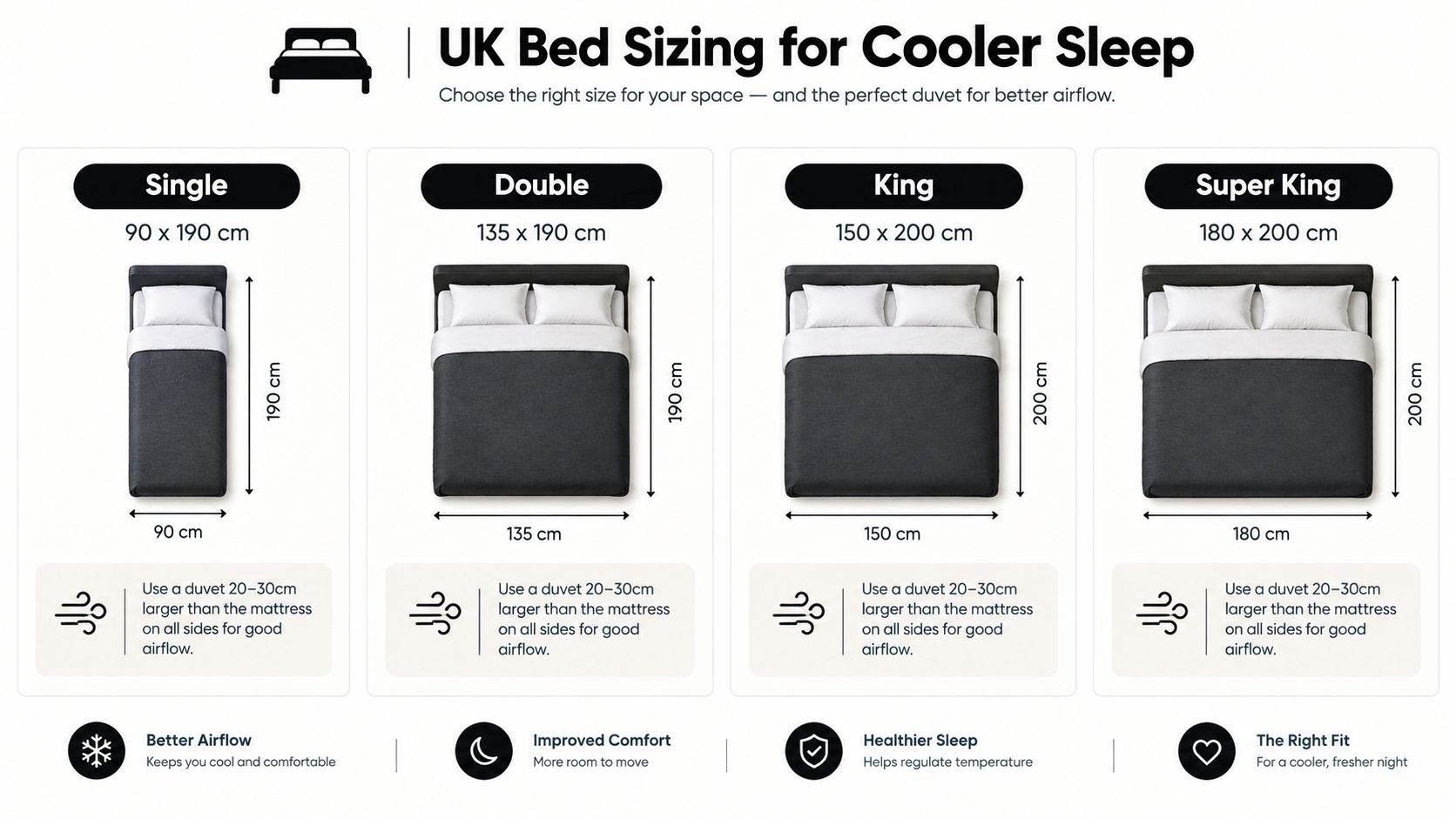
A duvet should cover the mattress comfortably, with roughly 30cm of overhang on each side as a practical guide. The exact fit depends on how much coverage you prefer and whether two people share the bed. Too little coverage leaves gaps, while excessive fabric can bunch around the edges and make the bed feel heavier.
Measure from the bottom of the mattress to its highest point, including any topper. 25 to 32cm pockets suit many modern mattresses, while pillow-top or especially deep mattresses may need 38cm or more. A pocket that's too shallow will pull loose during the night, and a very deep pocket may leave excess fabric under the sleeper.
Pillows affect the system as well. Hollowfibre or bamboo-filled designs can feel more ventilated than solid memory foam, which may retain warmth. Look for a breathable pillowcase even if you're keeping your existing pillow.
A thin, waterproof protector with a breathable membrane gives practical mattress protection without the bulk of a quilted winter layer. Check the construction and care instructions rather than assuming every waterproof protector will feel the same.
Build the bed in this order:
A useful guide to choosing comfortable duvets can help if you're comparing cover sizes and fill styles.
Breathable fabrics work best when detergent residue, excess heat and over-drying don't coat or damage the fibres. Always follow the care label first, particularly for bamboo viscose and Tencel lyocell.
For bamboo bedding, use a gentle cycle at 30 to 40°C with mild liquid detergent. Skip fabric softener, which can coat the fibres and interfere with moisture handling. Tumble dry on low if the label allows it, or line dry inside-out to reduce exposure to strong sunlight and help limit fading.
Cotton percale and linen can usually follow a similar cool-wash approach, subject to the item's instructions. Give linen a brief shake before drying, which helps relax the creases and prevents it drying in a tightly folded shape.
A manageable summer routine looks like this:
Once the warmer season arrives, fold spare winter duvets flat and place them in a breathable cotton bag. Plastic can trap moisture, so it's less suitable for long-term storage in a loft, airing cupboard or under-bed space. A lavender sachet can help deter moths, but keep it separate from the fabric if its oils might mark the bedding.
Replace sheets when they're thinning, persistently stained or no longer hold their shape. Many household guides use 2 to 3 years as a typical replacement point for sheets showing those signs, but actual lifespan depends on fabric, washing and frequency of use. Don't replace a sound set just because the season has changed.
If you've decided that a smooth, moisture-managing fabric suits your summer routine, bamboo can form the middle of a modular setup. The practical benefit is that you can change one layer at a time rather than replacing every item on the bed.
Peppervale's bamboo bedding offering maps onto the layers discussed above. The range includes:
The listed construction is 100% bamboo, with UK sizes including single, double, king and super king, alongside colour options shown on the relevant product pages. Check the individual listing before ordering because colours, sizes and availability can change.
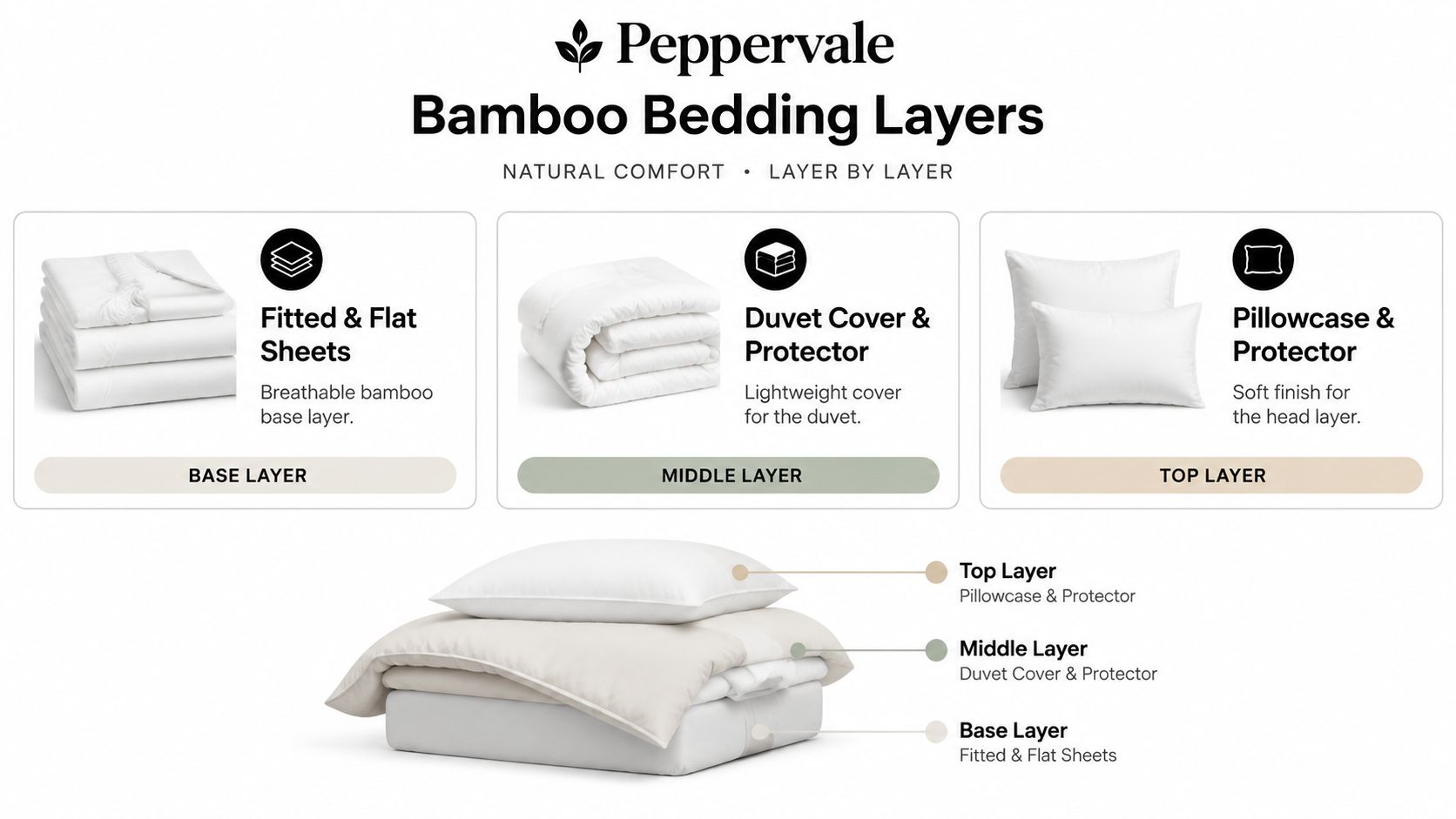
If your current bed feels hot because the sheet is rough or close-fitting, start with the base layer. If the duvet is comfortable but the cover feels heavy, change the cover first. If you need a little psychological weight without much insulation, a summer-weight duvet can offer more coverage than a flat sheet while keeping the system lighter than a winter bed.
Peppervale provides free standard UK delivery above the threshold shown on its current delivery information, offers 30-day returns, and prints care guidance on each item. Confirm the latest terms at checkout and on the product page, as delivery thresholds, return conditions and product information can change. UK shoppers also have statutory rights under the Consumer Rights Act 2015, including goods being of satisfactory quality, fit for purpose and as described, with remedies such as repair, replacement or refund depending on the fault and timing (TK Maxx UK).
For a closer look at fabric choice before you buy, Peppervale's guide to the best bamboo sheets can help you compare bamboo with cotton and decide whether the softer finish matches your sleeping style.
Visit Peppervale to browse current bamboo sheets, duvet covers, pillowcases and other home and living options for a more adaptable summer bed. Choose the layers that match your room and sleeping preference, then check the live product pages for sizes, colours, care details and ordering information.


