Share:

- Women
- Men
- Kids & Baby
- Workwear
- Footwear
- Accessories
- Home & Living
- Health & Beauty
- Pet Supplies

You're standing beside a busy yard in drizzle, waiting for a delivery vehicle to reverse into position. Your jacket is bright, but is it the right hi vis workwear for UK site rules? The answer depends on more than colour. You need to consider the garment's visibility class, the work environment, weather, fit and, for railway work, a separate orange rail requirement.
The same decision comes up across construction, warehousing, utilities, highways, transport and facilities maintenance. A lightweight vest may suit a controlled yard, while roadside work could call for a higher-coverage jacket and trousers. Rail-side work brings another layer of checking, because general high-visibility compliance alone isn't enough.
This guide starts with how hi-vis works, then explains EN ISO 20471, garment classes, colour choices and the rail-specific RIS-3279-TOM standard. It also covers sizing, layering, laundering and replacement, so you can choose clothing that remains useful after it leaves the packaging.
High-visibility clothing became familiar in Britain through railway work. Experimental use began in 1964 on the Scottish Region of British Railways, where fluorescent orange jackets known as “fire-flies” were trialled on the Pollokshields to Eglinton Street electrified section in Glasgow. By 1965, similar clothing was being issued to engineering and other staff working on electrified lines in the London Midland Region. The early jerkin was said to be visible at half a mile in normal weather conditions, as reported in this BBC account of the history of hi-vis clothing.
That railway beginning helped establish a pattern now seen across UK workplaces. Construction teams, warehouse operatives, delivery drivers, road maintenance crews and engineers all use hi-vis to make people easier to identify around vehicles and equipment.
The reason remains practical. Over the last five years, 19% of workplace fatalities were caused by workers being struck by a moving vehicle, averaging 26 deaths per year in the UK, according to UK hi-vis safety statistics from Arco. Visibility isn't the only control employers use, but it's a central part of managing vehicle and pedestrian risk.
Practical rule: Choose clothing for the task and site rules first, then compare comfort, pockets, weather protection and price.
A shopper searching for hi vis workwear uk may be buying one garment for personal use, or equipping people who work in different places. Those situations need careful comparison. A warehouse may have controlled vehicle movement, while a highways team works beside live traffic in darkness and poor weather. The product that looks suitable on a screen may not meet the required class or sector specification.
The decision becomes easier when you follow a simple order. First, identify the risk and whether a site manager has specified a class. Next, check the label for the relevant standard. Then assess coverage, fit and layering. Finally, plan how the garment will be washed, stored and replaced when its visibility deteriorates.
Hi-vis clothing uses two different visibility systems, and each works in a different way.
The fluorescent background fabric is designed for daytime conspicuity. Its strong yellow or orange appearance creates contrast against many ordinary workplace backgrounds, particularly when someone needs to be recognised quickly. Fluorescent material depends on available light, so it shouldn't be treated as a replacement for reflective elements after dark.
Retro-reflective tape serves a different purpose. It sends light from vehicle headlights or other sources back towards the driver, creating a bright return that helps identify the wearer in low light. That's why a garment can look vivid during the day but still need properly positioned reflective tape for night work, rain, mist and headlight glare.
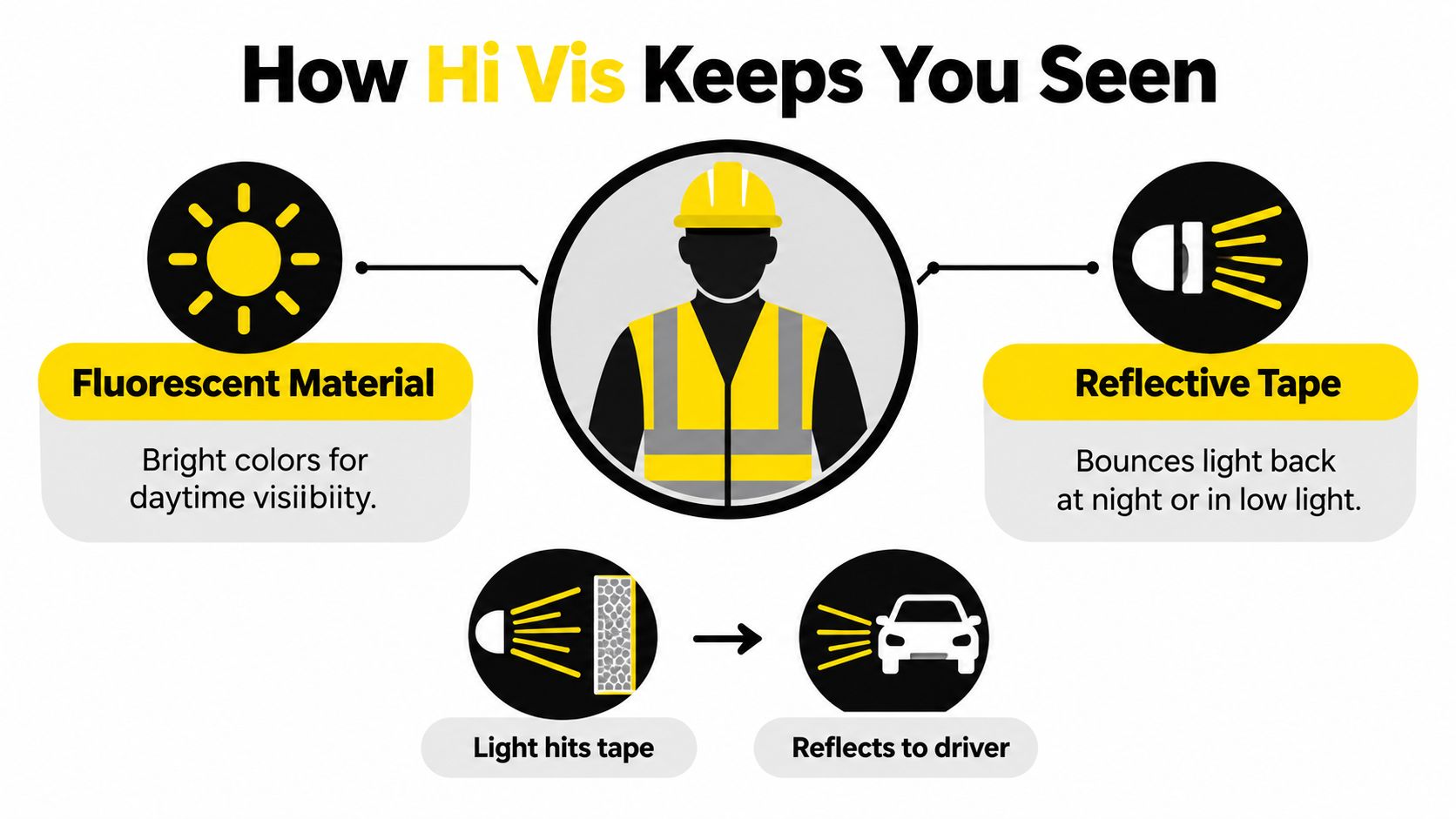
A strip of bright fabric on one part of the body doesn't create the same visual information as a garment that helps outline the torso. Tape around the body, shoulders or arms can help a driver recognise a person rather than seeing an isolated flash of colour.
That coverage is built into the garment's certification. EN ISO 20471 treats high-visibility clothing as regulated PPE, not as bright casualwear. The class reflects the amount of fluorescent background material and retro-reflective material included in the design.
A loose or badly positioned layer can reduce the benefit. A sweatshirt worn over the tape, an open jacket that hides the front, or a bulky bag covering the back can interrupt the visible pattern. The clothing still looks bright to the wearer, but the driver may not see the intended shape from every direction.
Look for the EN ISO 20471 marking and the stated class. The label should also identify the manufacturer and include care instructions. For railway work, look for the separate RIS-3279-TOM mark as well as the EN ISO class, because colour and sector compliance matter there.
The standard's purpose is to help employers match clothing to risk. A vest can be certified, but that doesn't automatically make it suitable for every road, rail or industrial setting. Always compare the label with the site's PPE instructions.
The most important distinction is this: colour alone doesn't determine the EN ISO 20471 class. The class depends on the certified combination of background material and retro-reflective material. Yellow and orange garments can meet the general visibility standard, subject to the garment's design and certification.
EN ISO 20471 sets out three classes. The material minimums show why the classes differ:
| Class | Background Material | Retro-Reflective Material | Typical Use Context |
|---|---|---|---|
| Class 1 | 0.14 m² | 0.10 m² | Lower-risk, controlled areas |
| Class 2 | 0.50 m² | 0.13 m² | General work around vehicles and site traffic |
| Class 3 | 0.80 m² | 0.20 m² | Higher-risk work requiring maximum coverage |
These minimum areas and the practical meaning of the classes are explained in this EN ISO 20471 guide.
Class 1 offers the lowest certified visibility level. It may suit a controlled site or limited exposure to moving vehicles, but you shouldn't assume every simple vest is Class 1, or that every vest is suitable for your workplace.
Class 2 provides more background coverage and is commonly relevant to general construction, logistics, maintenance and work around vehicle movements. It's often the starting point for everyday trade work, but the employer's risk assessment and site rules remain the deciding factors.
Class 3 provides the greatest certified material coverage. It's the type to consider where workers need to remain conspicuous in more demanding environments, such as roadside work, night operations or areas with faster traffic. More coverage can improve conspicuity, but it can also add weight, warmth or restriction.
The highest class isn't automatically the best purchase. The right class is the one that matches the assessed hazard while workers can wear it correctly throughout the shift.
A garment combination can change the overall result. For example, a jacket and trousers may provide more visible coverage than a vest, but you must verify how the manufacturer certifies the complete arrangement. Don't assume that putting two compliant-looking items together automatically creates a higher class.
For a practical example of how visibility requirements can be considered alongside other safety specifications, you can review this ANSI II safety vest resource. It's useful as a comparison point, but UK buyers must still check the standards required by their own site.
If your work takes place beside roads, use the risk and task details in this roadside work hi-vis guide rather than choosing by colour or appearance alone.
Rail is the important exception many general guides miss. RIS-3279-TOM is a UK rail-only specification, and it requires orange hi-vis clothing. A garment may meet EN ISO 20471 for general workplace use but still be unsuitable for trackside work if it isn't orange or doesn't meet the required rail class.
That means “orange” is not enough on its own. Check for the RIS-3279-TOM marking and the underlying EN ISO 20471 rating before buying for railway duties.
A hi-vis vest, jacket, pair of trousers and coverall don't solve the same problem. The useful question isn't “which item is brightest?” It's “which combination keeps the required areas visible while matching the task and weather?”
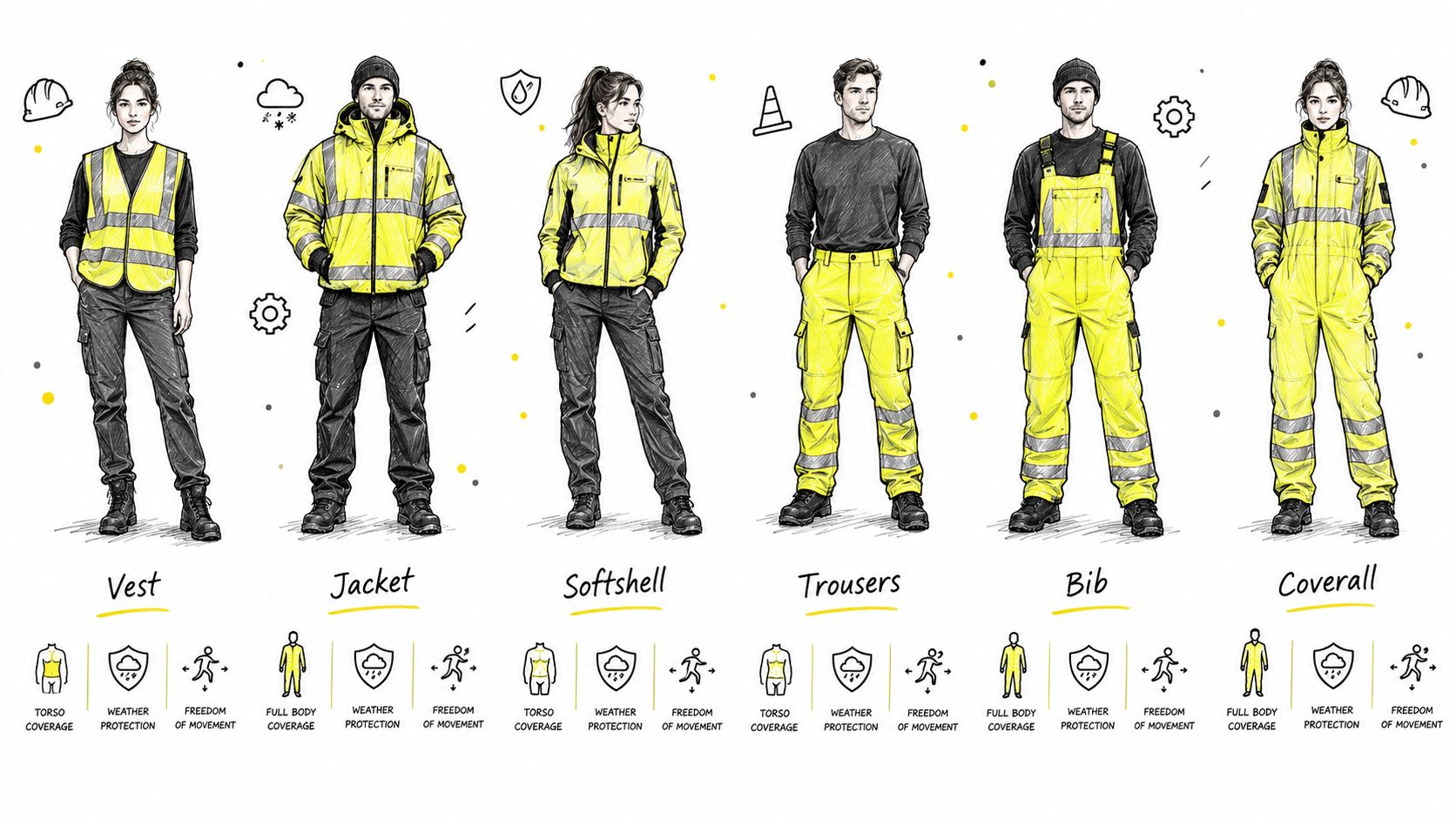
A hi-vis vest is light, quick to put on and convenient for warmer indoor or outdoor conditions. It can work well in a controlled yard or for short tasks, provided its class matches the risk. Its limited coverage may be less suitable when you need warmth, rain protection or visible arms and legs.
A hi-vis jacket adds coverage and can be easier to use as the outer layer in changeable weather. Look at the closure, hood arrangement, cuff design and pocket placement. Pockets are helpful for tools and phones, but anything carried over the reflective tape can interfere with visibility.
A softshell can suit people who need a more flexible layer for movement. It may feel more comfortable during active work than a heavily insulated coat, though you should check the product's actual weather and standard information rather than assuming a softshell is waterproof.
Hi-vis trousers add visible coverage below the waist. They're particularly useful where workers need to be recognised as people, not just as upper-body shapes. Check the waist, leg and ankle fit so the garment doesn't catch on equipment or become hidden by another layer.
Bibs and coveralls can provide broader, continuous coverage for demanding tasks. Coveralls may be practical for trades that kneel, climb or work around dirt, while bibs can offer a useful middle ground between trousers and a full one-piece garment.
The right system often changes with the season. A summer yard task may call for a lightweight certified top, while a winter highways shift may require a certified outer jacket and lower-body garment. For related footwear choices, compare the protection and construction differences in this guide to composite toe or steel toe boots.
A short video can help visualise how different high-visibility formats are used in practice:
A jacket that restricts shoulder movement may be left open. Trousers with awkward pocket access may be overloaded with tools. A vest that rides up can expose darker clothing underneath. These aren't merely style complaints. They affect whether the certified visible areas remain visible during real work.
If a team uses branded clothing, logos must not cover reflective tape or remove required visible material. For non-safety uniform additions such as hats, this guide can help you find affordable branded headwear, while hi-vis garments should always be checked against their certification requirements before decoration.
Good fit has two jobs. It keeps the garment comfortable enough to wear and helps the fluorescent panels and reflective tape stay in the positions intended by the manufacturer.
Start with your measurements, not your usual high-street size. Measure the chest under the arms, the waist at its natural point, the sleeve from shoulder to wrist and the inseam for trousers. Compare those measurements with the product's own size guide, because workwear cuts can differ from ordinary clothing.
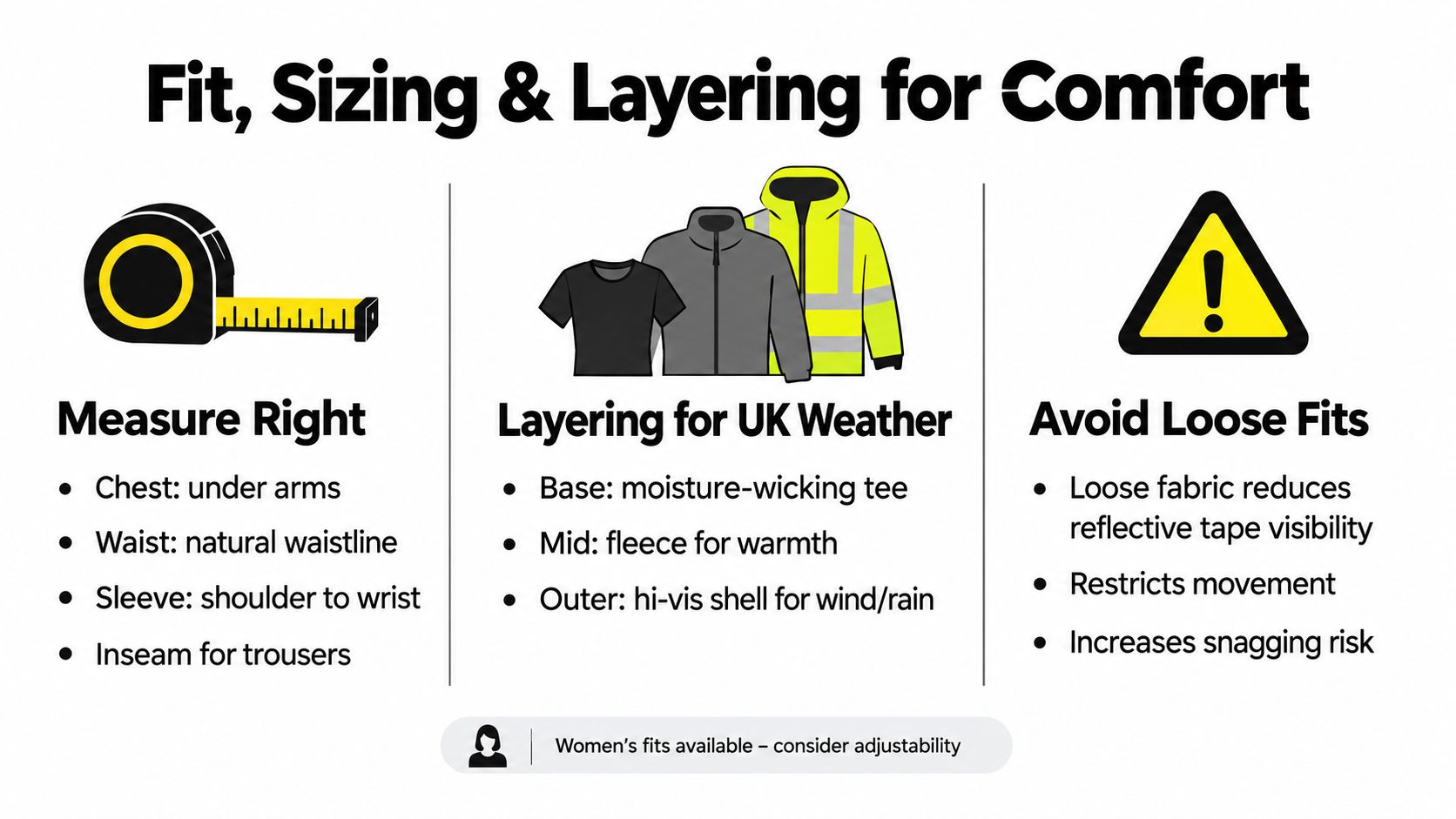
A hi-vis jacket that fits over a T-shirt may feel tight over a fleece. Try the garment with the layers used on shift, then raise your arms, bend your elbows, sit down and reach forward. The hem shouldn't ride up excessively, and the sleeves shouldn't uncover your wrists whenever you work overhead.
Women's fits can offer a more practical shape for the chest and waist, but availability and cut vary by product. Unisex garments may work well when the wearer checks shoulder width, sleeve length and room through the torso rather than choosing solely by a letter size.
Avoid excessive looseness. Loose fabric can move the reflective tape away from its intended position, catch on equipment and make active work less comfortable. An oversized garment also encourages people to roll sleeves or leave fastenings undone, which can alter coverage.
Fit check: Zip or fasten the garment, move as you would at work and ask someone to check whether the tape remains visible from the front, side and back.
Use a base layer for everyday comfort, a warm mid-layer when needed and the certified hi-vis outer layer on top. Don't cover the reflective tape with a fleece, body warmer, backpack or tool harness unless the site has approved that arrangement.
In warmer conditions, look for a cut that allows movement and airflow, but confirm the actual product details rather than assuming a bright fabric is breathable. In colder or wetter weather, the outer layer may need to accommodate a jumper or fleece without compressing the wearer's movement.
Check care instructions before buying multiple garments. Some fabrics and tapes require specific washing temperatures or methods, and incorrect laundering can shorten useful life.
UK employers must provide suitable PPE free of charge when a risk assessment shows that hazards can't be controlled by other means. Where visibility is part of the risk, that duty can include hi-vis workwear. The HSE clothing guidance also explains that employers must keep required PPE clean and in good working order, store it properly and train workers in correct use.
The employer's responsibility was strengthened by the 2022 update to the Personal Protective Equipment at Work Regulations, extending duties to agency, temporary and other limb(b) workers. The practical effect is important for mixed workforces. A temporary worker shouldn't be left to guess which garment is acceptable or expected to provide required PPE personally.
For most sectors, begin with the site risk assessment and the EN ISO 20471 class specified by the employer. For UK rail-side work, RIS-3279-TOM adds a railway-specific layer on top of EN ISO 20471. Garments must be orange and meet at least Class 2 visibility, with Class 3 also accepted where the hazard level justifies it, as set out in this RIS-3279-TOM rail clothing catalogue.
So, can you wear any orange hi-vis on rail? No. Orange appearance doesn't prove rail compliance. Check the RIS-3279-TOM mark and the EN ISO 20471 class on the label, then follow the railway operator or contractor's own rules.
For broader site planning, a practical resource on health and safety in construction can help employers think about clothing alongside other workplace controls. Hi-vis doesn't replace segregation, lighting, traffic management or safe systems of work.
There isn't a universal replacement date that suits every garment. Inspect clothing regularly, especially after frequent washing, outdoor exposure and contact with tools or machinery.
Replace it when the fluorescent material has visibly faded, the tape is cracked, peeling or badly worn, seams no longer hold, or fastenings prevent the garment from being worn correctly. A label can remain present while the garment's practical condition has deteriorated.
Wash according to the manufacturer's instructions. Don't use a cleaning method that damages the fabric or reflective tape, and store garments clean and dry rather than leaving them compressed in a damp vehicle. Employers should provide a simple reporting route so workers can flag damage before the next shift.
Start with the task rather than the product photograph. Write down where the work happens, how vehicles move, whether the job continues in poor light or bad weather, and what class the site manager or risk assessment requires. For rail, add the orange and RIS-3279-TOM checks separately.
When comparing current online listings, inspect the product page for the stated standard, class, colour, size chart, care instructions and any limitations. Don't infer certification from a yellow or orange appearance. If you're buying for several people, check each wearer's measurements and allow enough room for the layers they'll use.
Safety footwear deserves the same care. UK safety footwear is covered by EN ISO 20345, and published UK guidance states that from 8 April 2026 only the 2024 footwear standards are accepted. The same guidance identifies EN ISO 20345:2022 as the minimum performance standard for workplace safety footwear, so review the marking and product details rather than relying on a generic “work boot” description. You can also use this guide to men's workwear in the UK when building a complete practical outfit.
Peppervale's live catalogue covers workwear and footwear alongside clothing, accessories, home and living, kids and baby, health and beauty and pet supplies. That broader range is useful when you're comparing practical purchases for a household or a working team, but product availability, sizing, care details, delivery and returns should always be confirmed on the relevant live page.
Choose the garment that matches the assessed risk, verify the marking, test the fit over real layers and plan its care from the first wear.
Browse Peppervale for the current hi-vis workwear and safety-footwear selection, then compare the available class, colour, size and care details for your role. Choose confidently by checking the live product information before you buy.


