Share:

- Women
- Men
- Kids & Baby
- Workwear
- Footwear
- Accessories
- Home & Living
- Health & Beauty
- Pet Supplies

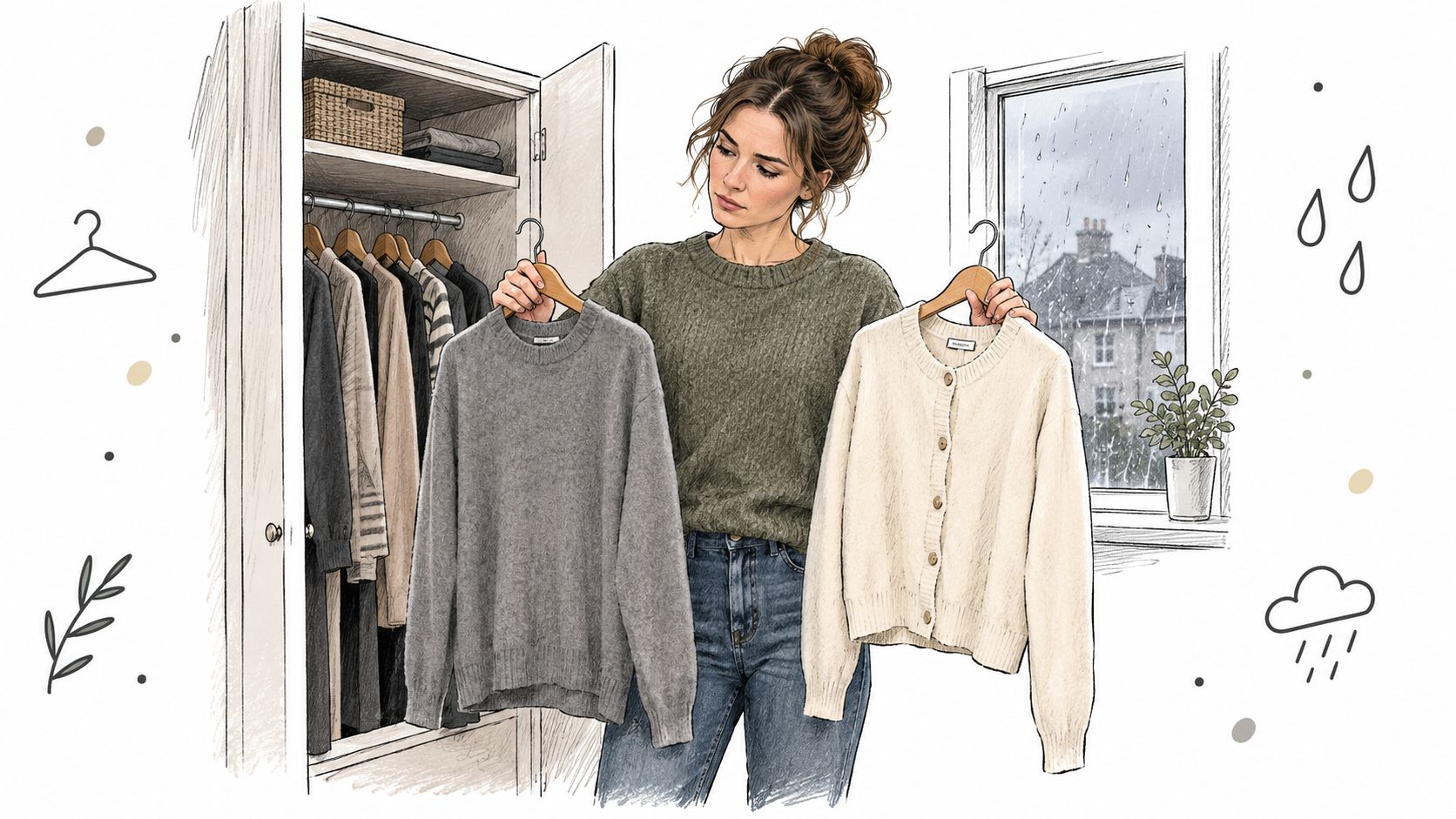
You're standing in front of your wardrobe on a damp British morning, holding a jumper in one hand and a cardigan in the other. The jumper looks warmer, but the office may be overheated by lunchtime. The cardigan seems more adaptable, provided its neckline sits neatly and its sleeves don't disappear up your arms when you reach for your umbrella.
That's where the crew neck cardigan earns its place. It gives you the familiar warmth of a knitted layer, but the front opening makes temperature changes and outfit adjustments easier. The right fabric, fit and care routine turn it from an occasional extra into a dependable part of your wardrobe.
A crew neck cardigan works because it solves an ordinary dressing problem. You can button it over a shirt for work, leave it open over a T-shirt at the weekend, or wear it under a coat when the weather turns sharper. It adds warmth without the full commitment of a jumper, which matters on days when a cold pavement, a warm train and a stuffy office all feature in the same journey.
The rounded neckline gives the garment a tidy outline. Unlike a V-neck, it doesn't expose as much of the shirt or base layer, and unlike a roll neck, it doesn't fold over or create a tall collar. A close ribbed neck can hold warmth around the base of the throat while remaining flat enough beneath a jacket.
In spring, a lightweight cotton or fine wool cardigan can replace a jacket during a cool morning. In autumn, a denser knit works over a shirt and beneath a waxed jacket or denim jacket. Winter calls for careful proportion, because a bulky cardigan may fight with the sleeves of a coat, while a finer knit can sit comfortably beneath a wool overcoat.
The front opening also gives you control over formality. Buttoned fully, the cardigan has a clean, almost jumper-like appearance. Worn open, it looks more relaxed and lets a shirt, T-shirt or patterned blouse provide the visual interest.
Practical rule: Choose the crew neck cardigan when you need warmth that can be adjusted without changing the whole outfit.
Its British appeal also has a long history. The cardigan's UK origin is strongly associated with James Brudenell, the 7th Earl of Cardigan, whose name became attached to the garment after the Crimean War. One widely cited account places the milestone in 1856, when the knitted waistcoat associated with Brudenell evolved into the cardigan, before the style moved from military utility into civilian clothing and later commercial fashion history. John Smedley's history of the cardigan places that story within the garment's British lineage.
The modern crew neck version belongs to that same practical family. It isn't dependent on a seasonal novelty. It suits tailored trousers, denim, workwear and relaxed weekend clothing because the shape is simple, familiar and easy to adjust.
A crew neck cardigan combines the body of a jumper with an opening at the front. Four details usually identify it:
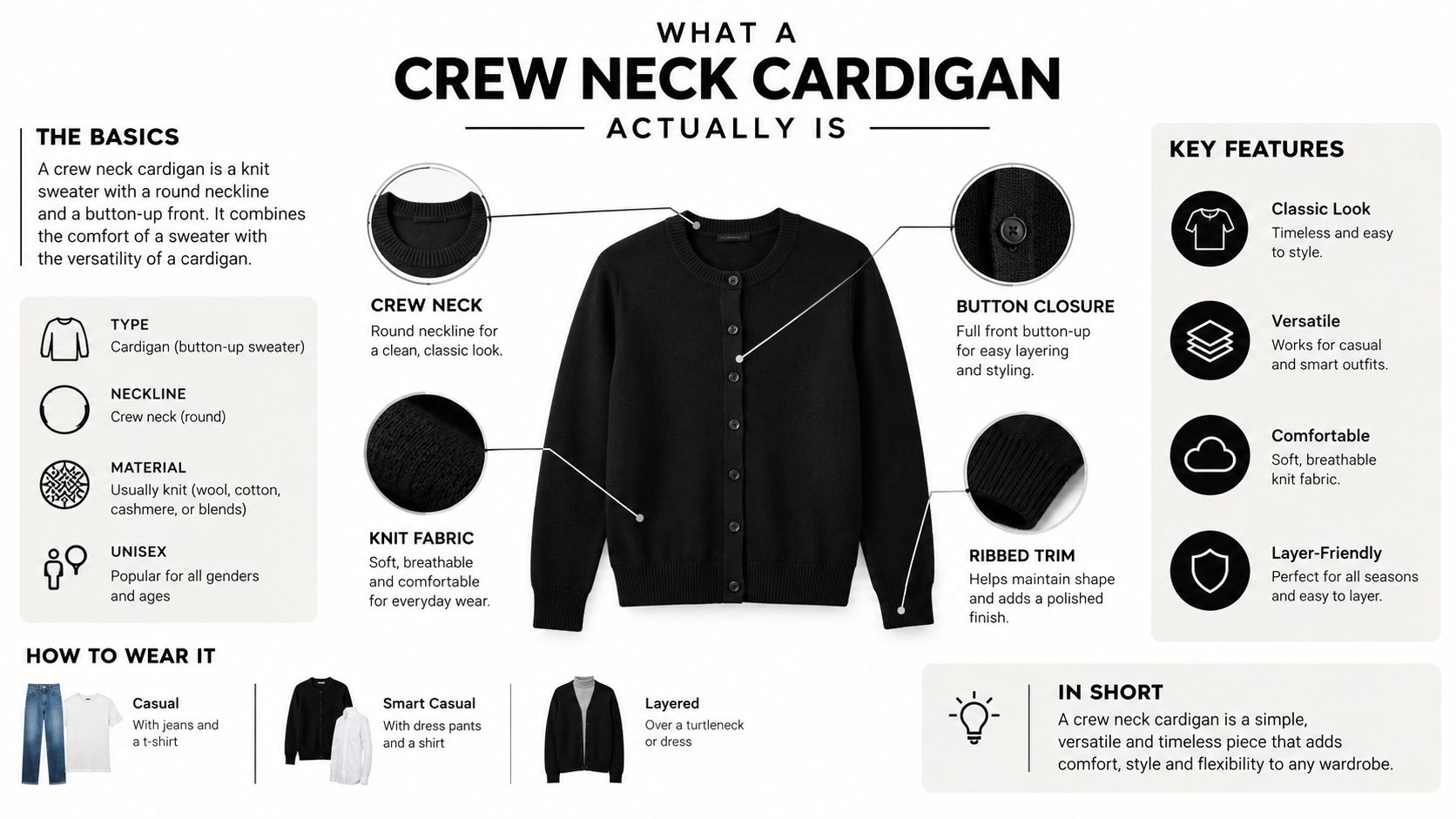
The neckband should sit flat rather than roll away from the body. It doesn't have the fold-over construction of a roll neck, and it doesn't create the open triangular space associated with a V-neck. That makes it especially useful over a collared shirt, because the shirt collar can sit behind or just above the knit without competing with a deep opening.
A crew neck jumper looks similar from the shoulders down, but it has no front opening. A shawl cardigan has a broad, folded lapel-like collar, giving it a softer and often more substantial appearance. A polo cardigan usually has a shorter placket with only a small number of buttons, rather than a front opening that runs down the body.
Construction affects how the neckline behaves after wear. If you're interested in the sewing principles behind a stable ribbed edge, this guide to fix curling neckband edges offers useful background, even if you're buying a finished cardigan rather than making one.
Look closely at the neckband, buttonholes, cuffs and hem. A neat neckband should recover its shape after gentle stretching, while a button-front placket should lie straight instead of rippling between fastenings. The hem shouldn't flare sharply unless that shape is intentional.
You'll also notice differences in proportion. A cropped crew neck cardigan can work well with high-waisted skirts or trousers, while a longer regular cut may provide more coverage over a T-shirt. Neither is automatically better. The useful question is whether the length and neckline suit the layers you wear.
The fibre content changes far more than softness. It affects warmth, weight, drape, drying time, resistance to stretching and the amount of care a cardigan needs. Always read the label rather than relying on a product name, because “wool cardigan” and “cashmere cardigan” can describe very different blends and constructions.
| Fabric | Warmth | Drape and feel | Care needs | Typical UK price |
|---|---|---|---|---|
| Wool | Warm and insulating | Can feel springy, structured or slightly textured | Check the label carefully, and avoid hot washing | Often mid-range, with price varying by fibre quality and construction |
| Lambswool | Warm but generally lighter and softer than robust wool | Fine, comfortable and gently structured | Needs careful washing and drying | Usually mid to premium |
| Merino wool | Warm, breathable and fine | Smooth hand-feel with a lighter drape | Follow the wool care label | Usually mid to premium |
| Cotton | Cool to moderate warmth | Clean, breathable and often more substantial | Often simpler to wash, but follow the label | Commonly accessible to mid-range |
| Cashmere | Warm for its light weight | Very soft, light and fluid | Gentle care is essential | Premium to luxury |
| Wool-cotton blend | Balanced warmth and breathability | More relaxed than pure wool, with useful structure | Care depends on the fibre mix | Mid-range |
| Wool-acrylic blend | Moderate warmth with practical durability | Can feel smooth and hold its shape | Often easier-care, but check the label | Accessible to mid-range |
Wool is a sensible choice for colder months, but it can shrink if washed too hot. UNIQLO's knitwear care guidance specifically warns that water that's too hot can cause fibres to shrink. That warning matters even when a cardigan feels sturdy in the shop.
Lambswool and merino suit office wear and autumn layering when you want warmth without a heavy, bulky feel. Merino's finer handle can work well beneath a jacket, while lambswool often gives a slightly fuller, cosier texture.
Cotton is useful for spring, indoor wear and homes where wool feels too warm. It tends to offer a clean surface and dependable structure, although a heavy cotton knit can become weighty when wet.
Cashmere feels soft and warm while remaining light on the body, but its premium price and need for gentle handling make it better suited to buyers who'll follow the care instructions. Blends can be a practical compromise for travel, frequent wear and households that prefer simpler washing routines.
Fibre labels also matter legally. UK textile labelling rules require textile products to show fibre content. Where two or more fibres make up 85% of the finished product, the fibres must be listed with percentages, and products with separate components must show each component's content. Pembrokeshire Trading Standards' textile labelling guidance explains what UK shoppers should look for.
If you're comparing knit weights at home, a size guide for chunky knit throws can also help you think about scale, texture and how a heavier knitted surface changes the feel of a textile.
For a wider look at fibre choices across clothing, see this guide to bamboo fabric clothing.
A cardigan can have the right chest measurement and still feel wrong. The shoulders may slip, the sleeves may be short, or the hem may finish at an awkward point. Judge the garment in the order your body encounters it: neckline, shoulders, chest, sleeve and length.
The neckband should rest smoothly around the base of the throat and collarbone. It shouldn't gape when the cardigan is buttoned, but it also shouldn't pull into visible horizontal lines. Try fastening the top button, then move your arms forward as if you're typing or carrying a bag. If the neckline shifts dramatically, the cut may not suit your layering habits.
UK sizing isn't perfectly consistent between brands. British Standard EN 13402-3:2017 is the UK implementation of a clothes size designation standard, so it's a useful reference for understanding how apparel sizing is structured, but the garment's own measurement chart still matters most. The BSI preview for EN 13402-3:2017 provides the relevant standard reference.
| Measurement | Slim Fit | Regular Fit | Relaxed Fit |
|---|---|---|---|
| Chest | Close to the body, with limited room for a shirt | Enough room for a shirt or fine base layer | More ease for thicker layers and a casual outline |
| Shoulders | Seams sit close to the shoulder edge | Seams follow the natural shoulder line | May use dropped seams or extend slightly beyond the shoulder |
| Body length | Often shorter or more shaped | Balanced everyday length | May be longer or wider through the body |
| Sleeves | Close and neat | Comfortable with normal movement | Fuller, sometimes longer at the cuff |
| Best use | Smart, streamlined outfits | Work and everyday layering | Relaxed dressing and heavier base layers |
Measure a cardigan you already like while it's laid flat. Note the chest width across the garment, overall length from the highest shoulder point to the hem and sleeve length from the centre back to the cuff. Lochcarron's knitwear guide shows why these details are useful. Its listed Small measures 49 cm chest width, 60 cm overall length and 74 cm from centre back to end cuff, while its Large measures 57 cm chest width, 64 cm overall length and 78 cm from centre back to end cuff. Lochcarron's knitwear size guide gives those measurements as a practical comparison.
A shorter wearer may prefer a hem that finishes near the natural waist or upper hip, because excessive length can make the body look compressed. A taller wearer may need to prioritise sleeve and body length, especially if the cardigan will be worn over a shirt.
If you carry more room through the chest or middle, a regular or relaxed cut may sit more cleanly than sizing up in a slim design. Sizing up can create excess width at the shoulders and sleeves without solving the original proportion issue.
For a fuller practical reference, use this UK women's clothing size guide. Before ordering online, measure your chest at its fullest point, keep the tape level and compare the result with the garment chart. If you plan to wear an Oxford shirt underneath, judge the cardigan over that shirt, not over a vest top.
Start with the layer closest to your skin, then build outwards according to temperature and movement. A crew neck cardigan is easiest to wear when each layer has a clear job. The T-shirt provides comfort, the cardigan adds adjustable warmth and the outer jacket handles wind or rain.
The weekday commute needs flexibility. Wear a fine merino or cotton cardigan over an Oxford shirt, with the top button open if the office is relaxed. For a smarter setting, add a tie beneath the crew neck, allowing only the knot and a small section of the shirt collar to show. Keep the cardigan fitted enough to sit beneath a structured jacket without bunching at the armholes.
The Sunday walk calls for movement rather than a sharp outline. Layer a cotton or wool-blend cardigan over a plain tee, then add a denim or waxed jacket. Leave the cardigan open if the base layer provides enough visual contrast, or button it through if the wind is cutting across the path. A longer hem can give useful coverage when you're bending, sitting or carrying a dog lead.
A casual dinner sits between the two. Try a dark crew neck cardigan over a clean tee with straight-leg denim, or wear a fine cardigan over a checked shirt with the sleeves pushed carefully to the forearm. If the shirt has a strong check, choose a cardigan in a quiet neutral so the layers don't compete.
Layering check: The collar should create a clean outline. If two neckbands are fighting for space, remove one layer or choose a finer base garment.
In autumn, a crew neck cardigan can sit under a waxed jacket or denim jacket, but avoid combining a very thick cardigan with a close-fitting outer layer. The shoulders should move freely when you reach forward. In winter, a fine knit is usually more comfortable beneath a wool overcoat than a chunky style with pronounced texture.
A V-neck jumper underneath can create contrast, but it isn't essential. If you use one, keep the visible neckline simple and avoid stacking a shirt collar, V-neck edge and crew neck band so closely that the outfit feels crowded.
Colour also affects perceived bulk. A tonal combination, such as a charcoal cardigan over a grey tee, creates a quieter column. A pale cardigan over a dark shirt makes the layers more visible. With checked shirts, choose one colour already present in the check or use a calm neutral such as navy, charcoal, cream or brown.
The same principles apply across wardrobes. A women's cardigan can soften structured trousers or balance a patterned skirt, while a men's cardigan can replace a blazer in a relaxed office. Children's versions benefit from the same practical thinking, especially when an easy front opening helps with changing temperatures.
For broader cold-weather outfit planning, Pandemonium Millinery's layering advice is a useful reminder to build warmth in manageable layers rather than relying on one oversized garment.
Read the care label before choosing a wash cycle. Fibre names give you a starting point, but the finished knit may include treatments, trims or construction details that change the recommended method.
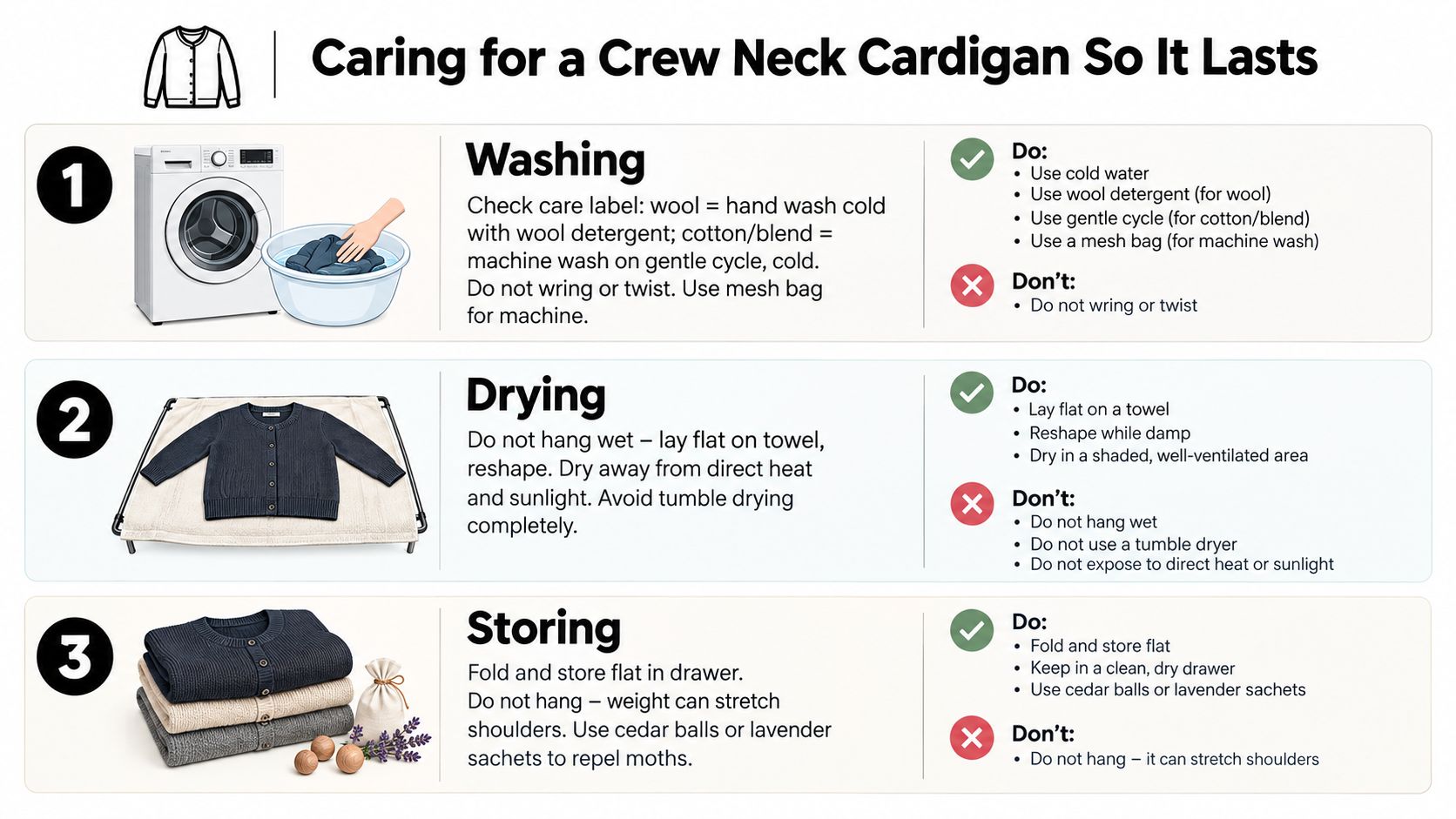
For wool, use the stated wool or delicate programme if the label allows machine washing, or hand wash in cool water with a wool detergent. Don't scrub, wring or twist the garment, because agitation can distort the shape and encourage fibres to felt. A mesh bag can reduce rubbing during a suitable machine wash.
Cotton and blends may tolerate a gentle machine cycle, but cold water remains the safer default when the label permits it. Hot water can shrink fibres, and that risk is particularly important for wool. Dry cleaning should only be used when the care label recommends or permits it, rather than as a universal solution.
Wet knitwear becomes heavier, so hanging it from the shoulders can stretch the shoulder seams and neckband. Lay the cardigan flat on a clean towel, ease the sleeves and side seams into their original shape and keep it away from direct heat and strong sunlight. Don't tumble dry unless the label specifically says it's safe, because heat and movement can change the dimensions.
Pilling doesn't automatically mean the cardigan has failed. Remove pills gently with a knitwear comb or fabric shaver, keeping the tool flat and using light passes. Avoid pulling individual pills by hand, as that can draw out surrounding fibres.
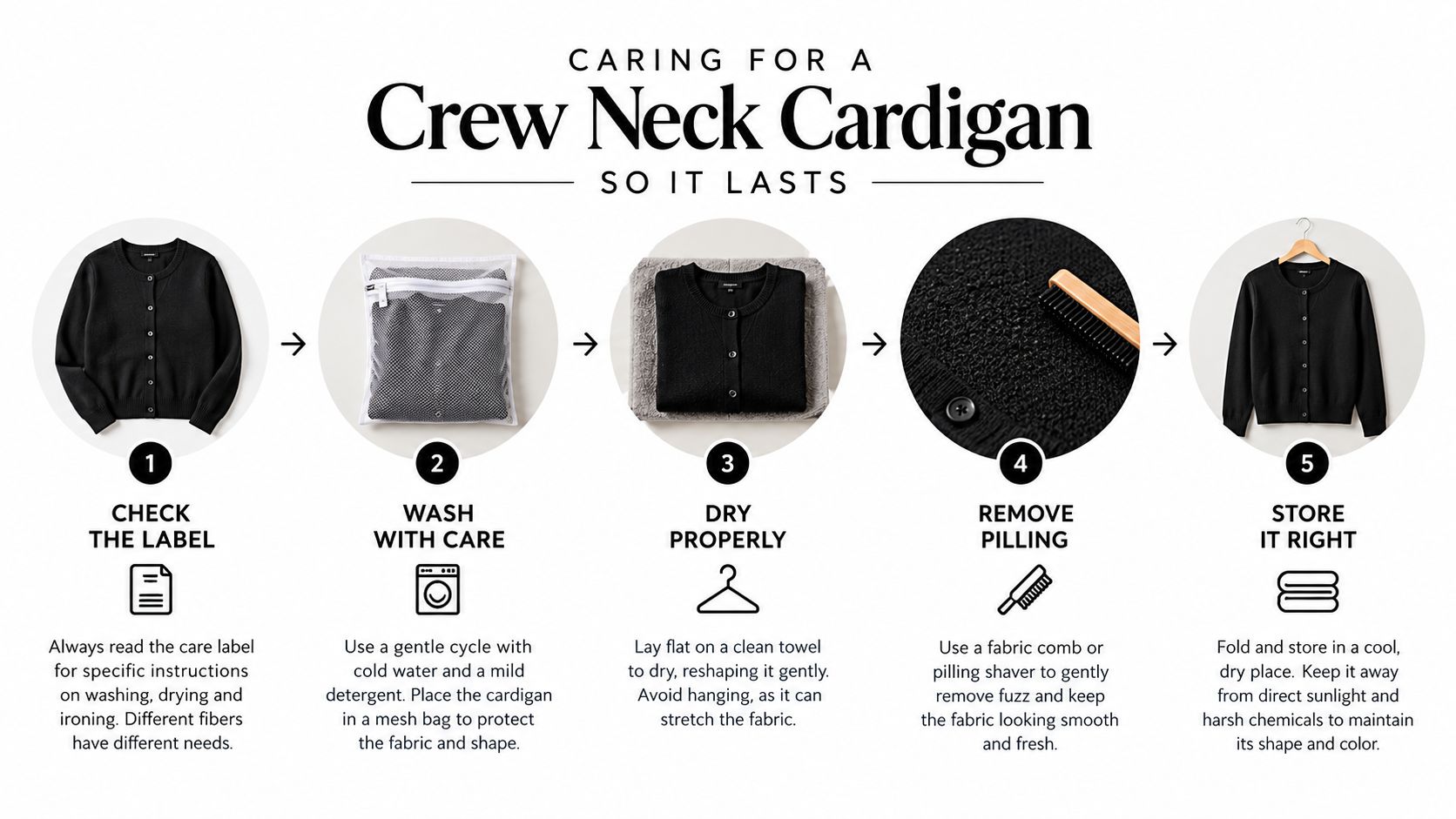
Storage habit: Fold knitwear flat in a drawer or on a shelf. Hanging can stretch the shoulders, especially when the garment is heavy.
Before storing a cardigan for the season, make sure it's clean and completely dry. Air it occasionally when you rotate your wardrobe, and consider cedar rings or lavender sachets as simple wardrobe measures against moths. Store those products so they don't sit directly against delicate fibres if their instructions advise otherwise.
Construction can also influence longevity. Full-fashioned knitwear is shaped during knitting rather than cut from a larger piece of fabric, which avoids raw cut edges and can reduce the risk of fraying and distortion. Reinforced button-front plackets help limit stretching around buttonholes, a useful detail on a cardigan that's fastened repeatedly. Hackett's cardigan guidance discusses these construction features in the context of UK knitwear.
Use a short checklist before you add a cardigan to your basket.
A deliberately oversized cardigan can look relaxed, but buying too large may swallow your frame rather than create an easy silhouette. Untreated wool needs particular care because hot washing can cause shrinkage, and sleeve length is easy to overlook when you're shopping online.
UK shoppers should also check the fibre content, country of origin and care symbols on the product page before ordering. January and July sales can be useful times to look for seasonal knitwear, while an independent knitwear shop in a market town may offer more personal fitting help than a busy high-street chain. For more UK-focused options and wardrobe context, explore this guide to women's knitwear in the UK.
Peppervale brings together practical clothing and knitwear alongside men's clothing, kids and baby essentials, workwear, footwear, accessories, home and living, health and beauty and pet supplies. Visit Peppervale to browse the current catalogue and choose everyday layers with the fit, fabric and use you have in mind.


