Share:

- Women
- Men
- Kids & Baby
- Workwear
- Footwear
- Accessories
- Home & Living
- Health & Beauty
- Pet Supplies

It's a drizzly Tuesday morning. The thermostat in the office is set too high, your train is delayed, and the jumper you pulled on in a hurry is either making you sweat, leaving you cold or bobbling after a few washes. That's the womens knitwear uk problem. It isn't a shortage of styles. It's buying the wrong weight, fibre or fit for the way you spend your day.
A dependable knitwear wardrobe should handle the walk to the station, indoor heating, a school run, a supermarket dash and a weekend outdoors without becoming uncomfortable or shapeless. This guide focuses on those decisions, including warmth, layering, sizing, wash care and cost per wear, rather than treating knitwear as a collection of seasonal trends.
Most wardrobes don't need another impulse jumper. They need a better mix of useful layers. A fine knit can work beneath a blazer, while a denser wool blend may earn its place for cold commutes. A chunky cardigan can be ideal around the house, but it may be hopeless under a fitted winter coat.
British shoppers have been buying and wearing knitwear for generations. By 1910, knitwear was established in the modern women's wardrobe, and by the early twentieth century the idea of fully fashioned, “knit to fit” garments was widely accepted in social circles, as documented in this history of British knitwear. Women also played a major role in hand knitting and early machine-linked production at home, in small workshops and in factories. Knitwear is part of Britain's clothing history, not a passing import fad.
Pull out every jumper and cardigan you own. Sort them by actual use:
The UK knitwear market was estimated at about £1.764 billion in 1998 and roughly £2.338 billion by 2003, when knitwear moved further from practical clothing into mainstream fashion, according to the same British knitwear research. That scale reflects how central the category has become. Your own buying plan should be smaller and more disciplined: choose garments that solve a repeated wardrobe problem, then check whether you'll wash and wear them often enough to justify the purchase.
Start with the job you need the garment to do, not the name on the product page. A classic jumper is the most adaptable option. Crew necks suit shirts, jeans and trousers, V-necks create room around the face and layer neatly over collared tops, while boat necks bring a wider line that works well with simple bottoms.
A cardigan gives you better temperature control. A button-through style can replace a jacket indoors, a longline version adds coverage over slim trousers or leggings, and a cropped cardigan sits neatly with high-waisted jeans or trousers. Cropped knits aren't automatically impractical. They're useful when the waistband of the outfit is doing the styling work.
A roll-neck or polo neck is the strongest cold-weather base layer. Pick a fine gauge if you want to wear it under a blazer, overshirt or coat. A thick version is warmer but needs room around the shoulders and neckline, and it can become too much in a heated office.
Knit dresses can simplify an outfit, particularly for office-to-evening dressing. Look for a hemline that works with the boots and coat you already own. A close-fitting knit dress gives a cleaner silhouette, while a relaxed style needs deliberate structure elsewhere, such as a belt, coat or firm boot.
| Style | Best use case | Typical weight | Pairs with |
|---|---|---|---|
| Classic jumper | Everyday layering and casual outfits | Fine to mid-weight | Jeans, trousers, skirts |
| Cardigan | Adjustable indoor and outdoor layering | Fine to chunky | Dresses, shirts, denim |
| Roll-neck | Cold-weather base layer | Fine to heavy | Blazers, coats, tailored trousers |
| Knit dress | Office-to-evening dressing | Fine to mid-weight | Boots, belts, structured coats |
For casual weekends, a crew jumper with straight-leg denim is hard to beat. For a school run, a chunky cardigan over a T-shirt gives warmth without the commitment of a heavy coat. For work, a fine roll-neck under a blazer looks sharper and handles temperature changes better than a bulky jumper.
Fibre labels tell you more than a marketing description, but only if you read the full composition. “Wool blend” can mean a useful balance of warmth and resilience, or a small amount of wool mixed with mostly synthetic fibres. “Fine knit” describes the appearance and construction, not necessarily the fibre or warmth.
Wool and merino are the sensible choices when you need warmth with breathability. Merino is usually smoother against the skin than coarser wool, although sensitivity varies. Wool garments need careful washing and drying, but a well-made knit can retain its shape better than a loose, low-quality synthetic one.
Cotton works well for spring, summer and transitional dressing. It feels familiar against the skin and suits shoppers who don't want wool, but it can absorb moisture and feel heavy or clammy in persistent rain. Cotton knits also need careful drying because wet fabric can stretch.
Acrylic and acrylic blends keep prices accessible and can be easy to care for. They're useful as colour-led or occasional pieces, but they often offer less breathable warmth than wool and may pill when exposed to repeated friction. A soft hand-feel on the rail doesn't guarantee long-term performance.
Cashmere offers a light, soft luxury layer, but it isn't maintenance-free. It can pill, needs gentle care and makes the most sense when you'll wear and look after it regularly rather than reserve it for rare occasions. Tencel and bamboo-style plant-based fibres can provide a fluid drape, although the finished knit's construction and blend still determine how it behaves.
| Fibre | Warmth | Breathability | Wash care | Price band | Durability |
|---|---|---|---|---|---|
| Wool | High | Good | Gentle washing | Mid to premium | Good when well made |
| Merino | Warm for its weight | Good | Follow label carefully | Mid to premium | Good with careful care |
| Cotton | Light to moderate | Good in mild weather | Often easier, avoid stretching | Budget to mid | Moderate |
| Acrylic blend | Moderate | Lower than wool | Often easier | Budget to mid | Variable, pilling can be an issue |
| Cashmere | High for its weight | Good | Gentle hand washing or specialist care | Premium | Good with disciplined care |
| Tencel or bamboo blend | Light to moderate | Generally comfortable | Follow the garment label | Mid | Depends heavily on the blend |
Dry-clean-only knitwear deserves an honest question before purchase: will you realistically pay for specialist care or hand-wash it? If the answer is no, choose a garment whose care routine fits your actual household.
Treat knit weight as a practical tool, not a calendar label. A lightweight knit around 200–300 gsm suits mild days, indoor layering and transitional weather. Fine merino works particularly well beneath a blazer, while fine cotton is comfortable when you need a breathable layer without much bulk.
A mid-weight knit around 400–600 gsm is more useful for a cool commute or a weekend outdoors. Pair a mid-weight crew with a wax jacket, scarf and straight-leg trousers. It gives more insulation than a fine jumper without making every coat feel tight.
Chunky cables and heavy ribs at 700 gsm or above are best for cold outdoor periods, relaxed weekends and working from home. They're warm but less versatile. A thick jumper under a close-fitting coat can restrict your arms, and a chunky cardigan may be excessive in a heated office.
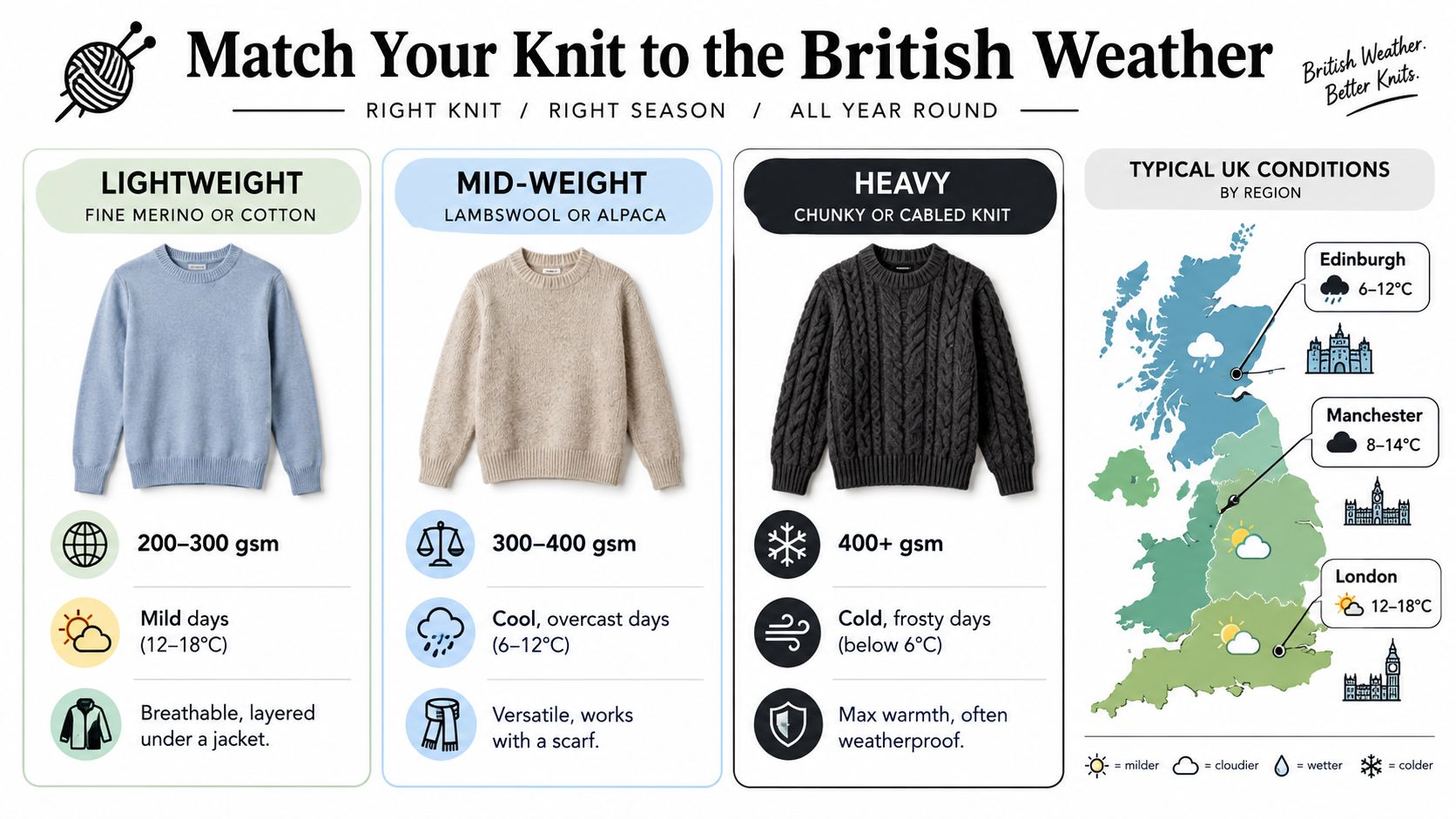
A fine base layer under a mid-weight jumper often beats one very thick garment. The finer layer traps warmth close to the body, while the outer knit adds insulation. A closer, more elastic fit can also reduce air movement around the body, which helps a winter layer perform better.
Wool and merino remain useful when conditions turn damp because they can retain warmth better than many alternatives. Cotton can feel clammy in persistent rain, while acrylic-only knits may feel warm indoors but offer disappointing outdoor comfort once wind and moisture enter the picture.
For a softer casual alternative, compare knitwear with the layering ideas in this guide to women's hoodies. A fine roll-neck beneath a blazer is the office solution. A mid-weight crew beneath a jacket is the commuting solution. A chunky cardigan over a T-shirt is the school-run or home-working solution.
The label is only a starting point. UK shoppers should measure bust, waist and hips in centimetres, then compare those figures with the specific garment chart. One UK knitting reference places a women's size 12 around 91 cm bust, 72 cm waist and 97 cm hips, while a medium knitwear garment may be specified around 102–109 cm chest with 56–58 cm sleeve or length dimensions, as shown in this standard garment measurement reference. Those figures demonstrate why body measurements and finished garment measurements aren't interchangeable.
S, M, L and XL also vary by retailer. A UK sizing guide shows approximate bust ranges from 77.5–80 cm at the smaller end through to 110–114 cm at the larger end across S to XL, so use the brand's chart rather than assuming your usual letter size, as outlined by WoolOvers London's sizing guide.
A fitted merino roll-neck needs enough room across the bust, shoulders and biceps to sit smoothly without pulling. A relaxed cotton jumper should have more ease, but excess fabric can create bulk beneath a coat. An oversized cut is a deliberate silhouette, not permission to ignore sleeve and shoulder measurements.
Use a tape measure and record your numbers once. The UK women's clothing size guide can help you interpret measurements before ordering.
Most knitwear damage starts in the laundry, not on the street. Friction, heat, harsh detergent and hanging wet fabric can turn a good jumper into a distorted one quickly.
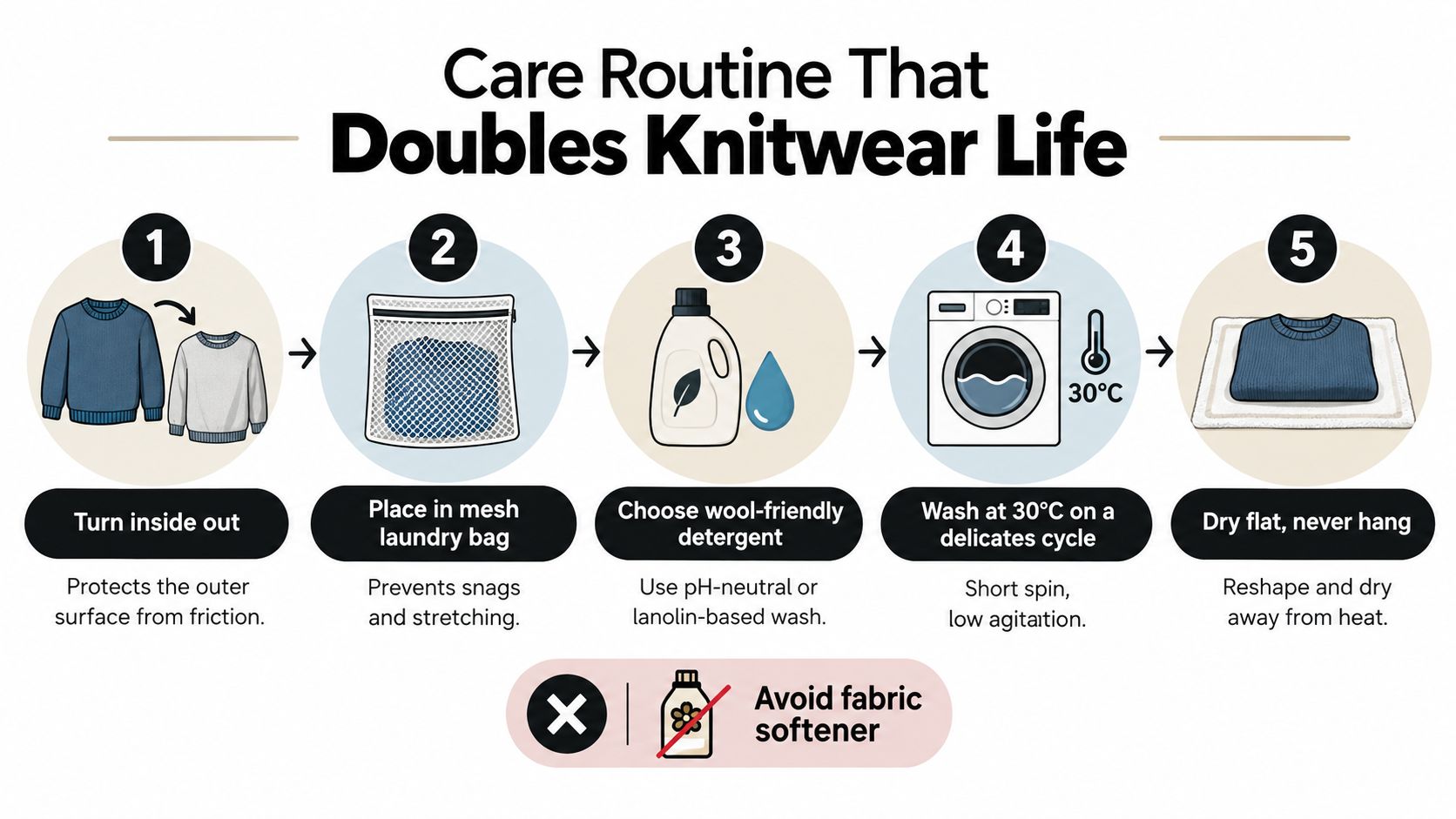
Never hang a wet jumper. Gravity pulls the shoulders down and can lengthen the body unevenly. Once fully dry, fold knitwear rather than placing it on a hanger, particularly in a warm airing cupboard. Cedar or lavender storage aids can help deter moths, but clean garments before storing them.
Use a fabric comb or sweater stone lightly across the surface. Don't drag aggressively, especially over fine merino or cashmere. A cashmere comb is worth considering only if you own several delicate pieces and will use it gently.
For a small snag, ease the loop back through to the inside with a needle. Cutting it creates a weak point that can unravel. Reattach loose buttons with secure stitches, and send treasured or badly damaged knits to a repairer for visible mending or darning rather than abandoning them.
The cheapest jumper isn't automatically the best value. The useful calculation is simple:
Cost per wear = purchase price divided by the number of times you wear the garment.
A £25 acrylic jumper worn 30 times costs about 83p per wear, while a £75 wool blend worn 150 times costs 50p per wear. Those are worked examples, not promises about how long any particular garment will last. They show why a higher upfront price can make sense when the fibre, construction, fit and care routine encourage repeated use.
| Knit type | Typical UK price | Estimated wears | Cost per wear | Durability |
|---|---|---|---|---|
| Budget acrylic example | £25 | 30 | About 83p | Variable, pilling risk |
| Mid-range wool blend example | £75 | 150 | 50p | Often stronger value when well made |
| Higher-end cashmere example | Not fixed | Not fixed | Depends on use | Soft but care-intensive |
Don't treat the table as a forecast. Inspect the actual garment. A tightly spun yarn, secure ribbing and fully fashioned seams can justify spending more because they support shape retention and repairability. A loose gauge, coated-feeling surface or vague fibre label should make you cautious, regardless of the price.
Cashmere can be superb for a light, warm layer, but it isn't automatically more practical than a wool blend. For everyday commuting, a well-constructed mid-priced wool blend may tolerate regular use better. Acrylic can be the right choice for an occasional colour or style, but it's a poor bargain if it pills quickly or feels clammy outdoors.
Use this guide to cheap women's clothing as a reminder to compare the garment's likely use with its ticket price. Peppervale also carries clothing alongside workwear, footwear, accessories, home and living, health and beauty and pet supplies, so shoppers can assess knitwear alongside other household and wardrobe needs in one catalogue.
Before clicking buy, make the decision in this order. It prevents an attractive colour or trend detail from distracting you from the garment's practical job.
Write down where you'll wear it. Office layering requires a smoother, slimmer knit. A cold outdoor day calls for more insulation and enough room for a base layer. A weekend cardigan may prioritise ease and pockets, if the live product page confirms them.
Next, choose the fibre and weight. Merino is a strong option for a breathable base layer, wool suits colder conditions, cotton works for mild days and synthetic blends can keep the purchase price lower. Check the full composition and care label rather than relying on terms such as “soft touch” or “fine knit”.
Measure your bust, waist and hips in centimetres. Compare those numbers with the specific size chart, then check sleeve and body length. Decide whether you want a fitted, regular, relaxed or oversized result before ordering.
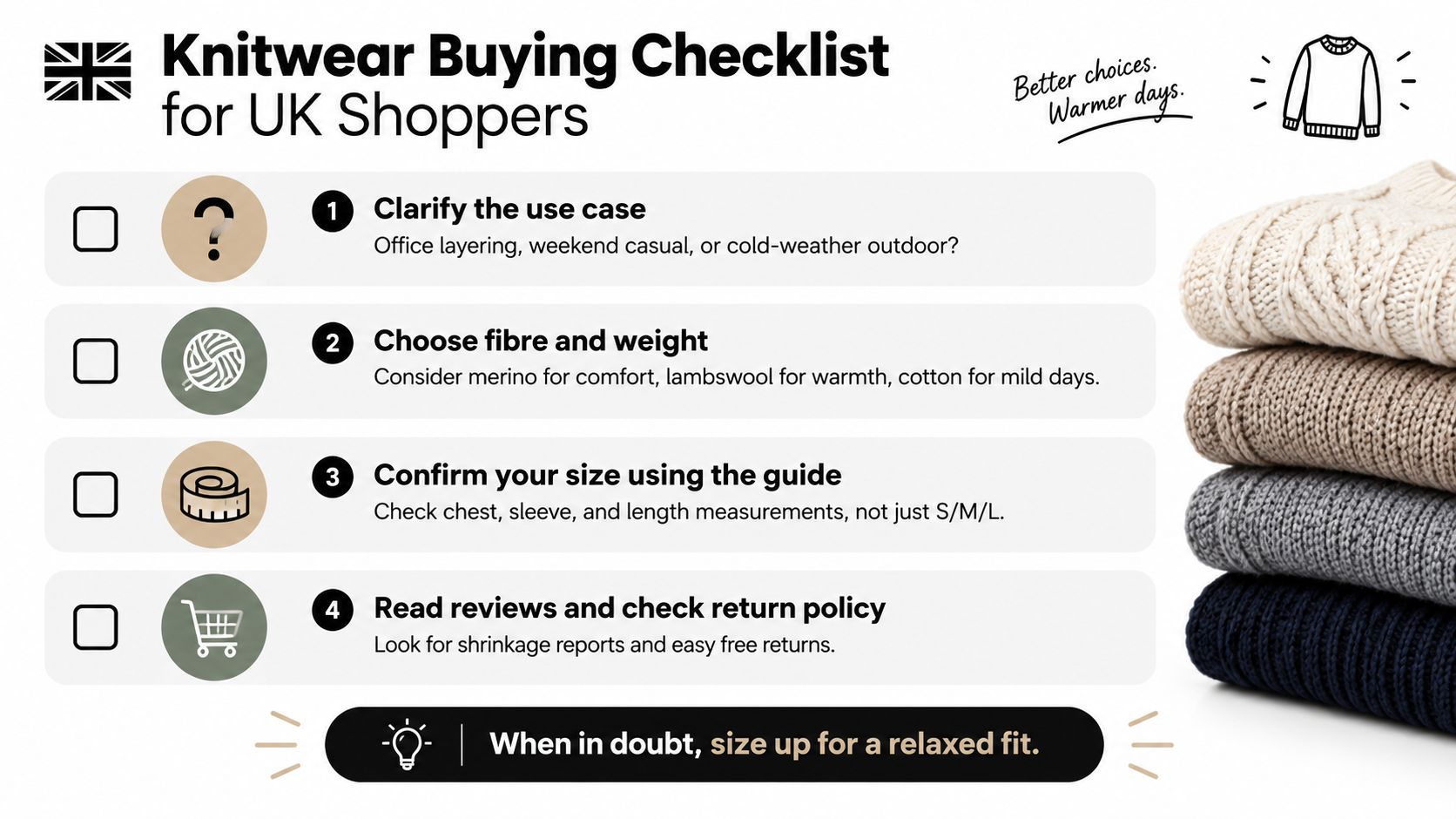
Review the live product details, including current sizing, material information, delivery options and returns terms. If you need next-day or nominated-day delivery, collection from a local drop-off point or want to understand how a multi-item order affects postage thresholds, confirm those terms before payment. They can vary by product and change over time.
Finally, build around what you already own. A jumper that only works with one new skirt isn't a useful purchase. Check its colour against your coats, its hem against your trousers and its sleeves against your jackets. Browse the current women's knitwear at Peppervale, then compare it with complementary clothing, footwear and accessories so you can choose a practical outfit rather than another isolated wardrobe piece.
Peppervale's UK catalogue brings women's clothing together with men's clothing, kids and baby essentials, workwear, footwear, accessories, home and living, health and beauty and pet supplies. Visit Peppervale to compare current knitwear with the everyday pieces you already need, and build a more useful basket around British weather and real wear.


