Share:

- Women
- Men
- Kids & Baby
- Workwear
- Footwear
- Accessories
- Home & Living
- Health & Beauty
- Pet Supplies

You're in a fitting room with two pairs of yoga trousers women often encounter when shopping. One slips down as you bend forward, while the other digs into your waist before you've even reached the mat. Both may look suitable on the hanger, but comfort during yoga depends on details you can't judge from appearance alone.
The right pair should move with your hips, stay secure through folds and twists, and give you confidence that the fabric will remain opaque. It should also suit how you live, whether that means studio classes, home practice, errands, travel, or a damp walk to the gym. This guide looks at fit, fabric, waistband design, sizing, seasonal comfort, and the practical checks that make online buying less risky.
Yoga trousers are movement-focused women's activewear, designed for repeated bending, stretching, twisting, and seated positions. They aren't any pair of stretchy bottoms. A useful definition rests on three practical features: a waistband that stays in place, fabric that follows the hip joint, and a cut that remains comfortable in both standing and floor-based poses.
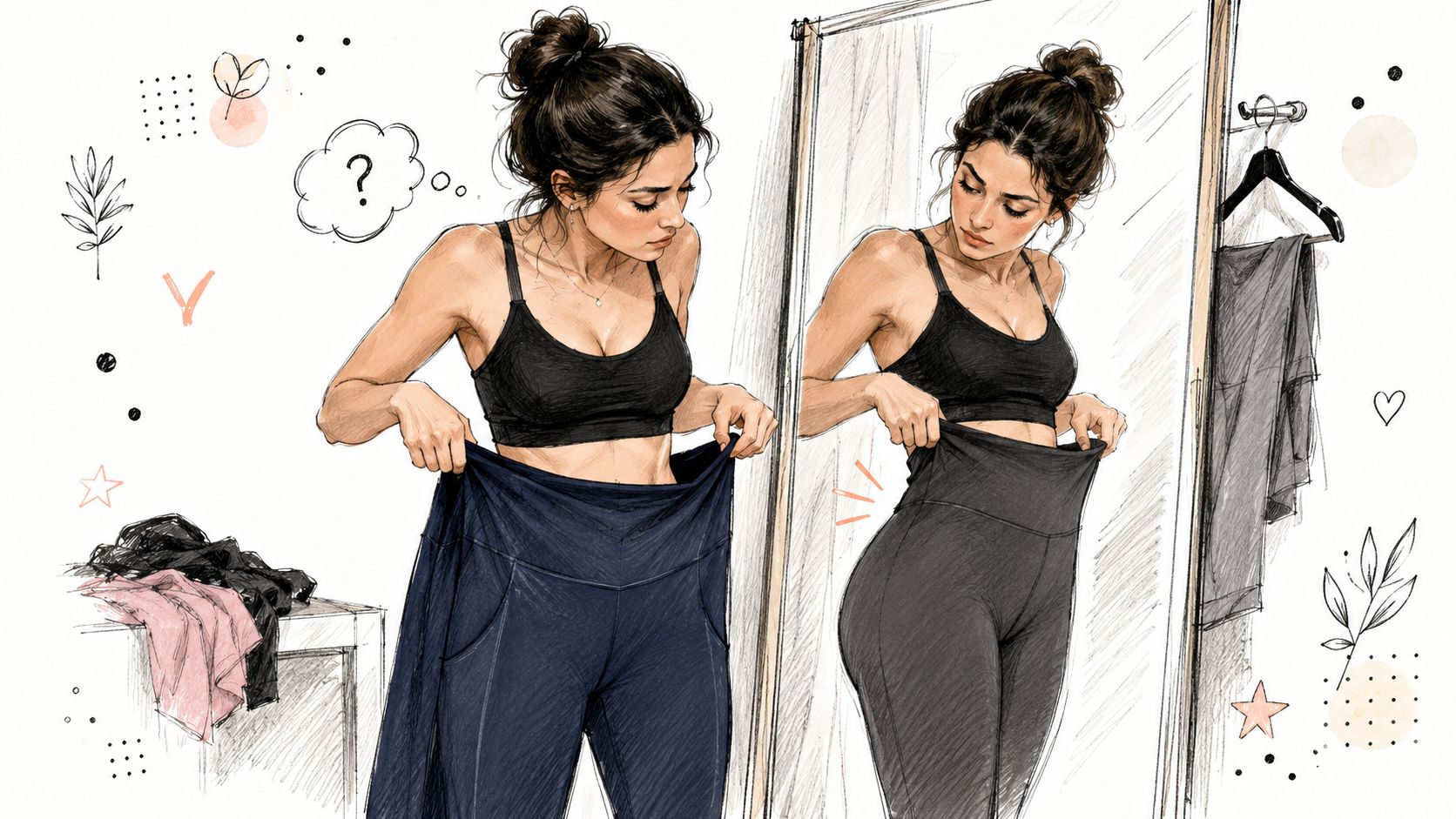
First, test the waistband. During a forward fold, the back should stay covered without forcing you to pull the trousers up. During an inversion or downward-facing dog, the waistband should feel like a secure lid on a jar. It holds everything in place without crushing the contents.
Second, look at movement through the crotch and hips. A well-cut pair should let you bring your knees towards your chest, widen your stance, and rotate your legs without the fabric pulling sharply across the front of the hips. A gusset, which is an extra shaped panel in the crotch, can give this area more room.
Third, consider the leg shape and length. Full-length trousers can provide coverage when you sit, kneel, or stretch, while a gently flared cut may feel more relaxed for everyday wear. The best choice depends on whether you want a close studio fit or a trouser that transitions into casual clothing.
The UK market gives this category useful context. The women's tights and leggings market generated USD 1,029.0 million in UK revenue in 2021 and was projected to reach USD 1,638.8 million by 2028, with a projected 6.9% CAGR from 2022 to 2028, according to Grand View Research's UK market outlook. Yoga trousers sit within this broader close-fitting lower-body category, so shoppers have plenty of choice, but also plenty of garments that aren't designed for yoga-specific movement.
The easiest way to compare bottoms is to judge what happens when the body moves, not how similar the garments look on a product page. Yoga trousers usually prioritise coverage, controlled stretch, and stability, whereas other categories may focus on fashion, warmth, or general comfort.
| Bottom type | Fabric and stretch | Waistband construction | Coverage when stretched | Movement and typical use |
|---|---|---|---|---|
| Full-length yoga trousers | Usually a flexible, moderately dense knit | Often wide, high, or shaped to stay secure | Generally selected for seated poses and deep bends | Yoga, pilates-style movement, home practice, everyday wear |
| Standard leggings | Can range from lightweight fashion jersey to technical activewear | Often simpler and less supportive | Depends heavily on fabric density and colour | Layering, casual outfits, light exercise |
| Tracksuit bottoms | Softer and roomier, with less close body contact | Drawcord or elastic waist is common | Usually opaque, though the issue is less about stretch transparency | Warm-ups, lounging, travel, outdoor casual wear |
| Capris | Stretchy, close-fitting fabric with a shorter leg | Similar options to leggings or yoga trousers | Often adequate, but the cut can expose more leg during poses | Warm studios, summer use, casual exercise |
Standard leggings can work for gentle practice, but many fashion-led pairs use a thinner jersey and a simpler waistband. That doesn't make them poor clothing. It means you should check whether the fabric remains opaque when stretched over the knees and seat, especially under bright or overhead studio lighting.
Tracksuit bottoms solve a different problem. They provide warmth and relaxed comfort, but loose fabric, bulky seams, cuffs, or zipped details can press into the body during kneeling and seated positions. They're better for travelling to class or warming up than for a practice that involves long periods on the floor.
Capris can feel cooler, but the mid-calf hem may ride upwards during lunges or pull across the lower leg when you point your toes. They suit shoppers who dislike full-length fabric, provided the hem doesn't distract you.
Practical rule: If the trousers feel secure while you fold, squat, sit, and raise one knee, they're more likely to work for yoga than a garment judged only by its stretchiness.
For outfit ideas beyond the mat, see this practical guide to what to wear with leggings. The key distinction remains simple. The term yoga trousers usually signals a longer, more opaque, movement-tested cut intended for studio and home practice.
Fabric labels tell you the fibre family, but they don't tell you everything about the finished garment. Knit density, yarn direction, elastane percentage, seams, and surface finishes all influence how trousers feel when you move. Two pairs with similar labels can behave very differently after washing.
Polyester-spandex blends are common because polyester dries relatively quickly, holds colour well, and can support shape retention when the knit is well made. They're a practical choice for regular studio use and mixed-intensity sessions. Look for a smooth surface, firm but comfortable stretch, and fabric that returns to its original shape after you release it.
Nylon-spandex blends often feel silkier against the skin and can offer a particularly fluid stretch. They're a strong option for warm studios or more vigorous flows, but the quality of the knit still matters more than the fibre name alone. A thin nylon fabric may feel cool yet provide less coverage than a denser polyester blend.
The most useful questions concern the exact fabric panel, not just the marketing description. Eurofins' activewear testing guidance identifies ISO 9237 for air permeability and AATCC 195 for liquid moisture management as recognised performance tests. Asking whether the fabric has been tested can help you distinguish breathability and sweat transport from vague claims such as “high performance”.
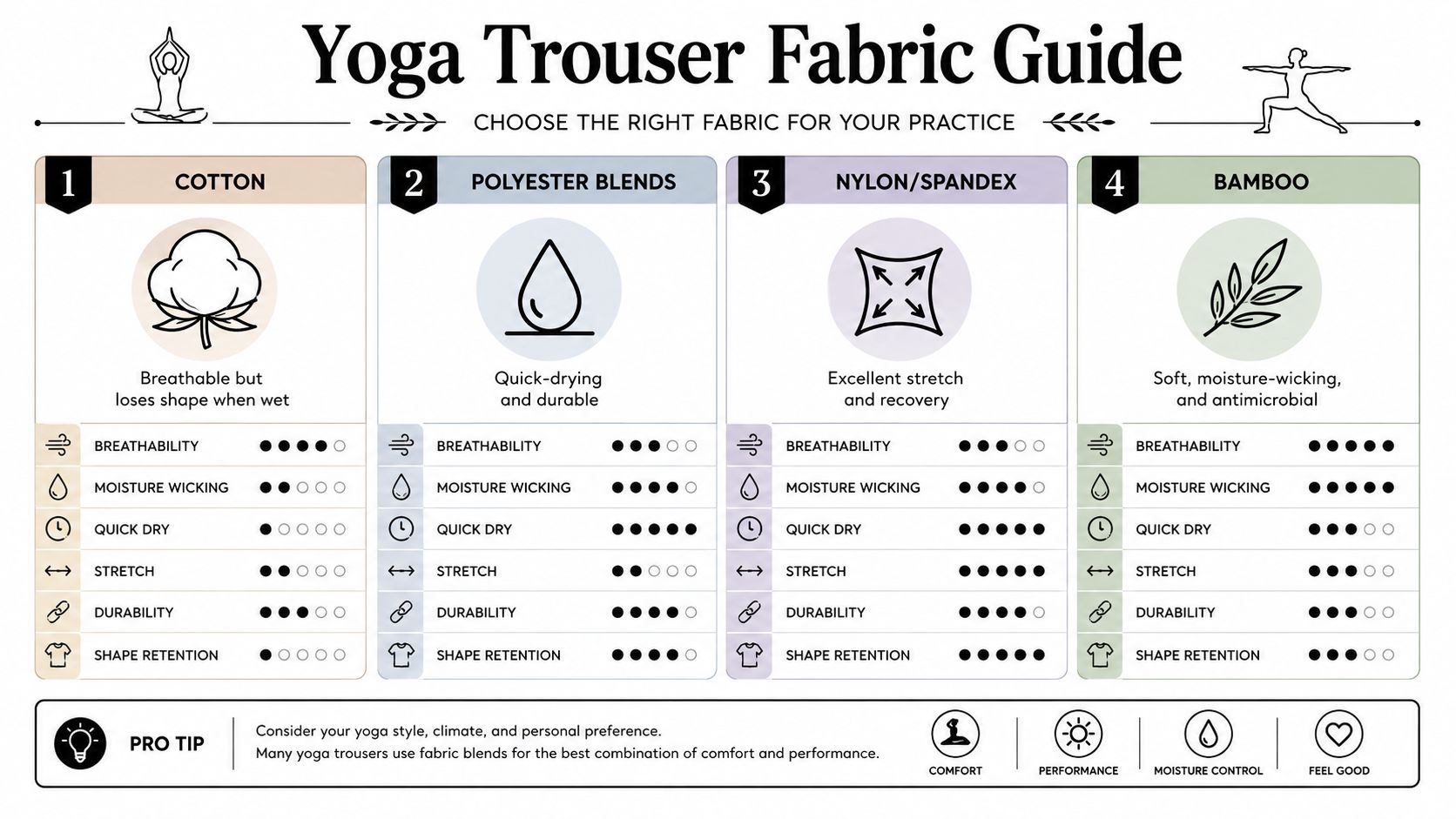
Cotton-rich blends feel soft and familiar. They can suit restorative yoga, stretching, and relaxed home practice, particularly if you prefer a less slippery surface. Cotton can hold moisture for longer, though, and may lose its neat shape when repeatedly damp or washed unless it's blended with fibres that improve recovery.
Bamboo-viscose blends appeal to shoppers who want a soft hand-feel and a fibre story associated with sustainability. Their comfort can be excellent for lounging and travel, but check the full composition and construction. “Bamboo” on a label doesn't automatically tell you how quickly the finished fabric dries or how well it keeps its shape.
Recycled fibres can reduce reliance on newly produced raw materials, but the same performance questions apply. Check opacity, stretch recovery, seam strength, and care instructions rather than treating sustainability language as a substitute for garment testing.
For practical washing and activewear context, explore this guide to women's activewear. You can also watch the following visual guide before comparing fabric labels:
A peer-reviewed comparison of leggings found that all tested pairs wicked to 20 mm within 5 minutes, while the lowest-performing dupe had significantly slower wicking and lower air permeability than the higher-end pairings, as reported in the comparative leggings performance study. The practical lesson is that fibre content alone can't guarantee comfort.
A waistband needs enough hold to stay secure during bends and inversions, while excessive pressure can make the whole garment uncomfortable. The right rise depends on your proportions, the movements you practise, and how the trousers feel across your waist and hips. For UK women whose hip-to-waist measurements fall into different size brackets, the waistband often determines whether a pair stays put or creates pressure.
| Waistband style | Often suits | Useful for | Possible drawback |
|---|---|---|---|
| High-rise compressive band | Hourglass shapes and shoppers wanting more midsection coverage | Inversions, deep folds, flowing sequences | Can feel restrictive if the band is too firm |
| Mid-rise band | Pear shapes and those who dislike fabric over the ribs | General vinyasa and everyday wear | May shift during larger movements |
| Fold-over waistband | Maternity-friendly dressing and flexible comfort | Gentle yoga, home practice, changing body shapes | The fold can roll or loosen during inversions |
| V-waist | Apple shapes and shoppers wanting a shaped front | Inversions and standing sequences | The point can sit awkwardly if the size is wrong |
| Wide elastic band | Budget-conscious shoppers and simple everyday use | Light practice and lounging | May stretch out or dig in over time |
A pear-shaped body often needs more room through the hips and thighs than through the waist. A mid-rise pair with a contoured top edge can reduce the gap that appears when a straight waistband follows the waist instead of the body. A drawcord can fine-tune the fit, but it cannot make a too-small size comfortable.
An hourglass shape may feel secure in a high-rise band that follows the natural waist. An apple shape may prefer a V-waist or a broad, softer band that spreads pressure across the midsection rather than creating one tight line. Try sitting, folding forward, and reaching overhead. The waistband should stay in place without cutting into your ribs.
Fold-over styles offer flexibility when your body is changing or you want adjustable coverage. They can be less dependable for inversions if the fabric rolls, so test the trousers with a forward fold before keeping them.
A simple wide elastic band can work well for gentle practice and lounging. Check whether it snaps back after stretching and whether the stitching lies flat. If the band twists in the changing room, it is unlikely to improve during class. Seasonal use matters too. A thick, compressive band may feel comfortable in cooler weather, while a softer, lighter construction can be easier to wear on warmer days.
Fit starts with measurements, not the size printed on an old pair of trousers. UK shoppers face a particular problem because 54% of women say clothing sizes vary “a great deal” between shops, while 63% say trouser size varies a lot between retailers, according to YouGov's UK clothing-size research. Treat every retailer's chart as a separate set of instructions.
Use a soft tape and stand naturally. Don't pull your stomach in or tighten the tape until it leaves an indentation.
Your hip measurement usually deserves priority in close-fitting trousers because the garment must pass comfortably over the fullest point. If your waist and hip measurements fall into different size brackets, don't automatically size down to get a tighter fit. Choose the size that accommodates the hip, then look for a drawcord, contoured waistband, or adjustable feature to refine the waist.
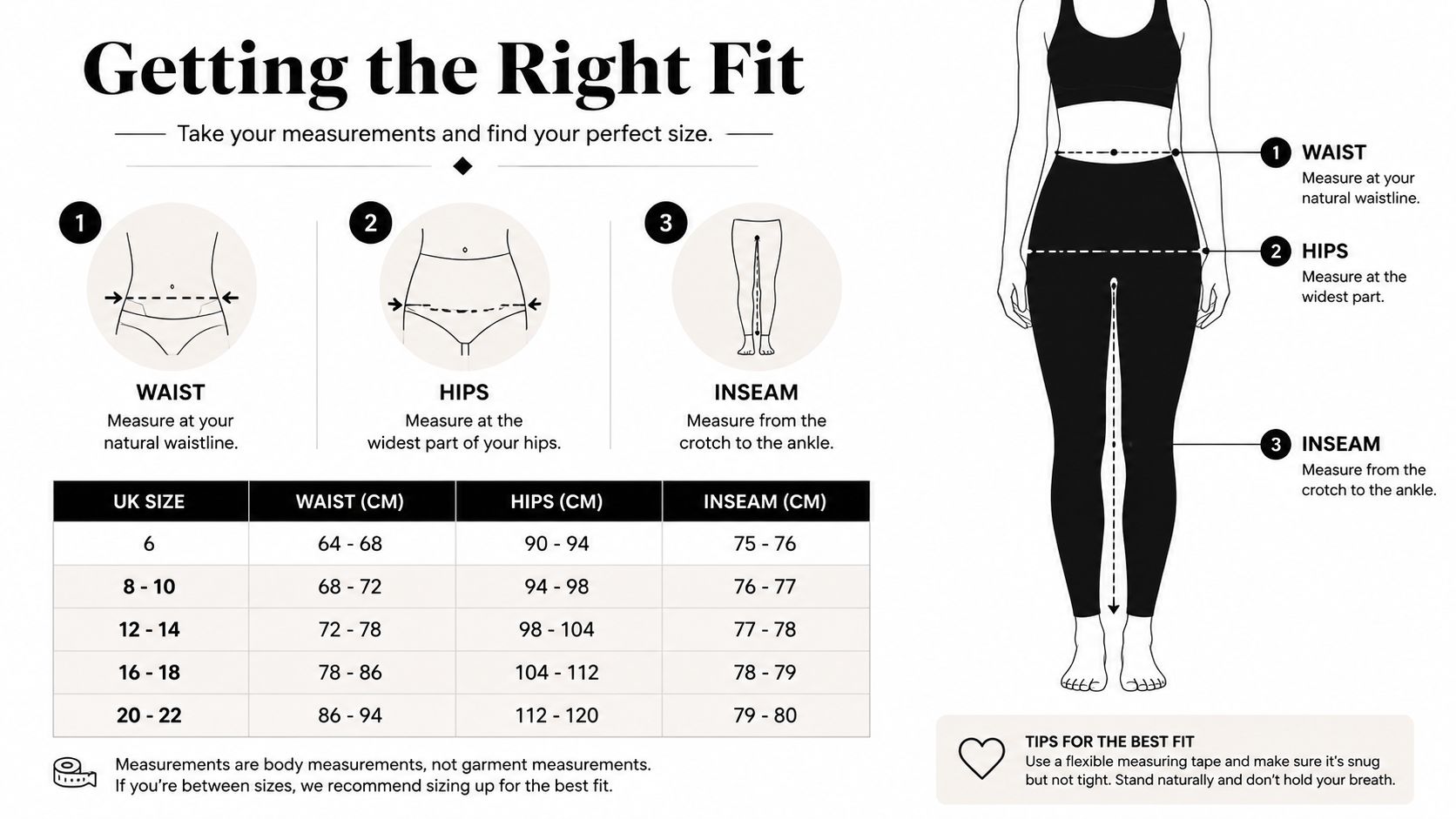
Inseam options commonly include 24, 25, 28, and 31 inches, but those figures are garment measurements, not universal height rules. A petite shopper under 5'4" may find a 25-inch inseam easier to manage, while taller frames may prefer 28 or 31 inches, depending on leg proportion and whether the hem should reach the ankle.
Check where the waistband sits, too. A high-rise trouser can make the visible leg length feel shorter, while a cropped style can expose more ankle during seated poses. If you're between lengths, decide whether you prefer a clean ankle finish or extra fabric that can gather slightly.
Yoga-specific trousers often include a gusset for movement, so sizing down isn't usually necessary because the garment stretches. A smaller size can create excess pressure at the waistband and increase fabric tension over the seat, which may reduce comfort and opacity.
Before ordering online, read the retailer's return policy, check whether unworn garments must retain tags, and confirm who pays return postage. Use this UK women's clothing size guide alongside the individual product chart rather than relying on a familiar number.
The best fabric for a heated studio may be the wrong choice for a cold, damp walk. UK shoppers often need one pair to work across indoor heating, rainy travel, outdoor errands, and changing seasonal temperatures, so choose for the main situation rather than the label alone.
A hot yoga or vigorous vinyasa session calls for light, breathable fabric with reliable moisture management. Nylon or polyester blends can work well when the knit allows airflow and the garment dries promptly. Mesh panels may improve ventilation, but inspect their placement. A panel under the seat may feel cooler, while a large open section at the knee can reduce coverage during floor poses.
Ask whether the trousers have been tested for air permeability or liquid moisture management, and look for a waistband that won't become heavy or slippery when damp. A smooth, close fit usually creates fewer distractions than loose fabric in a heated room.
Outdoor use needs more than stretch. Look for an opaque, denser fabric, a secure pocket for keys, and a waistband that stays stable under a jacket or longer top. Brushed-back polyester or a heavier nylon blend can feel warmer on a cold morning, while a water-resistant finish may help with light drizzle, although it shouldn't be confused with full waterproofing.
Damp weather also makes poor recovery more noticeable. Fabric that feels fine when dry may become uncomfortable if it stays wet against the skin, so prioritise documented moisture performance when available.
Soft cotton-bamboo blends can feel closer to pyjamas while still allowing easy stretching. They suit travel days, gentle home practice, and casual wear where rapid drying isn't the main concern. A wide waistband and relaxed leg can make long sitting more comfortable than a highly compressive studio pair.
Flared and relaxed silhouettes are useful here because they can look more like everyday trousers. That matters for shoppers who want one garment to cover yoga, errands, and informal travel rather than buying clothing for a single activity.
A thermal-lined or brushed fabric can make an unheated room more inviting, especially during slow starts and long rest positions. Check that the lining doesn't create excessive bulk behind the knees or at the waistband. A warmer trouser should still bend cleanly and remain comfortable when you sit cross-legged.
UK trend coverage describes a seasonal split between breathable, ventilated styles for warmer periods and brushed or fleece-lined options for cooler months in this UK yoga-wear trends overview. Use that distinction as a starting point, then match it to your studio temperature and commute.
Use this checklist before you add a pair to your basket. It separates fit, fabric, and function, so an attractive colour doesn't distract you from the details that determine comfort.
Price should follow use, not vanity. A budget pair may be enough for occasional gentle practice, while a mid-range garment can offer better construction for regular wear. Premium features are easiest to justify when you practise frequently, need dependable sweat management, or want one pair to withstand repeated washing.
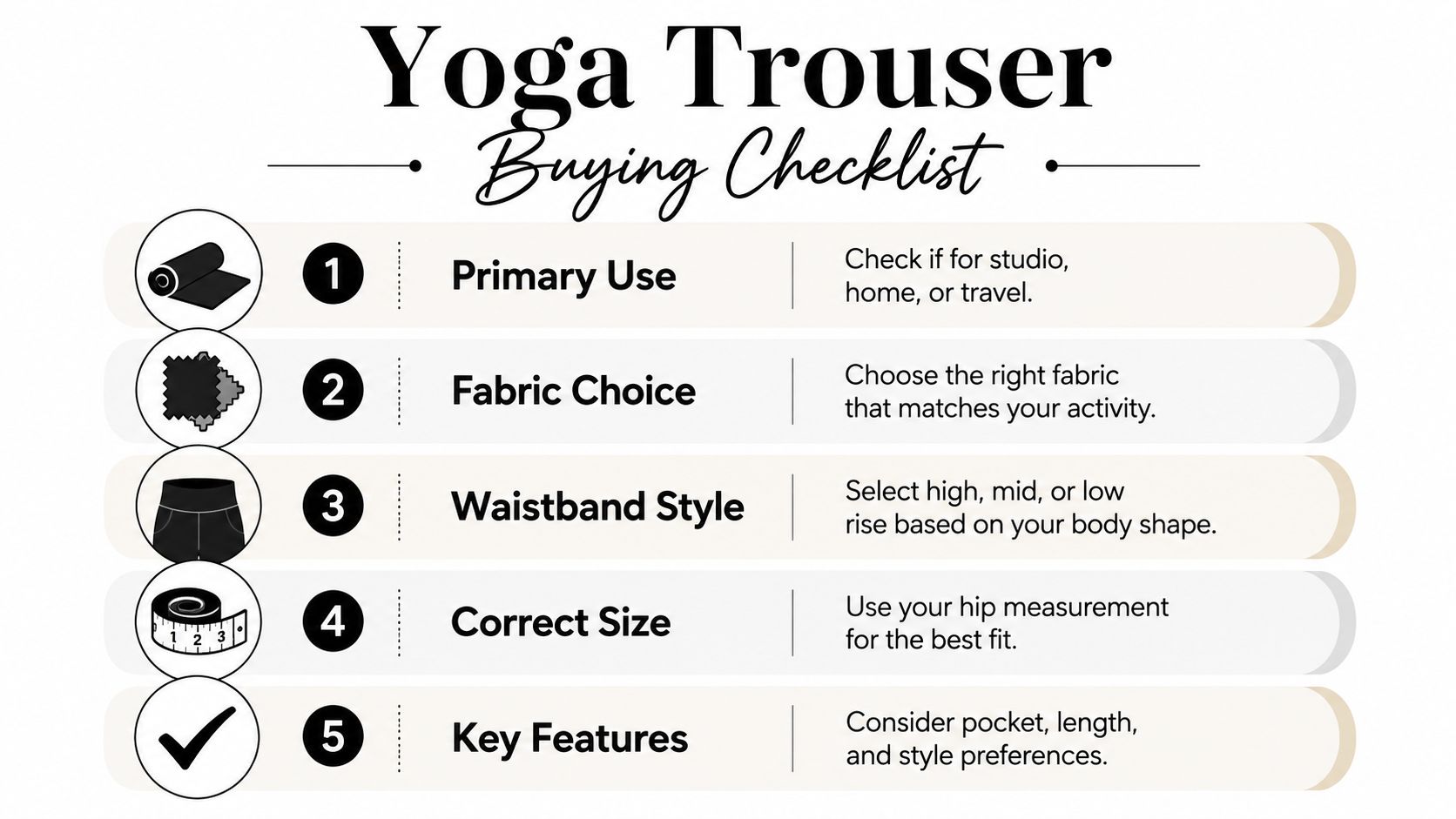
Stretch recovery deserves special attention because it can change after washing. A leggings performance thesis reported substantial differences in post-wear stretch after repeated washing, showing that elastane content alone doesn't guarantee lasting shape retention. Follow the care label, avoid treating high elastane content as a promise, and keep the return option in mind until you've checked the fit.
Peppervale offers UK-focused everyday clothing, including leggings and casual trousers, with clear GBP pricing, stock information, delivery details, and returns guidance. Visit Peppervale to browse comfortable wardrobe options and choose your next pair with your measurements, practice, and daily routine in mind.


