Share:

- Women
- Men
- Kids & Baby
- Workwear
- Footwear
- Accessories
- Home & Living
- Health & Beauty
- Pet Supplies

You've bought the “right” size, waited through delivery, and opened the parcel to find a T-shirt that fits everywhere except where it matters. The neckline gapes, the sleeves sit oddly, and the supposedly relaxed medium feels tighter than another brand's small. Back it goes, along with the time spent printing labels, finding packaging and waiting for a refund.
The smarter way to shop for women's T-shirts in the UK is less glamorous than scrolling through model photographs. Check the flat garment measurements. Understand how cotton, modal, bamboo and polyester behave in damp, changeable weather. Inspect construction before paying for a “premium” label. UK online fashion returns average about 30%, with poor fit a leading cause, according to UK online fashion returns coverage.
This guide is the shortcut you wanted before clicking buy. It covers cuts, fabric, sizing, durability, styling, shopping and care, with advice for real UK routines, from train commutes to quick lunch breaks and weekends spent moving between drizzle and overheated interiors.
The fitting room has its own particular kind of pressure. Harsh overhead lights expose every crease, the changing-room queue is forming behind you, and three versions of the same T-shirt are draped over one arm. One has sleeves that reach too far, another pulls across the bust, and the “medium” looks as though it was cut for someone with an entirely different idea of a medium.
You try the shirt with jeans, then with the trousers you planned to wear. The neckline shifts when you move. The shoulder seam slips towards your upper arm. The hem sits at the wrong point, making your high-waisted trousers look strangely low. Eventually, you take the least offensive option to the till, then wonder why the online version seemed so much easier.
Online shopping removes the queue but not the uncertainty. A product photograph shows styling, lighting and posture. It rarely tells you the half-chest measurement, the amount of ease around the bust, or whether the fabric will cling beneath a raincoat. That missing information is why a size label can't carry the decision on its own.
The useful question isn't “What size am I?” It's “What measurements does this garment have?”
The UK women's T-shirt market is already a substantial and expanding category. It was estimated at USD 5,232.5 million in 2021 and is forecast to reach USD 8,419.0 million by 2028, with a projected 7% compound annual growth rate across 2022–2028, according to Statista's UK women's T-shirts market outlook. That gives shoppers plenty of choice, but choice only helps when product pages explain fit clearly.
Use this guide to make the process decisive. Measure a tee you already love, compare the fabric to the weather and the occasion, then judge construction before colour or trend. The best T-shirt is the one you reach for repeatedly, not the one that looked most convincing in a studio photograph.
A T-shirt's cut changes more than its appearance. It determines where the shoulder seam lands, how much room the bust receives and whether the garment layers neatly or collapses into bulk.
| Cut | Best For | Watch Out For |
|---|---|---|
| Classic crew neck | Blazers, cardigans and dependable everyday layering | A high neckline can look cramped on a fuller bust |
| V-neck | Softening a rounder face and lengthening the upper body | Deep Vs can gape or expose vest straps |
| Scoop neck | Showing the collarbone while keeping coverage | A loose scoop may lose shape after washing |
| Relaxed boxy | High-waisted trousers, skirts and modern casual dressing | Wide hems can overwhelm a shorter torso |
| Fitted ribbed | Tucking into slip skirts, denim and tailored trousers | Ribbed fabric reveals pulling across the bust |
| Oversized drop-shoulder | Off-duty denim, leggings and relaxed layering | Shoulder seams can slide too far down the arm |
The classic crew neck is the safest starting point. Choose one with a shoulder seam close to your natural shoulder edge, then layer it under a blazer or denim jacket. A mid-weight crew in black, navy, white or grey earns its space because it works with smart and casual pieces without demanding much styling.
A V-neck creates visual length through the centre of the body, which makes it useful when a crew neck feels too enclosed. Keep the point moderate for work and check the neckline while sitting, not only while standing. A scoop neck offers a softer alternative. It suits a collarbone-led look, but it needs a stable neckband or it can become wider with wear.
The relaxed boxy cut works particularly well with high-waisted trousers because the shorter, wider shape balances the rise. Half-tuck it only if the fabric is light enough to fold cleanly. A fitted ribbed tee belongs under a slip skirt, sharp overshirt or open shirt, where its close profile prevents excess fabric.
The oversized drop-shoulder tee is excellent with straight-leg jeans and trainers. It looks deliberate when the volume is balanced by a cleaner lower half. It looks untidy when the sleeve, body and trousers are all oversized.
Avoid sizing up accidentally and calling the result oversized. A genuine oversized design usually has planned shoulder drop, sleeve width and hem proportion. If the shoulder seam falls off your arm while the body remains narrow, you haven't found a relaxed cut. You've found a mismatched grade.
When you're unsure, choose a mid-weight crew neck in your true shoulder width. It's the hardest shape to get wrong and the easiest to style across seasons.
Fabric choice matters more in the UK than a product photograph suggests. A tee may feel perfect in a cool bedroom and become clingy beneath a coat, chilly on a breezy platform or slow to dry in a small flat.
| Fabric | Feel & Breathability | Durability & Care | Price Band |
|---|---|---|---|
| 100% cotton | Familiar, soft and breathable, with a crisp or brushed hand depending on the knit | Can shrink, crease and lose shape if washed harshly | Budget to premium |
| Bamboo or modal blends | Smooth, fluid and comfortable beneath layers | Drapes well but needs gentle care and can lose structure in a loose cut | Mid-range to premium |
| Cotton-polyester mixes | Practical, stable and less prone to severe creasing | Often keeps shape well, though the hand-feel varies widely | Budget to mid-range |
| Pure polyester | Lightweight, quick-drying and often smooth | Can hold odour and feel less breathable in everyday wear | Budget to technical premium |
100% cotton is the easy choice for a dry summer day or a casual weekend. Lightweight cotton feels fresh on a warm pavement, but it can cling in a humid Tube carriage and may take longer to dry indoors. Mid-weight cotton is more versatile because it gives the garment enough body to sit cleanly under a blazer without becoming winter-heavy.
Bamboo and modal blends feel cooler and smoother beneath a raincoat or cardigan. They're useful for travel and long days because the drape follows the body instead of standing away from it. Choose a stable neckline and avoid assuming the word “bamboo” means the garment is made from raw bamboo fibre. Clothing labels may describe regenerated fibres such as rayon or viscose made from bamboo, so read the full composition.
A cotton-polyester mix is sensible for frequent washing and commuting. Polyester can improve shape retention, while cotton softens the hand-feel. Pure polyester makes more sense for gym or technical use than for a basic everyday tee, particularly if you dislike synthetic warmth or trapped odour.
Buy for the situation, not the fibre's marketing story.
For a cool office, choose mid-weight cotton or a cotton mix under a blazer. For weekend layering, choose cotton with enough structure to hold a half-tuck. For gym-to-brunch, choose a technical polyester or a smooth blend, then change the styling layer before lunch. If activewear is part of the same wardrobe decision, this women's activewear guide offers a useful comparison point.
Treat “organic cotton” as a fibre description, not a guarantee of longevity. Check the knit, seams and care instructions. The same applies to bamboo. The label can tell you what the fibre is called, but it can't promise how the tee will behave after repeated washing.
UK sizing becomes much easier once you stop treating the label as a measurement. Start with your bust. Wrap the tape snugly under your arms and across the fullest point, keeping it level without pulling tight. Then compare that body measurement with the garment's own flat measurement.
Lay a T-shirt you love on a flat surface without stretching it. Measure straight across the chest from armpit seam to armpit seam. That is the half-chest measurement. Double it only as a rough guide to the garment's circumference, because seam shape, fabric stretch and construction still affect the fit.
UK charts commonly map XS to bust ranges around 71–76 cm, M around 81–86 cm, and XXL around 112–118 cm, with those ranges often corresponding to UK dress sizes such as UK 4–6, UK 12–14 and UK 22–24 respectively, as shown in this UK women's T-shirt size chart. Treat those figures as a starting point, not a promise that every brand will cut the garment identically.
A product page that lists only “size 12” gives you limited information. A page that lists half-chest, body length and sleeve length lets you compare the actual shape with a tee already in your wardrobe. Peppervale's UK women's clothing size guide is useful as a reference when translating labelled sizes into body measurements.
| UK Size | Bust (inches) | Bust (cm) | High-Street Half-Chest | Fitted Half-Chest |
|---|---|---|---|---|
| XS, UK 4–6 | Not uniform between brands | Around 71–76 | Compare with the garment chart | Allow for stretch and close ease |
| S | Not uniform between brands | Check the brand chart | Use a favourite tee as the benchmark | Measure ribbed styles unstretched |
| M, UK 12–14 | Not uniform between brands | Around 81–86 | Compare the listed flat measurement | Size may need adjustment for a close cut |
| L | Not uniform between brands | Check the brand chart | Check bust and body length together | Watch for pulling across the bust |
| XXL, UK 22–24 | Not uniform between brands | Around 112–118 | Use the listed half-chest | Check stretch recovery and hem width |
The important point is that a 5–6 cm shift in the bust band can move a shopper one full size, according to the cited UK sizing reference. A fitted tee has less room for error than a relaxed cotton shape, so your body measurement may place you between labels while the garment measurement tells you which option will work.
Check sleeve length if you're petite or tall, and inspect shoulder drop in relaxed and oversized styles. Size up deliberately when you want more body room, but don't call a narrow, long tee oversized just because you bought a larger label.
Two T-shirts can cost the same and age completely differently. The label may show fibre content, but it often leaves out the details that decide whether the neckline stays firm, the hem lies flat and the surface remains smooth.
Fabric weight is a useful signal when the retailer provides it. Very light jerseys can feel appealingly soft when new but may become sheer, lose structure or pill quickly. A denser knit usually gives better shape retention, particularly when the garment is worn beneath coats and washed frequently.
Construction deserves equal attention. Look for a folded, sewn hem rather than a raw edge held together with adhesive. A clean coverstitched or reinforced hem generally lies flatter than a weak single line of stitching. Inside the garment, check whether seams are tidy, secure and free from loose loops.
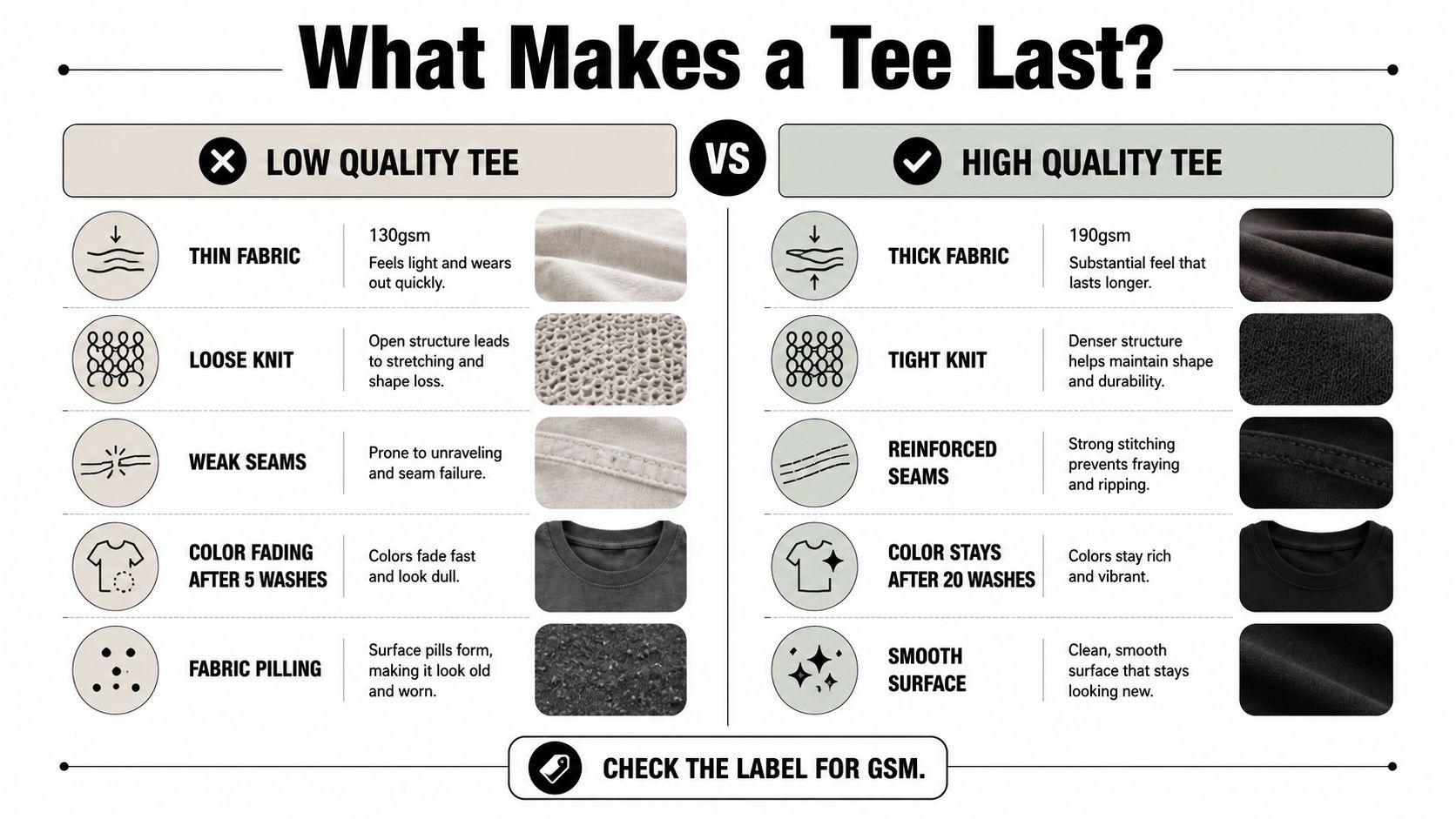
The common assumption that a higher cotton percentage always means better quality is too simplistic. A cotton-elastane blend can recover more effectively at the neckline and shoulders than a rigid cotton tee, while a poorly knitted 100% cotton shirt can twist or sag.
Use this quick inspection before buying:
British homes often mean indoor drying, radiators and repeated low-temperature washes. A T-shirt that needs perfect handling to retain its shape isn't automatically high quality. It may be inconvenient.
A good T-shirt earns its place by solving several outfits, not by looking impressive on its own. These formulas use different cuts for different parts of the week.
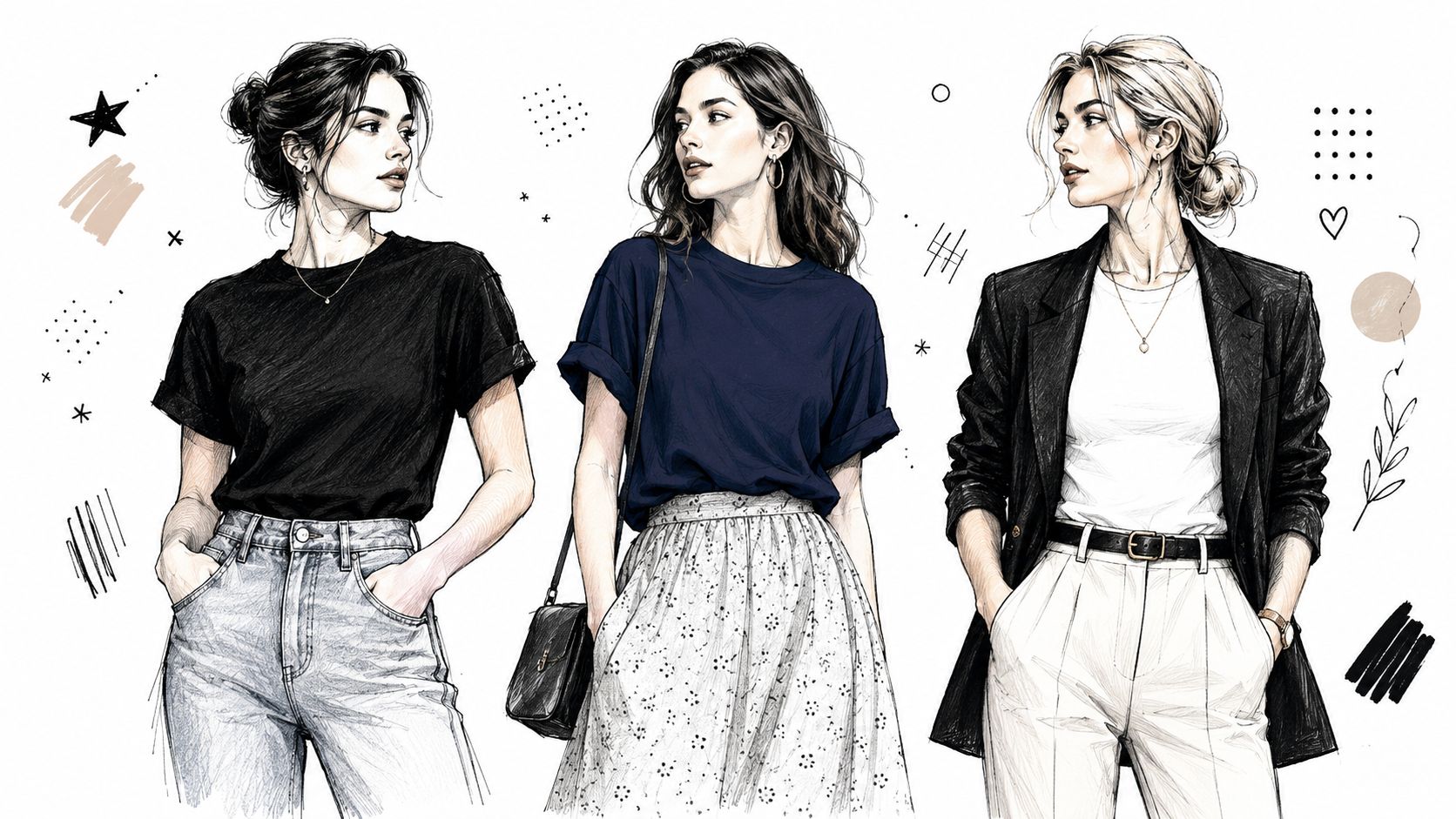
Start with a heavier-weight crew neck in black or navy. Tuck it into high-waisted wide-leg trousers, add a soft blazer over your shoulders and finish with a low block heel. The close neckline creates a clean base beneath tailoring, while the heavier jersey stops the tee looking like sleepwear.
Keep the bag structured but not formal. A medium leather tote works for a laptop and everyday essentials, and the block heel gives the outfit enough authority without turning a commute into an endurance test. If the office is cold, add a fine cardigan beneath the blazer rather than choosing a thinner tee that bunches under the jacket.
Choose a slub cotton relaxed-fit tee in ecru, faded blue or charcoal. Half-tuck it into straight-leg jeans, add a worn-in leather belt and finish with white trainers. Slub texture gives the outfit visual interest without making it look overplanned.
The cut should skim rather than cling. Roll the sleeve once if the arm opening is generous, but don't keep adjusting it throughout the day. A soft cross-body bag keeps the hands free, and a waxed jacket or trench makes the formula practical for a damp afternoon.
For a long journey, use a bamboo-blend scoop neck in a darker colour or muted earth tone. Layer it under a light merino cardigan on the plane, then wear it alone with linen trousers when you arrive. The scoop neckline adds shape without needing jewellery, and the smooth fabric sits comfortably beneath another layer.
Choose slip-on trainers and a lightweight tote with a secure closure. The outfit should move from station to café without looking like a tracksuit. For more ideas on building a small, useful wardrobe, see this guide to women's basics.
The trick in all three outfits is proportion. A fitted tee needs volume below or above it. A boxy tee wants a cleaner lower half. An oversized tee works best when at least one supporting piece, usually the trousers or shoes, remains visually restrained.
Start with the product page, not the retailer's reputation. A familiar shop can still sell a cut that doesn't suit your proportions, while a less familiar label may provide the measurements you need to make a sound decision.
UK shoppers have a broad retail field. M&S and Next are practical places to start for everyday cotton staples. Uniqlo is useful for technical jersey and Supima options. Toast, Baukjen and Thought suit shoppers looking for natural-fabric-led collections, while BAM Bamboo focuses on bamboo clothing. Peppervale offers UK online shopping across everyday clothing categories, including tops, with UK delivery and returns information available through its website.
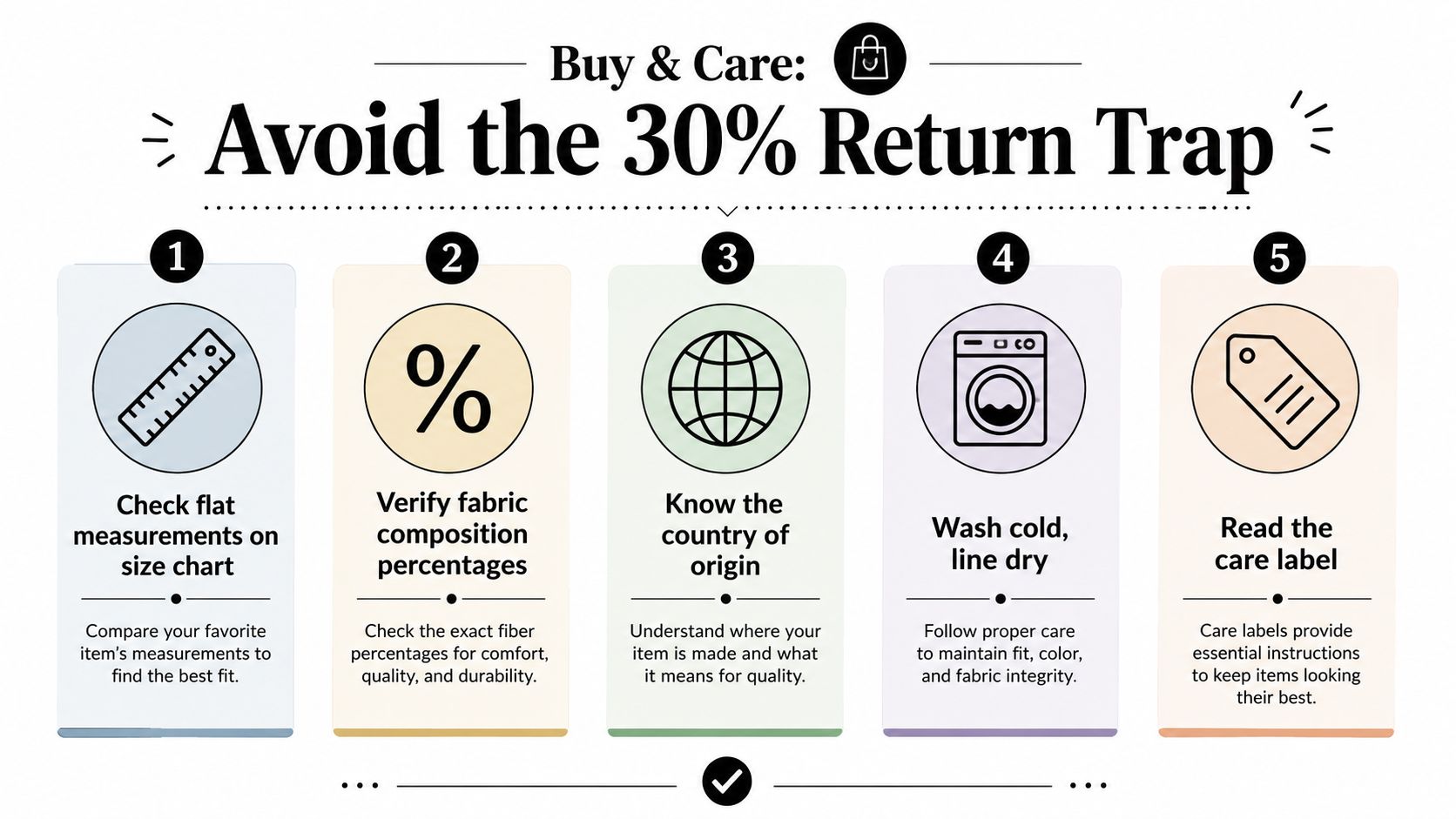
Wash T-shirts inside out at 30°C with similar colours, unless the care label says otherwise. Skip fabric softener on cotton and bamboo, because it can coat fibres and affect absorbency and hand-feel. Reshape the garment while damp, then dry it flat on a towel where possible.
Radiators provide tempting speed but can encourage uneven drying and distortion, particularly in soft knits. Store tees folded rather than hung, since hanger pressure can stretch the shoulders. Wash less aggressively when the garment isn't dirty, and air it between wears instead of treating every use as a full laundry cycle.
Here's a practical demonstration of how to handle everyday clothing care:
Take these five rules into every shop and product page:
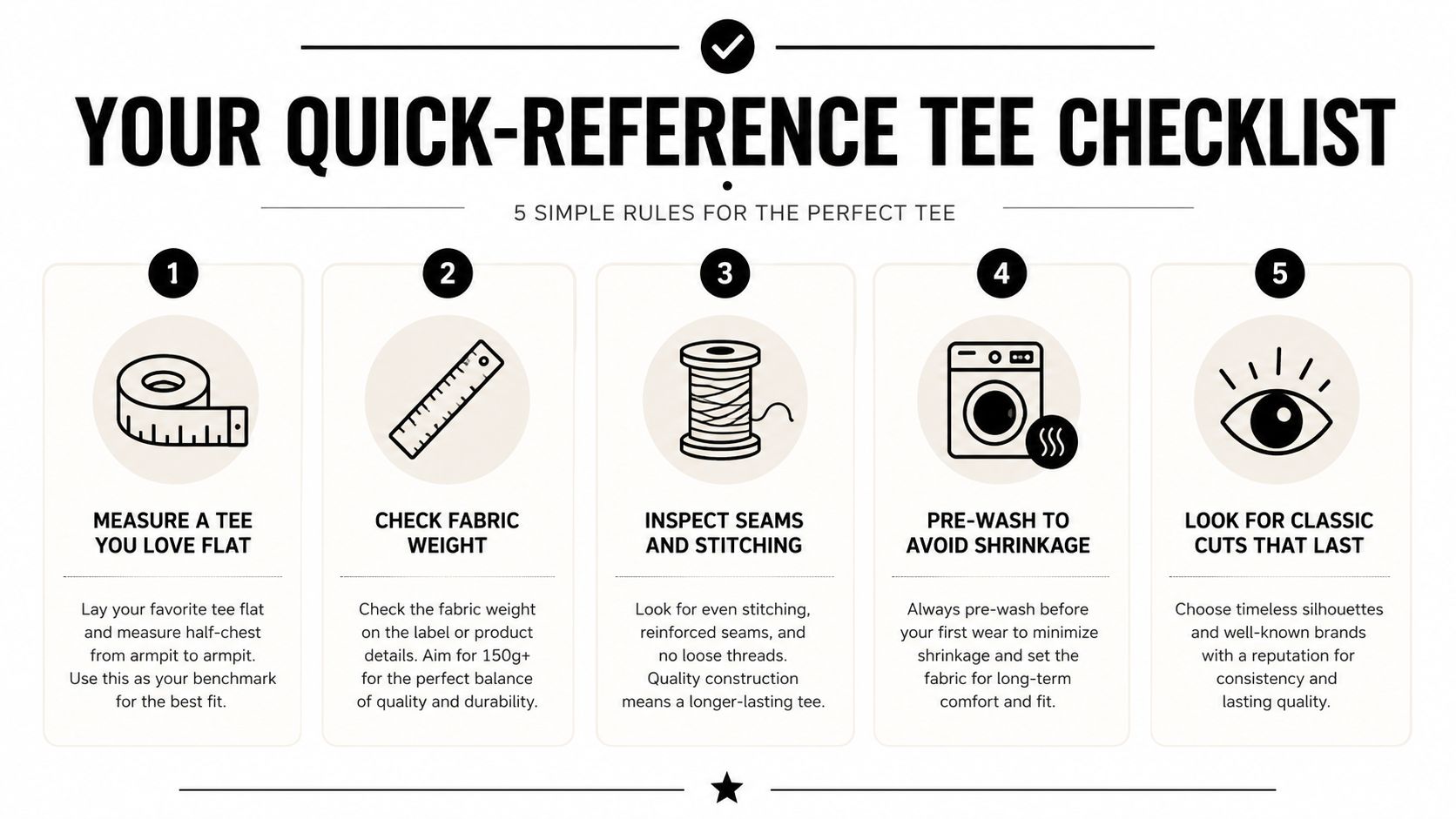
The next fitting-room visit should be shorter. Measure the garment, inspect the shoulder and neckline, check how the fabric behaves when you move, then leave the “maybe” pile behind. A T-shirt that fits on paper and in motion is far more likely to become the one you wear on repeat.
Peppervale offers everyday UK clothing, including tops, with online ordering, UK delivery and accessible returns information. Visit Peppervale to compare practical wardrobe pieces and choose your next T-shirt with the measurements, fabric and care details in mind.


