Share:

- Women
- Men
- Kids & Baby
- Workwear
- Footwear
- Accessories
- Home & Living
- Health & Beauty
- Pet Supplies

The perfect pair of women's leggings depends on matching fabric engineering and rise length to your body shape and intended activity, not just choosing your usual label. The UK women's tights and leggings market was valued at USD 1,029.0 million in 2021 and is projected to reach USD 1,638.8 million by 2028, so there's no shortage of choice, but more choice doesn't remove the need to understand fit. Grand View Research's UK market outlook places the category firmly in the mainstream.
Why, then, can a pair feel supportive in the changing room but turn sheer during a squat, slide down during a walk, or lose its shape after washing? The gap comes from variables most size labels and product titles barely explain: fabric stretch, opacity under tension, rise, inseam, waistband construction and stretch recovery. Treat leggings as engineered garments rather than simple pull-on trousers, and buying becomes much less mysterious.
Why can leggings with the same UK size label feel entirely different? The label shows where a retailer expects the garment to fit, but it says little about how the fabric behaves on your body. One pair may use a soft, low-tension knit, while another uses denser fabric with firmer compression.
The first trap is treating size as a fixed measurement. UK leggings sizing generally uses waist and hip measurements, and neighbouring sizes can overlap by 1–2 inches at those points, according to UK leggings size guidance. Stretch makes that overlap practical, yet the number on the label cannot predict comfort on its own.
A fabric with generous two-way stretch may be easy to pull on but lose shape after repeated movement. Four-way stretch can follow the body more closely, although it may feel restrictive when the pattern or waistband is too firm. Stretch recovery means the material's ability to return to its original shape after being pulled, bent or worn.
A pair can fit your waist and still feel wrong through the legs.
Rise creates another hidden variable. A high-rise style extends further over the abdomen and may feel secure during movement. A mid-rise style offers less coverage and may suit a shorter torso. If the rise is too short, the waistband can pull down at the back. If it is too long, fabric may bunch beneath the waistband.
Practical rule: If leggings ride down, don't assume you need a smaller size. Check whether the rise suits your torso and whether the waistband is gripping rather than stretching.
Opacity belongs in the fit check too. As fabric stretches across the seat and thighs, its knit structure becomes less dense and lets through more light. Leggings that look opaque while standing may become more revealing during a squat, lunge or deep bend. A movement check therefore gives a more reliable answer than a static mirror check, especially when choosing between casual wear and performance use.
Fabric labels often reduce a complex garment to a short fibre list. Cotton, polyester, nylon and elastane tell you what the material contains, but not how tightly it's knitted, how it manages moisture or how it behaves under tension.
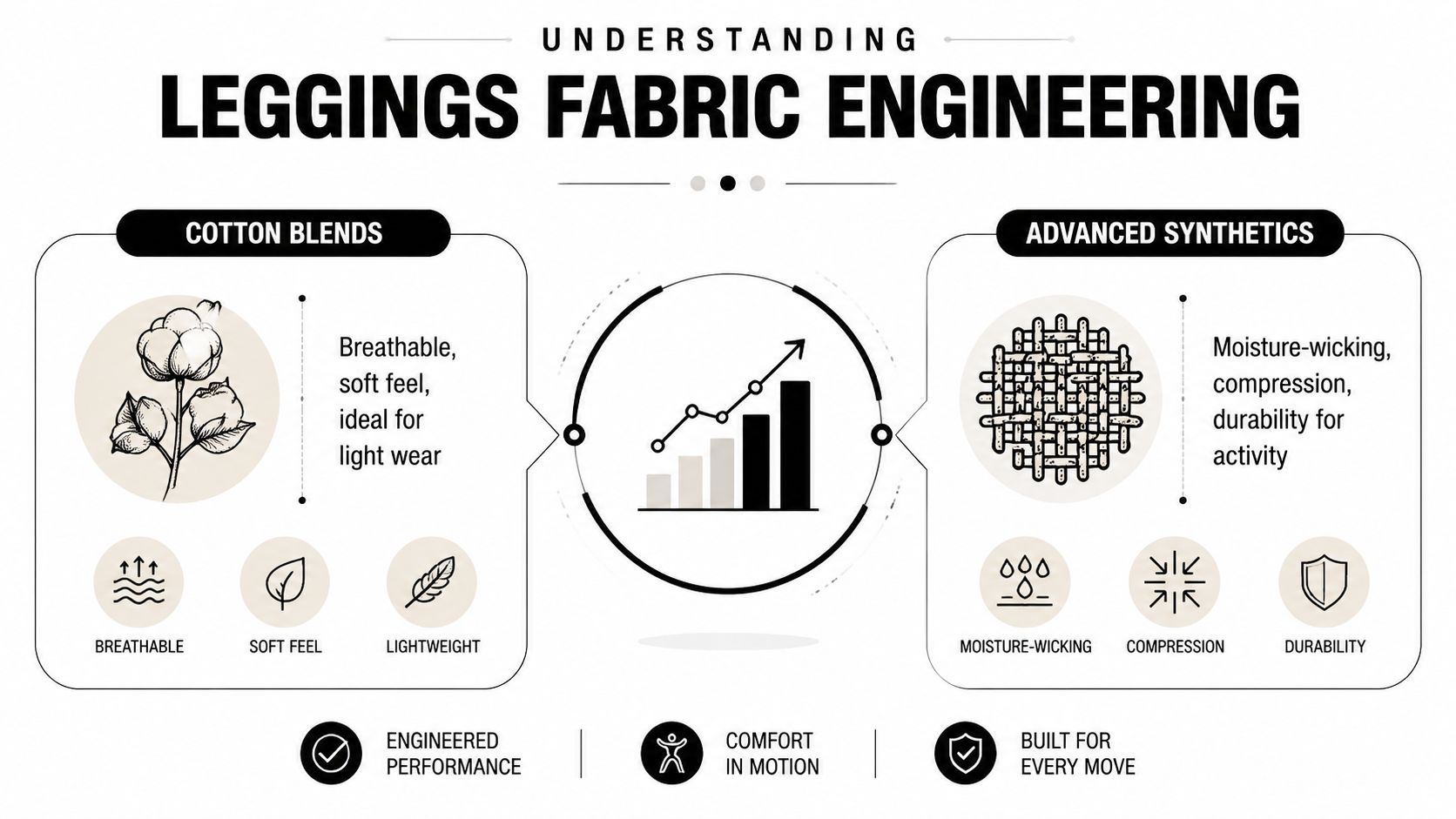
Cotton blends usually prioritise a soft, familiar hand feel. They're comfortable for lounging, gentle movement and everyday outfits, although cotton can hold moisture rather than moving it quickly away from the skin. A small amount of elastane can improve mobility and help the garment retain its shape.
Synthetic performance fabrics, often built from polyester or nylon with elastane, are designed around movement. Their knitted structure can support close body mapping, moisture transfer and compression. The word “wicking” should still be treated as a prompt to investigate, not proof of a particular result.
Blended technical fabrics combine different priorities. A natural-feel fibre may soften the surface, while synthetic fibres add strength and recovery. The right blend depends on whether you value a dry feel during exercise, a soft finish for all-day wear, or a balance of both.
Moisture management works through capillary transport, where liquid travels through small spaces in the fabric. UK apparel testing documentation describes wick tests that measure how far liquid moves through a fabric during a fixed time window. One testing manual specifies a benchmark of 50 mm after 3 minutes, showing that wicking can be assessed as a functional property rather than described only with words such as “fresh” or “dry”. The UK and EU apparel testing manual provides the technical context.
The test doesn't answer every comfort question. A fabric can spread moisture while a dense waistband remains damp, and a highly breathable knit may offer less coverage under tension. Look for the combination of moisture movement, stable recovery, suitable compression and opacity during movement.
| Fabric Performance Comparison | Moisture Management | Stretch Recovery | Best Use Case |
|---|---|---|---|
| Cotton blends | Comfortable, but may retain more moisture | Depends on the elastane content and knit | Lounging, errands and light movement |
| Synthetic performance fabrics | Often designed to spread moisture through the knit | Usually engineered for repeated movement | Gym sessions, running and active use |
| Blended technical fabrics | Can balance surface comfort with moisture transfer | Varies by fibre mix and construction | Wardrobes needing one versatile pair |
Could a familiar UK size label be hiding the reason your leggings feel wrong? A reliable purchase starts with a tape measure rather than memory of your last order. Measure your natural waist, the fullest part of your hips and your inside leg while wearing minimal clothing. Keep the tape level and close to the body, without pulling it tight.
Your waist-to-hip relationship affects fit because leggings must stretch over both areas. If your hips sit near the upper edge of one size while your waist sits near the lower edge, choosing by waist alone can put excessive tension across the seat. That tension may reduce opacity during movement or make the waistband dig in.
UK size charts commonly place UK 8 to 10 around 26–28 inches at the waist and 34–37 inches at the hips, while UK 12 to 14 can span about 28–30 inches at the waist and 37–41 inches at the hips. The UK leggings measurement guidance illustrates why labels overlap instead of creating rigid boundaries.
| UK Size | Waist (inches) | Hips (inches) |
|---|---|---|
| UK 8 to 10 | 26–28 | 34–37 |
| UK 12 to 14 | 28–30 | 37–41 |
Use the garment's own chart whenever possible, since brands can assign different measurements to the same nominal size. For a broader explanation of UK clothing measurements, compare it with this UK women's clothing size guide.
Inseam runs from the crotch to the hem. Petite, regular and tall descriptions show how a brand adjusts that measurement, but they are not universal standards. A cropped or 3/4 design may finish at the lower calf on one person and closer to the ankle on another, depending on height and leg proportion.
Rise runs from the crotch seam to the top of the waistband. A longer rise can reduce exposure when bending, while a shorter rise may prevent excess fabric on a shorter torso. Try sitting, squatting and lifting one knee. The waistband should remain stable without cutting into your abdomen or leaving a gap at the lower back. This fit check reveals problems that a standing mirror can miss.
A pair of leggings for a supermarket trip has a different job from a pair for a sweaty training session. Everyday comfort leggings usually prioritise softness, a relaxed supported feel and easy styling. Performance leggings prioritise moisture management, recovery, secure construction and movement control.
The mistake is expecting one fabric to deliver every benefit at maximum strength. An ultra-soft, lightly compressive fabric can feel excellent on a sofa or during travel but may feel less stable during repeated lunges. A dense performance knit can offer reassuring support yet feel warmer or more noticeable during a quiet day.
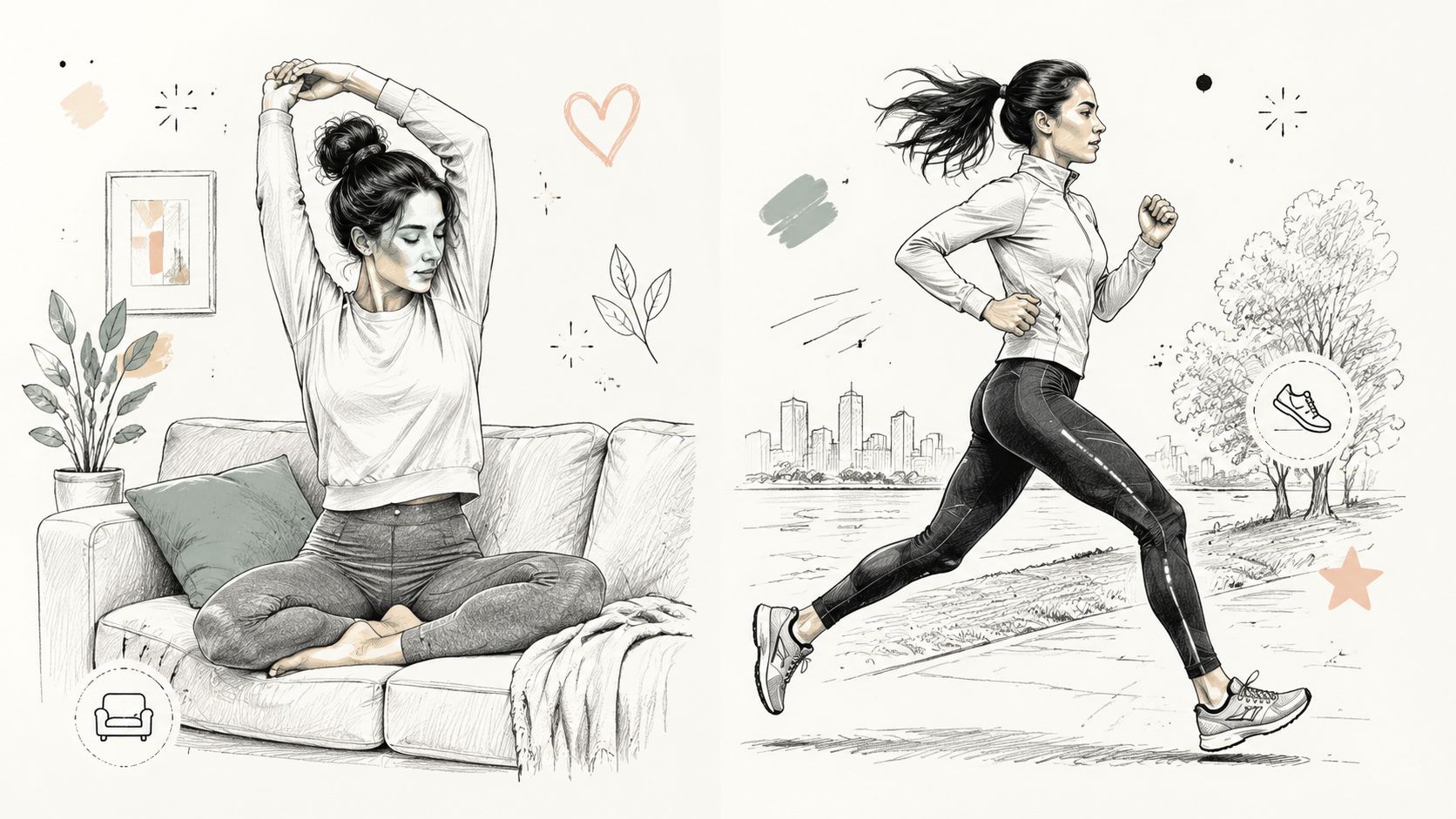
For lounging and errands, assess the waistband first. You want enough recovery to prevent sagging, but not so much compression that sitting becomes uncomfortable. A matte finish, practical pockets and a length that works with trainers can make the pair more useful than a highly technical design.
For running, gym work or demanding classes, check the movement points. Bend, raise your knees and rotate your hips. Look for fabric that remains stable across the seat, a waistband that doesn't roll and seams that don't rub. A technical pair should support movement without forcing you to keep adjusting it.
A versatile middle ground has a supportive waistband, moderate compression, dependable opacity and a fabric soft enough for ordinary wear. It won't replace a dedicated option for every activity, but it can serve a working week that mixes exercise with daily routines.
The UK activewear market has a broad women's end-use segment, and UK activewear market coverage identifies women as the largest revenue-generating end use in its 2025 projection. That breadth reflects varied needs, not a single definition of activewear. Use this women's activewear guide to think about the complete outfit rather than leggings in isolation.
Black full-length leggings can move through several settings when the surrounding pieces change. For a coffee run, try a longline sweatshirt, clean trainers and a structured cross-body bag. The longer top creates coverage, while the bag adds shape to an otherwise relaxed outfit.
For a casual office or informal meeting, choose a dense, matte pair rather than a shiny gym finish. Add a longer shirt, an unbuttoned overshirt or a softly structured blazer, then finish with loafers or simple ankle boots. The outfit works because the top layer supplies structure and the footwear signals intention.
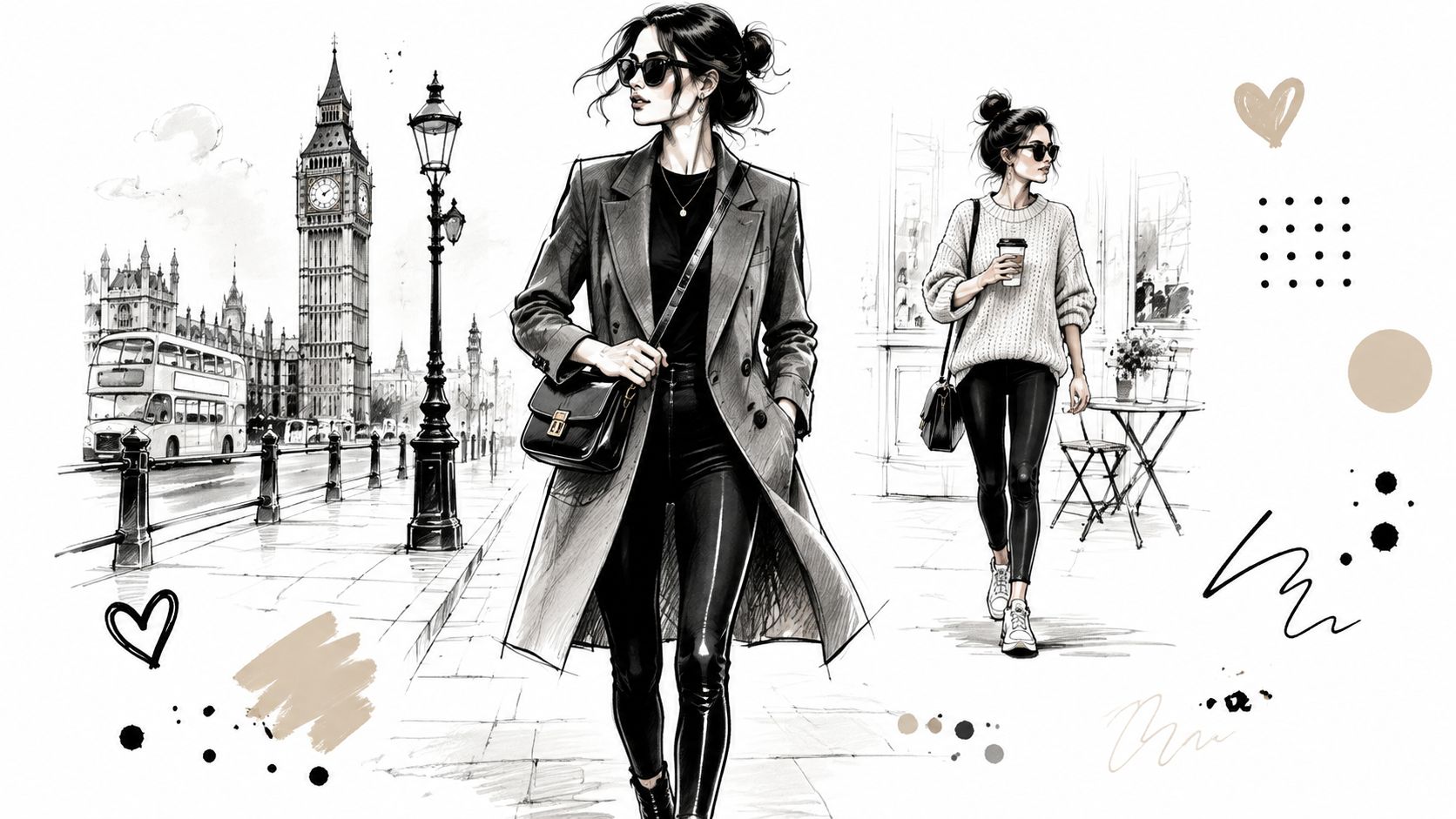
Full-length leggings create a continuous line into trainers, boots or socks. They're useful in cooler weather and can sit neatly beneath a longer coat. Cropped and 3/4 styles bring more attention to the lower leg, so balance them with a top that has some volume, such as an oversized knit or relaxed shirt.
A spring walk might pair cropped leggings with a breathable tee, lightweight waterproof layer and supportive trainers. For a weekend hike, choose a performance fabric, secure pockets and a hem that won't catch beneath footwear. For a relaxed home-to-town outfit, softer leggings can sit beneath a chunky cardigan with a simple tee.
Colour does the quiet work. Black, navy and charcoal combine easily with neutrals, while earth tones soften an outfit built around natural textures. If the leggings have a strong colour or visible seam detail, keep the top and accessories calmer.
After you've chosen the silhouette, use this practical guide on what to wear with leggings for more outfit combinations.
A final styling check should happen in motion. Walk, sit and reach before leaving the house. The most polished outfit is the one that stays comfortable without constant pulling or readjustment.
“Wash everything hot so it gets properly clean” sounds sensible, but high heat can be harsh on elastane and may accelerate loss of recovery. The care label should take priority, yet a cool or moderate wash, gentle detergent and restrained spin are generally kinder to stretch garments than aggressive heat.
Fabric softener can also be a poor match for technical leggings. It may leave a coating that changes the fabric's surface and interferes with the way moisture moves through the knit. Wash performance pairs separately from heavily lint-producing items when you can, and turn them inside out to reduce surface abrasion.
A tumble dryer can expose elastic fibres to heat and repeated mechanical action. Air-drying on a line or flat surface is usually the gentler choice, but avoid placing stretch leggings directly against intense heat. Don't wring them tightly. Press out excess water, reshape the waistband and seams, then leave the garment to dry naturally.
Storage matters too. Folding leggings keeps the waistband from being stretched unnecessarily. If you hang them, use a method that doesn't clamp or pull hard on one area of the fabric.
Inspect the seat, knees, inner thighs and waistband in bright light. Early signs include persistent bagging, fuzzy abrasion, thinning fabric or transparency that appears during ordinary movement. Once the knit has lost substantial recovery or opacity, washing it differently won't restore the original structure.
Care rule: Clean leggings according to their fibre and construction, then protect them from unnecessary heat, friction and stretching while wet.
Avoid storing damp leggings in a gym bag. Let them dry fully before folding, and wash them after heavy sweating rather than allowing moisture and odour to sit in the fibres.
Start with your actual week. If you mainly walk, travel and run errands, prioritise a soft everyday pair with a stable waistband, useful length and enough opacity for bending. If you train regularly, place fabric recovery, moisture management and secure construction higher on the list.
Use a simple purchase sequence:
A compact wardrobe doesn't need every style. One comfortable everyday pair, one performance-focused pair and one length or colour suited to your seasonal outfits can cover different needs without creating a drawer full of near-duplicates. Add another pair only when it solves a clear problem, such as a different inseam, stronger pocket design or warmer fabric.
Peppervale offers UK shoppers everyday clothing, including leggings and 3/4 trousers, alongside footwear, accessories and bamboo home textiles, with product availability, delivery and returns information provided online. Visit Peppervale to compare the current range, check measurements and choose leggings that fit your routine rather than relying on a label alone.


