Share:

- Women
- Men
- Kids & Baby
- Workwear
- Footwear
- Accessories
- Home & Living
- Health & Beauty
- Pet Supplies

You're standing in a UK bedding department, pressing a sample sheet between your fingers. It feels smooth, almost buttery. You buy it, wash it, sleep on it, and then the familiar problem appears. After a few cycles, the fabric feels rougher, warmer and less inviting than it did in the shop.
That's why choosing soft bed sheets in the UK isn't really a thread-count competition. The reliable choice comes from four things, fibre, weave, finish and wash care, with certification and honest labelling helping you avoid misleading claims. A sheet should feel pleasant on the first night, but it should also suit your sleeping temperature and remain comfortable after ordinary household washing.
A damp January evening in a Manchester terrace house is a demanding test for bedding. The heating has dried the bedroom air, the window is cold with condensation, and the sheet that felt luxurious in the shop is now rubbing against your skin in exactly the wrong way. You remember the sample swatch, but your bed tells a different story.
Softness at the point of purchase is only a snapshot. A fabric can be treated, brushed or heavily finished to create an impressive first touch, then lose that surface after washing. The better question is not “How soft is this today?” but “Why does it feel soft, and will that reason survive real use?”
British bedrooms also change throughout the year. Central heating creates dry indoor conditions in winter, while warmer, more humid nights make breathability and moisture movement more important. A dense sheet may feel cosy at first but become clammy for a warm sleeper. A crisp construction may feel too firm from the packet yet become more comfortable as it relaxes.
Practical rule: Buy for the conditions against your skin overnight, not for the sensation you get from a ten-second shop-floor touch.
Soft bedding also affects friction. A smoother surface can feel kinder against hair and skin, while a rougher or coarser construction becomes distracting when you turn over. UK shoppers already associate softness with wider quality perceptions. Cotton Incorporated's 2024 Global Home Textiles Survey, which included UK consumers, found that 78% considered softness a key bedding attribute, while 79% described cotton bedding as feeling the softest and 87% called it the most comfortable.
That connection matters. The UK's official inflation framework also tracks “05.2 Household textiles” as a distinct category covering items such as sheets, duvet covers and pillowcases, as shown in the ONS household textiles series. Bedding is an everyday purchase, not an obscure luxury category. If you're dealing with sensitive skin or comparing materials carefully, Peppervale's guide to hypoallergenic bedding in the UK is a useful companion.
Softness is a fabric result, not a single specification. Run your hand across a sheet and you're feeling the interaction of the fibre, the yarn, the weave and the finish. Treating thread count as the whole answer is like judging a jumper by the number of stitches and ignoring the wool.
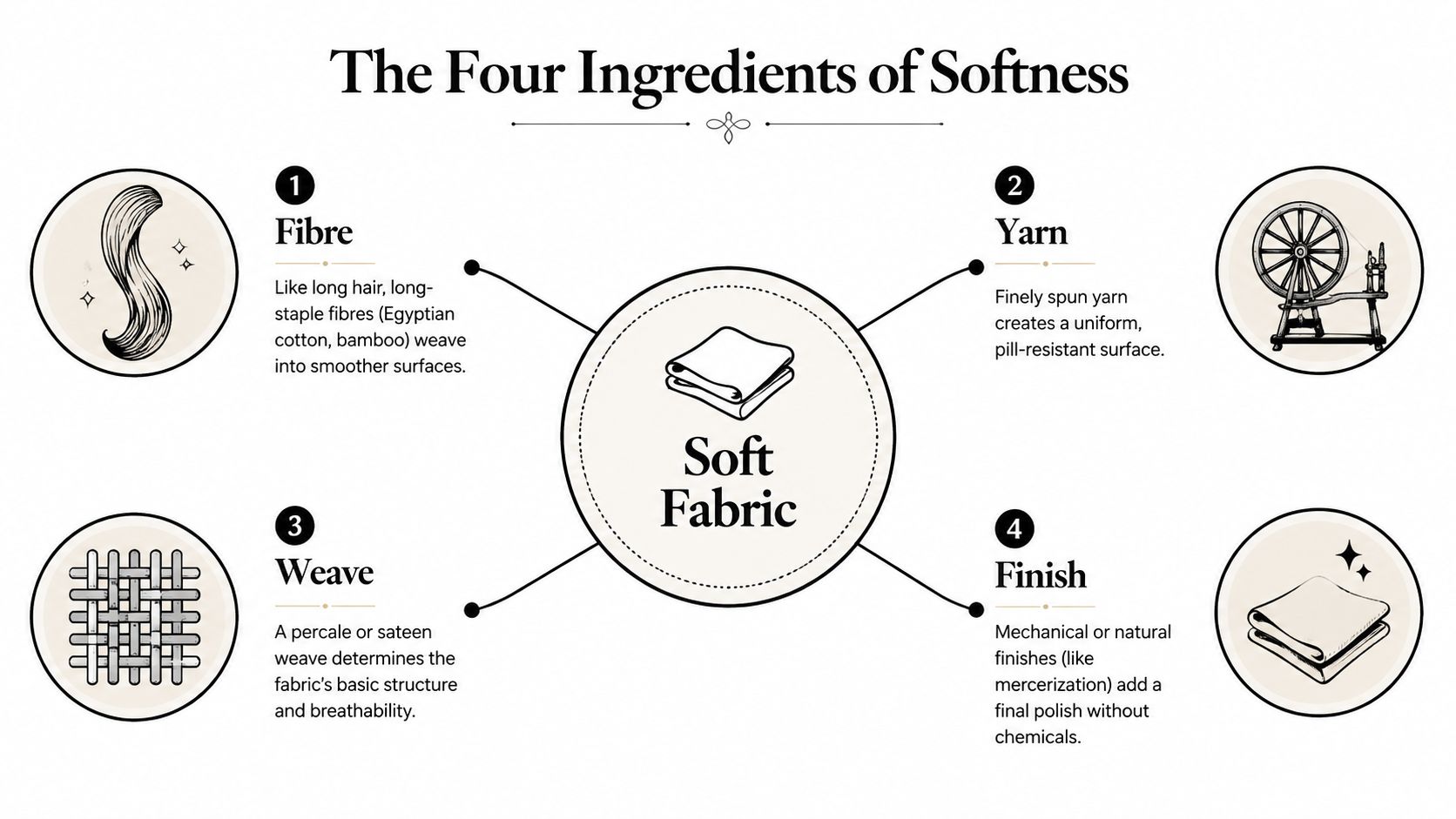
Fibre is the raw material. Long, smooth fibres can form a more even surface, while shorter fibres create more loose ends and a rougher hand-feel. Think of long-staple cotton or bamboo-derived fibres as long hair lying flat, compared with short fibres behaving more like stubble.
Bamboo viscose and lyocell are particularly strong choices if your priority is a silky, smooth feel. Long-staple cotton, including reputable Egyptian or Pima cotton, offers a softer surface with a more traditional cotton character. Linen often begins with a firmer, more textured hand, but it relaxes with use and washing.
The label matters more than the marketing name. “Bamboo bedding” can describe different constructions and blends, so look for the actual fibre composition rather than relying on the front of the packet.
Fine, evenly spun yarn creates a more consistent feel. A sheet made from rough, uneven yarn may feel scratchy even when its fibre type sounds premium. Yarn quality also affects how quickly the surface develops pills, although no label can replace proper care and regular washing.
Single-ply yarn uses one strand. Multi-ply yarn twists strands together, which can create strength but may also make a fabric heavier and less supple. A high thread count achieved through multi-ply yarn isn't automatically a sign of a softer sheet.
Percale uses a simple, balanced structure that feels crisp, matte and airy. It resembles a good cotton shirt, with a clean snap rather than a slippery surface. Sateen exposes more yarn on the face of the cloth, giving it a smoother, drapier feel that many shoppers describe as silky.
For soft bed sheets, UK buyers should choose based on touch and temperature. Sateen suits people who want fluid softness, while percale suits those who prefer freshness and structure. Jersey feels more like a T-shirt, but its stretch and knitted structure give it a different character from woven bedding.
Garment washing, brushing, enzyme washing and mercerisation can alter the surface. These processes may make a sheet feel softer or more polished, but the care label still determines how well that finish holds up.
Thread count only describes yarn density. UK bedding guidance places a practical comfort range around 300 to 600 thread count, while bamboo guidance commonly favours around 300 to 500, because fibre structure and weave do more of the work. Anything above 1,000 deserves scrutiny rather than automatic approval, as density can increase without improving hand-feel or durability. The English Home thread-count guide supports that more useful way to read the label.
No single material wins every category. Bamboo viscose usually wins the first-touch test, long-staple cotton offers a dependable balance of softness and durability, linen excels in heat management, and microfibre keeps the price down while accepting clear compromises.
| Material | Softness | Breathability | Care | UK Price |
|---|---|---|---|---|
| Bamboo viscose or lyocell | Very smooth and silky | Strong moisture management and airflow | Cooler, gentle washing preferred | Usually above basic cotton |
| Long-staple cotton | Soft, familiar and improves with use | Good, especially in percale | Generally straightforward | Mid-range to premium |
| Linen | Textured at first, softer over time | Excellent for warm sleepers | Creases easily and needs care | Often premium |
| Microfibre | Smooth and silky from the packet | Weaker, can feel warmer | Easy, but pilling and snags are concerns | Budget |
Choose bamboo if your main complaint is roughness, overheating or a sheet that feels unpleasant against bare skin. UK-facing bedding guidance commonly places bamboo bedding in the 300 to 500 thread-count range, because fine fibres can produce a soft, airy fabric without excessive density. The Glamour UK bedding guide also places fibre type, weave and weight ahead of a dramatic thread-count figure.
Bamboo-derived regenerated cellulose has a smooth handle and can move moisture away from the body effectively. That makes it a sensible fit for centrally heated flats and sleepers who swing between feeling cold at bedtime and too warm later.
Long-staple cotton is the safer choice if you want softness without changing the familiar cotton experience. Percale gives you a cool, crisp surface, while sateen adds more drape and glide. Good cotton often becomes more agreeable with washing, though the result depends on yarn quality and finishing.
Cotton also offers a more forgiving care routine than delicate regenerated fibres. If your household needs frequent, practical washing, that difference can outweigh a slightly silkier first feel.
Linen isn't usually the softest material straight from its packaging. Its appeal is different. It feels textured, airy and relaxed, then softens as the flax fibres settle through use. For hot sleepers, that breathability can be more valuable than a smooth hand-feel.
Expect creasing. That's part of linen's character, not a defect. If you want a rumpled, informal bed and dislike heat-trapping fabric, linen deserves serious consideration. Peppervale's guide to organic bed linen in the UK adds useful context for shoppers comparing natural options.
Microfibre feels attractive in the packet because its fine synthetic fibres create a smooth, slippery surface. It's often a budget-friendly answer for guest rooms or temporary use, but it can retain more heat and develop pills sooner than better natural or regenerated-cellulose options.
Buy it when upfront cost and easy handling matter most. Don't buy it expecting the same overnight breathability or long-term surface quality as well-made bamboo, linen or long-staple cotton.
A high thread count can look impressive on a UK product page and still produce a warm, stiff or short-lived sheet. Thread count measures how densely yarns are packed into fabric. It does not confirm fibre quality, yarn fineness, weave, finishing or overnight comfort.
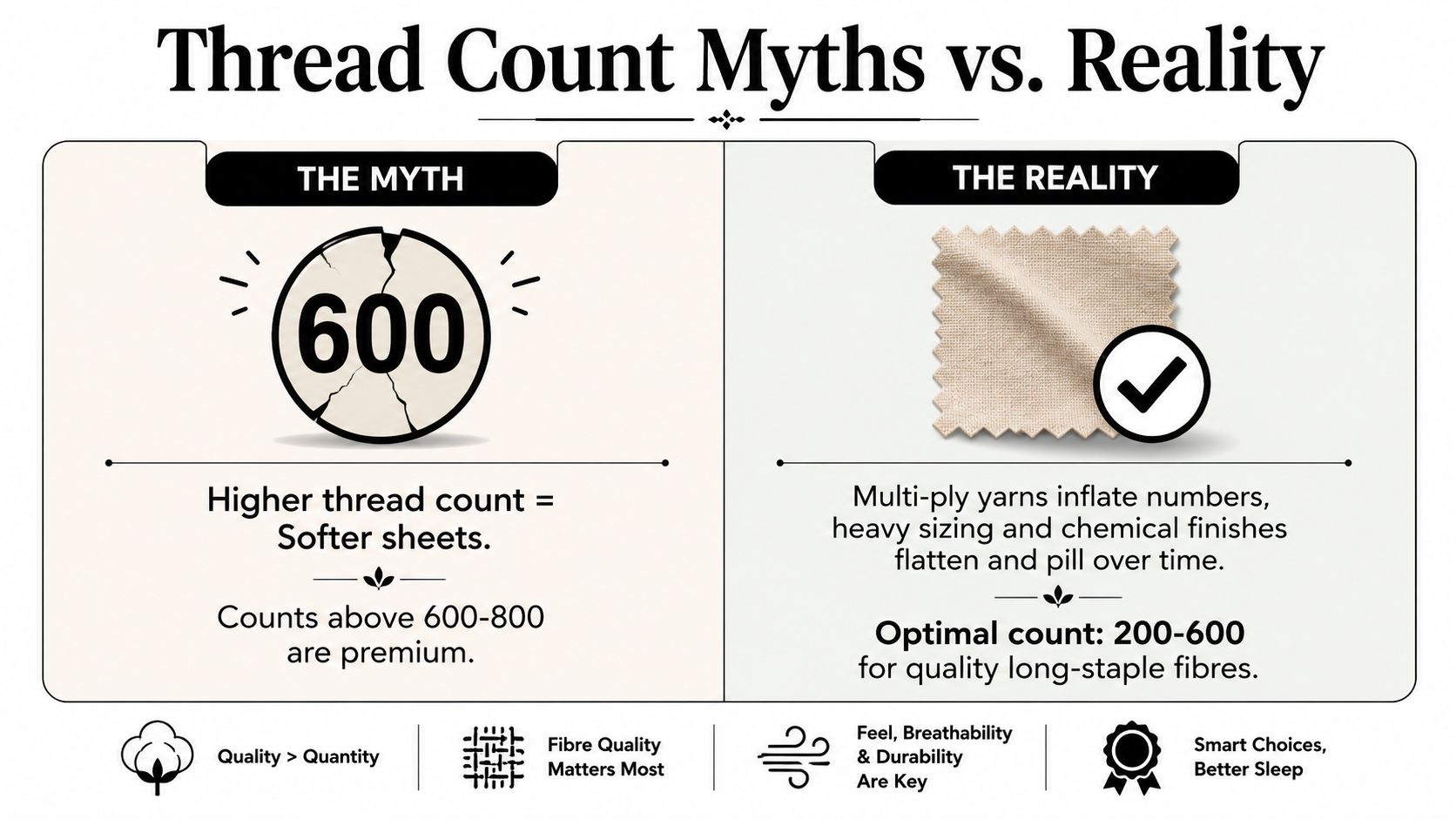
Use the cited guidance as a screening tool, not a softness guarantee. A well-made sheet with good long-staple fibre can feel smoother, lighter and more breathable than a denser product built around inflated figures. For UK sleepers, airflow matters alongside hand-feel, particularly if a heavy fabric leaves you overheated overnight.
Some manufacturers twist multiple yarns together, then count every component in the advertised total. That construction can create a heavier, denser fabric, while restricting airflow and making the sheet feel less flexible. Extra sizing or surface treatment may deliver a polished first touch, but washing can expose the underlying quality.
The UK thread-count guidance from The English Home helps shoppers assess construction rather than trust a “luxury” badge. Check the fibre, weave and yarn details before treating a large figure as an advantage. For bamboo, choose a clearly described fabric instead of paying for an extreme count.
Egyptian cotton should be supported by clear composition and origin information. A vague label does not prove that the sheet contains high-quality Egyptian cotton.
Softened finish describes treatment at the point of sale, not how the fabric will feel after repeated washing. Check how the sheet should be laundered. If the routine does not suit your household, the initial smoothness may not last.
Silk-like microfibre describes touch only. Microfibre can feel slippery while retaining more warmth than breathable natural or regenerated fibres, and pilling can alter its surface over time. Buy it for low cost and easy handling, not for silk-like sleep performance.
A product page can make a sheet sound luxurious without giving you enough information to judge it. Use this sequence before you click “add to basket”, and reject any listing that hides the details.
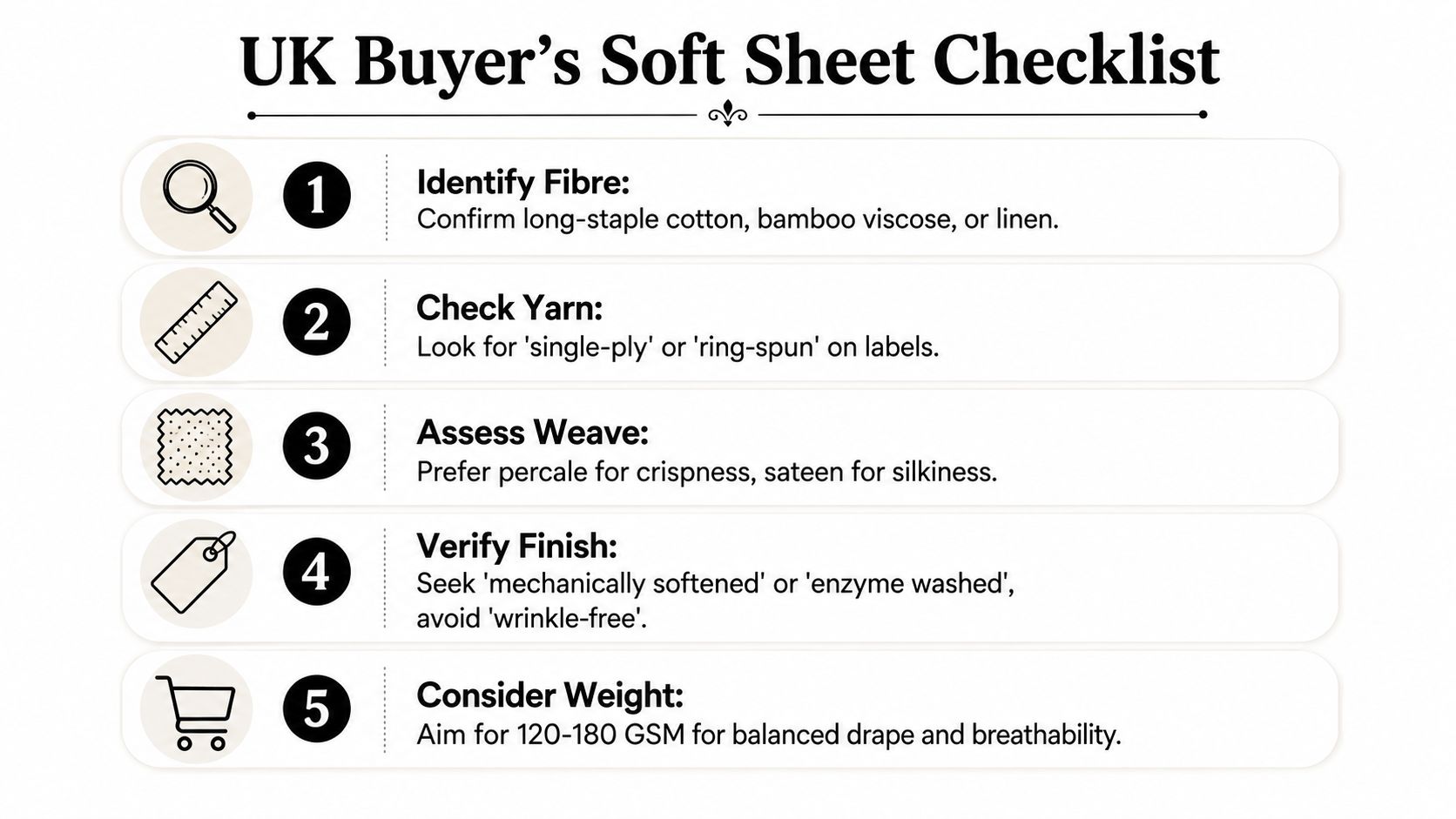
The final test is practical. Can you identify the fibre, weave, construction, certification and care routine without contacting the seller? If not, the product page hasn't earned your confidence.
For a softness-first buyer, bamboo viscose is the strongest default. It offers the smooth, fluid touch people often want from sateen, while remaining more suitable for warm sleepers than an overly dense sheet. It isn't magic, but its fibre structure gives it a clear advantage over many basic cotton and microfibre options.
Bamboo-derived cellulose is processed into fine fibres that create an even surface. That explains the immediate softness rather than a heavy coating trying to imitate it. The material can also handle moisture well, which matters in UK homes where bedrooms may move from centrally heated and dry to warm and humid as the seasons change.
Cotton sateen can feel luxurious, but dense sateen may become warmer than expected. Bamboo sits closer to a smooth brushed sateen in touch while retaining a lighter, airier character when the construction is well chosen.
Percale cotton is cooler and crisper, so it remains the better choice if you dislike drape or prefer a fresh hotel-sheet feel. Linen is cooler still and develops its own softness over time, but it begins with a noticeably more textured surface.
A 2024 sleep review discussed by BelleDorm's bedding and sleep-quality guidance links fibre choice with sleep quality, especially in warm conditions. The National Bed Federation's 2024 survey also found that 49% of purchasers prioritised comfort, while 18% prioritised a mattress suited to the season. Those findings support a practical conclusion: bedding should help manage the sleep environment, not just feel pleasant in a shop.
Bamboo viscose usually costs more than basic cotton or microfibre. Quality also varies, so check whether the sheet is 100% bamboo viscose or lyocell, inspect the weave and confirm the certification details.
Care is the other trade-off. Cooler, gentler washing helps preserve the smooth surface, and harsh detergents or excessive heat can shorten its useful life. If you're prepared to follow that routine, bamboo is the most convincing all-round choice for UK sleepers who want softness, airflow and moisture management in one sheet.
For a more detailed buying comparison, use Peppervale's guide to the best bamboo sheets.
Softness is partly a buying decision and partly a laundry habit. Even a well-made sheet can become rough, lose drape or develop pills if you wash it too hot, overload the drum or coat it in fabric softener.
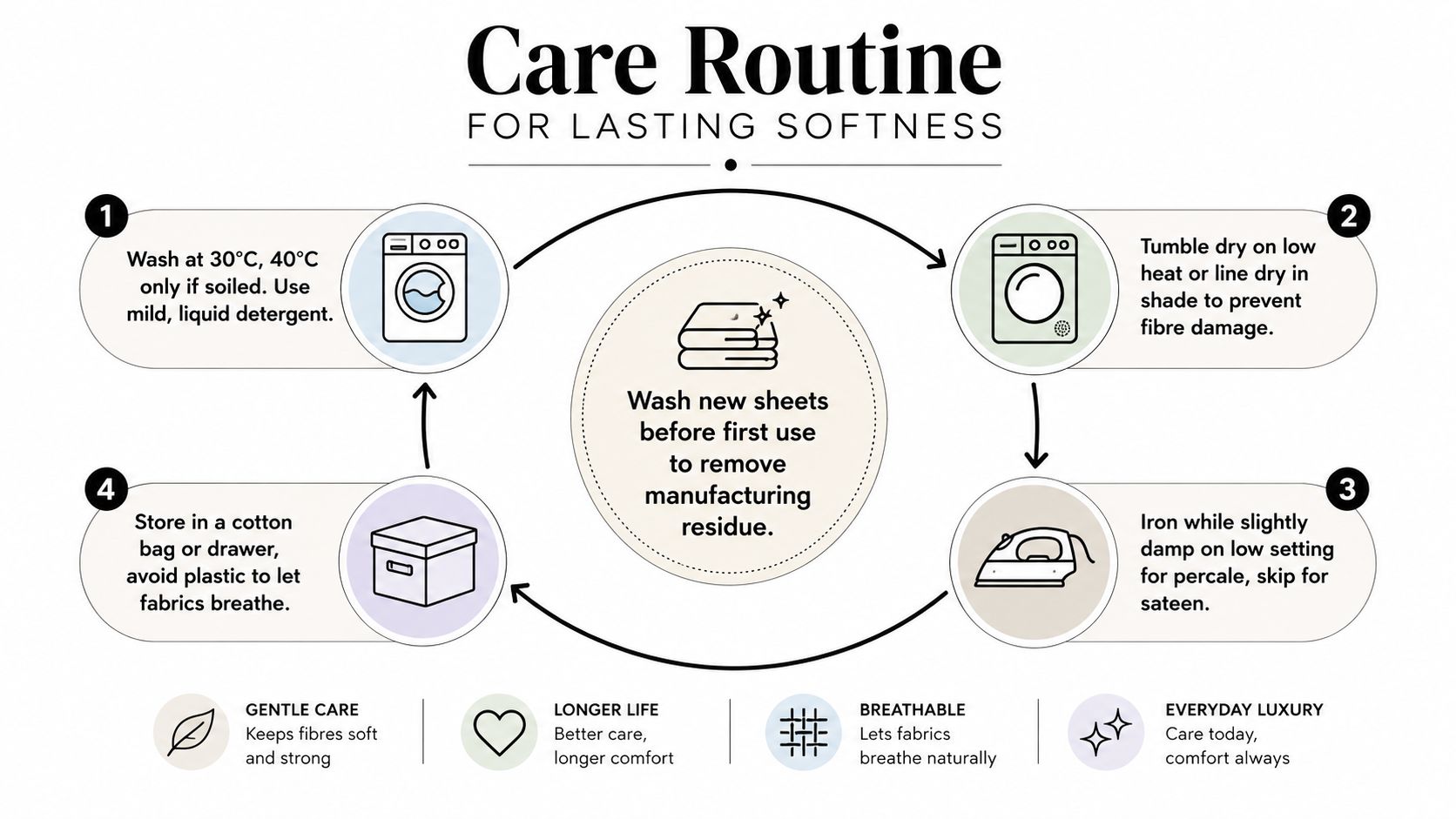
Start with 30°C for most routine washes. Use 40°C when the fabric is soiled and the care label allows it. Bamboo benefits from cooler, gentle cycles, while cotton may offer more flexibility.
Choose a mild liquid detergent and skip fabric softener. Softener coats the fibres, which can reduce absorbency and interfere with the fabric's natural breathability. Wash sheets separately from rough towels, zips and abrasive garments whenever possible.
Don't pack the drum tightly. A crowded machine prevents proper rinsing and creates unnecessary friction, both of which can encourage pilling. Use a moderate spin setting, especially for lighter bamboo constructions.
Line drying is the kindest option when weather and space allow. In winter, avoid leaving damp sheets in a poorly ventilated room, where they can remain wet for too long. Air them on a bright day without prolonged, harsh direct sun, then bring them in as soon as they're dry.
If you use a tumble dryer, select low heat. A short low-temperature cycle can fluff the fibres without the damage caused by excessive heat. Remove sheets promptly and fold them while they're still warm to reduce deep creases.
Percale can be ironed while slightly damp on a low setting if you want a sharper finish. Sateen usually looks better with minimal handling, so steam lightly or accept its natural drape.
Laundry shortcut: Wash new sheets before their first use. It removes manufacturing residue and lets you judge the fabric's real hand-feel rather than the packet finish.
Fold and rotate your sets instead of wearing the same one repeatedly. Store them in a breathable cotton bag or a dry, ventilated drawer, never sealed plastic. For microfibre, a wash bag can limit snags and reduce contact with rougher items.
Stop shopping from the largest number on the product page. Use three filters in order.
Choose the fibre first. Bamboo viscose or lyocell is the strongest choice for smoothness and temperature management. Long-staple cotton is the dependable alternative if you want familiar durability. Linen is the specialist option for maximum airflow and a relaxed texture.
Choose the weave second. Sateen gives you a silkier, more fluid surface. Percale gives you crispness, lightness and a cooler feel. The right answer depends on whether you want to sink into the fabric or sleep beneath it.
Verify construction and care third. Check the composition, yarn information, certification and wash label. OEKO-TEX STANDARD 100 adds useful reassurance around harmful-substance testing, while GOTS is relevant when certified organic production is part of your buying priorities. A lower or mid-range thread count from a well-described fabric is more convincing than a dramatic number with no construction details.
Before ordering, measure your mattress depth, including any topper. Decide whether your priority is silky softness or crisp freshness, then set a realistic budget for the set you'll use most often. Check delivery, returns and availability as carefully as the fabric details.
UK shoppers can apply this framework to bamboo ranges from Peppervale or to products from other retailers. The retailer matters less than whether the sheet clearly states what it is made from, how it is woven, how it should be washed and which certification supports its claims.
The best soft bed sheets in the UK aren't just the ones that feel smooth under your hand. They're the ones that stay comfortable across changing temperatures, move moisture away from your skin and remain manageable in a real household laundry routine. Choose the material and construction first, and softness becomes a reliable result rather than a shop-floor gamble.
Peppervale offers 100% bamboo duvet covers, fitted sheets and pillowcases for UK shoppers looking for a smooth, breathable bedding option, with product availability and UK delivery information shown online. Visit Peppervale to compare the bamboo bedding range and choose the pieces that match your mattress and preferred feel.


