Share:

- Women
- Men
- Kids & Baby
- Workwear
- Footwear
- Accessories
- Home & Living
- Health & Beauty
- Pet Supplies

You've found the right-looking top online, but the moment you step into daylight, the white fabric tells a different story. The neckline sits well, the sleeves are useful, and the price seems sensible, yet the bra line shows through and the lightweight jersey clings under a jacket. For UK shoppers, that's the decision: finding a long sleeve white top that looks smart, feels comfortable and gives enough coverage for changeable weather.
A white long-sleeve top can rescue several ordinary wardrobe problems at once. Wear it with jeans for a school run, tuck it into trousers for work, or use it beneath knitwear when the morning is cool and the afternoon turns mild. The same simple layer can also sit comfortably in a family wardrobe, provided each wearer gets the right cut, size and fabric weight.
That versatility helps explain why long-sleeve tops have become a core part of the UK clothing market rather than a niche item. One major UK retailer listed 221 long-sleeve women's tops online at the time of capture, while another category view showed 48 of 221 items currently visible, evidence of a broad, segmented assortment rather than a small seasonal range. You can see that variety in the pricing too, from £4.00 to £8.00 on one high-street platform to roughly £12.50 to £30 across other UK retailers. (New Look's long-sleeve jersey top category)
The white version works particularly hard because it acts as a neutral base. It can soften a dark workwear outfit, brighten denim, or create a clean foundation beneath a cardigan without competing with a patterned scarf or statement accessory. In Britain's cooler, changeable climate, sleeves also give you more flexibility than a short-sleeve top worn alone.
The item's staying power reflects a wider move from formal, structured dressing towards layered, lower-cost basics that can work throughout the year. The current online assortment suggests that shoppers now treat long-sleeve tops as everyday essentials across casualwear, workwear and layering.
The cheapest option may be useful for occasional layering, but a denser jersey can offer better coverage when worn on its own. A close-fitting rib can sit neatly under knitwear, while a relaxed cotton top may feel more comfortable for casual wear. The key trade-off isn't price versus style. It's opacity, fabric weight, fit and intended use.
Peppervale's catalogue includes clothing alongside kids and baby, workwear, footwear, accessories, home and living, health and beauty and pet supplies. That broad setting is useful when you're building a practical order around everyday needs, but you should still judge each item from its live product details rather than assuming that every white top has the same construction.
A long sleeve white top is more than a short-sleeve T-shirt with extra fabric added. Its sleeve length, shoulder position, neckline, hem and knit structure all affect how it feels and how it layers.
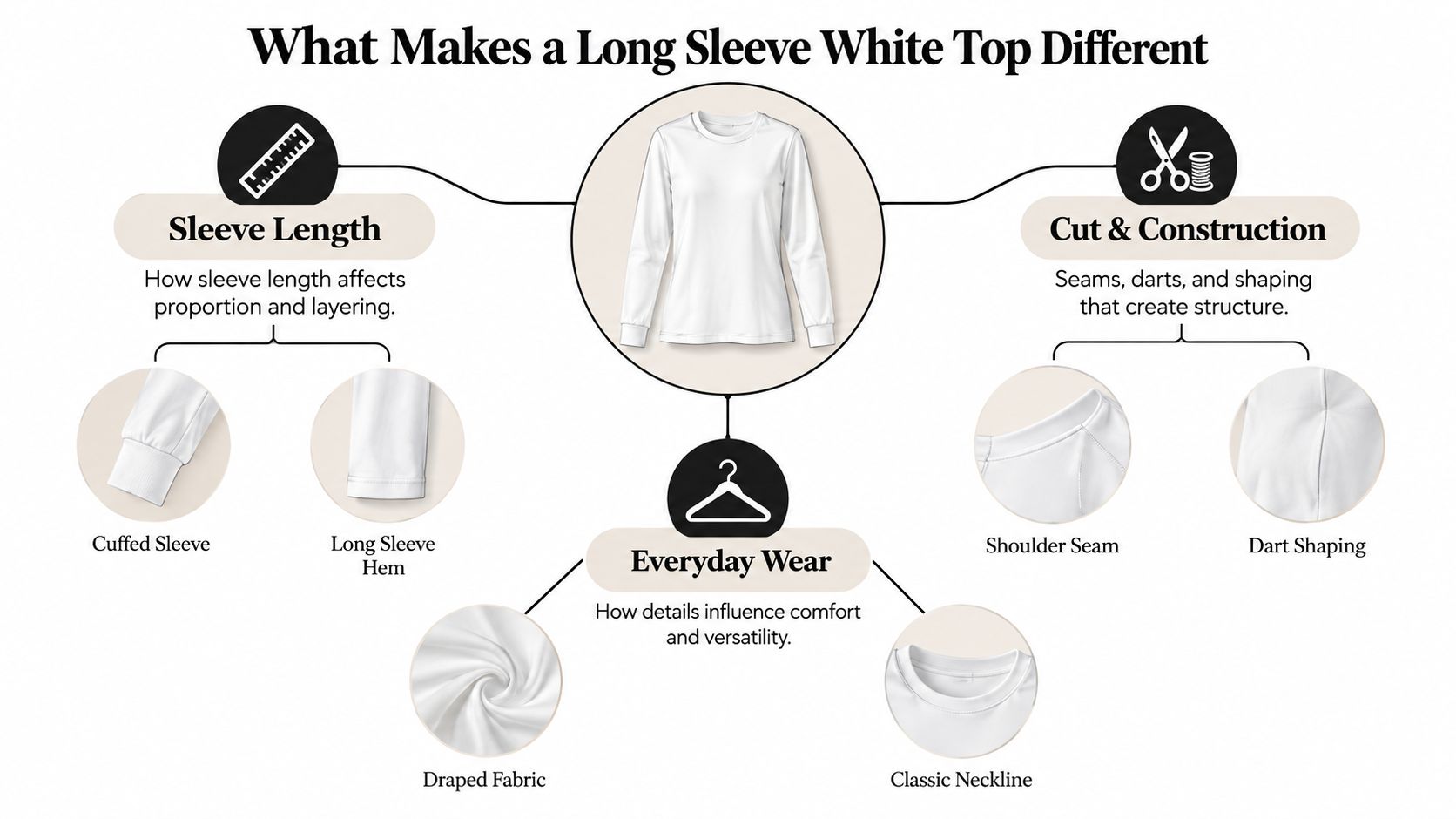
Look at the shoulder seam first. A seam that ends close to your natural shoulder usually gives a cleaner, more structured outline. If it drops down the arm, the top will look more relaxed and may feel easier over a vest or camisole, but it can also add visual volume beneath a fitted coat.
The sleeve itself can finish in several ways. A simple open hem gives a casual feel and may sit comfortably over the hand. A cuff holds the sleeve in place and often works better beneath knitwear. A fitted sleeve follows the arm closely, while a wider sleeve creates room but may bunch under a jacket.
The neckline changes the top's role too. A crew neck gives a familiar T-shirt shape and offers useful coverage. A scoop neck opens the upper chest slightly and can make a layered outfit feel lighter. A higher neck can provide a more enclosed look, but it may feel less comfortable if you dislike fabric close to your throat.
Seams and shaping tell you how the garment is meant to sit. Side seams keep a basic jersey top simple and easy to style. Darts, curved seams or a shaped hem create more structure, which can make the piece feel closer to a blouse or fitted base layer.
White fabric also behaves differently from darker colours. Small variations in knit density, stretch or tension are easier to notice, particularly in bright daylight. A top that looks opaque under shop lighting may reveal more when you move near a window.
Practical rule: Treat white as a performance choice, not only a colour choice. Check how the fabric is made before deciding whether it can be worn alone.
For layering, choose a smooth body and sleeves that won't create bulky ridges beneath knitwear. For standalone wear, look for a fabric with enough body to cover comfortably and a hem that stays in place when you sit or reach. For casual dressing, a relaxed cut may be more forgiving. For workwear, a neater shoulder and stable neckline can look more polished.
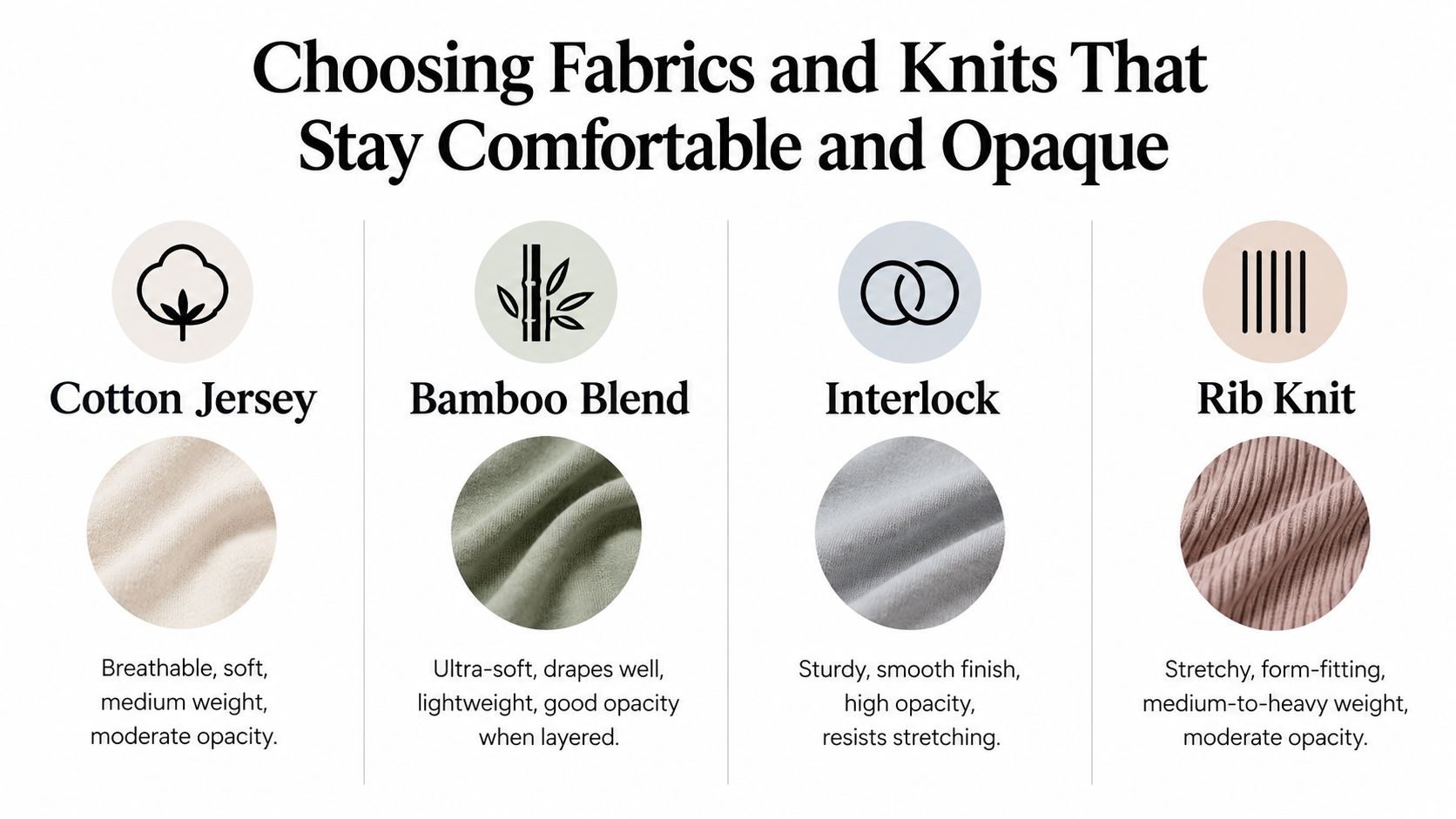
Fabric choice decides whether a white top feels dependable or disappointing. Weight, density and stretch all affect show-through, while the fibre mix influences softness, breathability and care. A lightweight fabric may feel pleasant indoors but need another layer in strong daylight, whereas a denser knit can work on its own.
| Fabric or Knit | Best For | Opacity and Weight Note | Care Consideration |
|---|---|---|---|
| Cotton jersey | Everyday wear and breathability | Soft, medium weight and moderately opaque | Follow the care label and expect the fabric to need careful handling to retain its shape |
| Bamboo blend | Soft layering and a fluid drape | Lightweight, with good opacity when layered | Check the product instructions because blends can have specific washing needs |
| Interlock | Standalone wear and dependable coverage | Sturdy, smooth and highly opaque, with good resistance to stretching | A stable knit may keep its shape well, but the live care label remains the authority |
| Rib knit | Close-fitting base layers | Stretchy, form-fitting and medium to heavy weight, with moderate opacity | Stretch can change how the white fabric covers, so wash and dry it as directed |
The important distinction is between a fabric that feels thick in your hand and one that has a dense, even knit structure. A heavier GSM generally improves coverage and reduces show-through, particularly when the top is worn in bright daylight. An interlock or substantial jersey may therefore be more useful than a very light, smooth fabric that only looks refined on a product image.
Cotton jersey remains a sensible all-rounder for people who want a breathable, familiar feel. Bamboo blends can drape attractively and feel soft, but a lightweight version may work best under another layer. Rib knit offers stretch and close contact, though its vertical texture can reveal more of the outline beneath it if the fit is too tight.
Product pages don't always use the same language for weight or opacity. Look for descriptions such as interlock, heavyweight jersey, dense knit or opaque, but don't treat a general colour description as proof of coverage. If the page gives a material composition, use it to understand feel and care, not as a guarantee that the top won't show through.
For readers interested in making or adapting clothing, these quilting cotton garment sewing tips provide useful context on choosing suitable cotton for apparel projects. The principles around handle and construction can help you think more clearly about why some fabrics feel better for a garment than others.
You can also compare the top with other everyday layers through Peppervale's women's activewear collection, particularly if you want a close-fitting piece for movement or layering. Check the live listing rather than assuming that an activewear item has the same opacity or finish as a casual top.
Choose cotton jersey when breathability matters most, interlock when coverage is the priority, rib when you want a fitted base layer, and a bamboo blend when softness and drape matter. If you'll wear the top alone, favour density and body. If it will sit under knitwear, a lighter, smoother construction may be more comfortable.
Size labels can only take you so far. A well-fitting long sleeve white top should sit correctly at the shoulder, allow comfortable movement through the arms and give you the amount of body coverage you need.
Stand naturally and inspect where the shoulder seam rests. If it sits far beyond your shoulder, the garment has a deliberately relaxed cut or is too large. If it pulls towards the neck, the size or shape may be too small. The seam should feel comfortable when you lift your arms, without dragging the neckline backwards.
Next, raise both arms and reach forward. The sleeve should move with you rather than exposing the wrist immediately or pulling tightly across the upper arm. If you'll wear a watch, bracelet or jacket, allow enough room for those layers without creating uncomfortable pressure at the cuff.
A body-skimming top follows your shape without pulling across the chest or stomach. It usually looks tidy beneath a blazer or cardigan. A relaxed top leaves more room and can feel easier for casual wear, but excess fabric may bunch beneath fitted knitwear.
Use the intended outfit to make the choice. For a white top beneath a work jacket, smooth and lightly fitted often works best. For jeans or loungewear, a softer relaxed shape may look more natural. Parents buying across women's, men's, kids and baby ranges should compare the measurements and fit notes on each individual product page rather than transferring expectations from one category to another.
The UK women's clothing size guide can help you organise your measurements before comparing a live listing. It shouldn't replace the product's own measurements, particularly where brands use different cuts.
Try the top with the underwear you're most likely to wear underneath it. Stand near a window, turn sideways and lift your arms. Check the bust, side seams, upper back and sleeves, because movement can change how the knit stretches.
White should be checked in the light where you'll actually wear it, not only beneath flattering indoor lighting.
If the outline is visible, consider a denser fabric, a slightly more relaxed fit or a suitable camisole. Don't automatically size up to hide show-through. A larger size may improve coverage at the body but create loose shoulders and excess fabric at the sleeves. The better answer is often a more opaque construction.
The most useful white top changes role with the weather. A lighter layer can sit beneath knitwear, while a denser one can become the visible centre of an outfit. Choose the outfit around the fabric's weight, not around the colour.
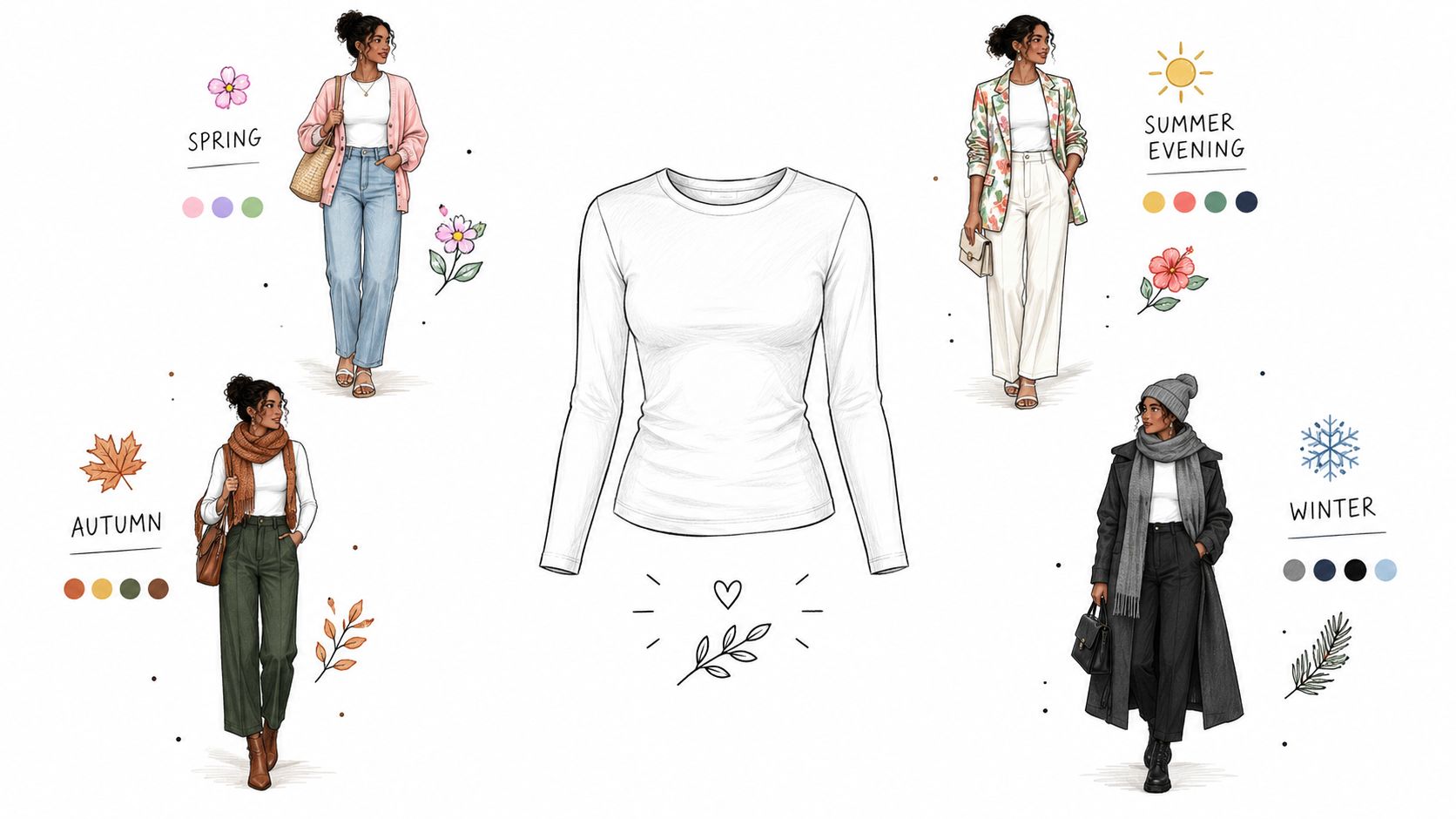
For spring, pair a medium-weight white top with denim or practical trousers and add a lightweight jacket that can come off as the day warms. A neat crew neck keeps the outfit simple, while a textured accessory gives the neutral base more interest.
On a cool summer evening, choose a lighter jersey beneath an overshirt or cardigan. The long sleeves give you coverage without the bulk of a heavy jumper. If the fabric is quite sheer, treat the top as a layer rather than an independent blouse and choose a smooth base beneath it.
Autumn is where fabric weight becomes especially useful. A dense cotton jersey or interlock can sit beneath a cardigan, shacket or workwear jacket without looking flimsy. Keep the bottom half simple if the outer layer has a strong pattern, or use the white top to brighten darker seasonal colours.
For a more fitted combination, rib knit can work under a jacket because it follows the body. Check that it isn't stretched so tightly that the white becomes translucent across the bust or arms. A slightly relaxed base layer may be more comfortable for long days.
You'll find more everyday outfit foundations in Peppervale's women's basics collection. Use the live catalogue to compare current shapes and details rather than planning around an item that may no longer be listed.
In winter, the white top can provide a clean layer beneath knitwear, a blazer or a practical overshirt. A higher neckline can feel more enclosed, while a crew neck is easier to pair with scarves and open collars. For work, combine a smooth white top with trousers or a skirt and add a structured outer layer.
Footwear changes the message of the outfit. Casual shoes keep the look relaxed, while a more formal pair can make the same top suitable for a smarter setting. If your day includes outdoor work, choose clothing and footwear from the relevant live workwear categories rather than treating a fashion top as protective equipment.
Here's a short visual guide to combining proportion, layers and seasonal texture:
The strongest outfit formula remains simple: dense white top worn alone, lightweight white top worn beneath another layer. That approach keeps the garment useful across seasons and avoids asking a thin knit to provide coverage it wasn't designed to provide.
Measure your chest, waist and relevant length while wearing light clothing, then compare those measurements with the live product information. For sleeves, measure from the shoulder point down the arm with the arm relaxed. If the product page gives garment measurements, compare them with a top you already own and like.
Follow the care label on the product page and garment. Separate whites from colours, especially for the first washes, and avoid adding a new white top to a load that could release dye. The correct temperature depends on the fabric and construction, so a higher setting isn't automatically better.
Optical brightening agents can affect how white textiles appear. UK textile guidance recommends measuring white textiles with CIE D65 illumination and UV-controlled spectrophotometry where fluorescent whitening agents are present, because uncontrolled UV can change the apparent reading. (UK guidance on instrumental colour measurement of textiles)
That laboratory point has a practical lesson at home. Judge colour and coverage in ordinary daylight, and don't rely on a fabric looking exceptionally bright beneath artificial lighting.
Avoid twisting a wet jersey top aggressively. Reshape it while damp and dry it according to the care instructions. If the label allows line drying, support the garment in a way that doesn't pull the shoulders out of shape. Fold it for storage rather than leaving it hanging if the fabric is prone to stretching.
UK textile guidance also connects translucency with the testing setup and uses a black-trap and white-tile method when checking opacity, with a white base target of 90 CIE units or above for cotton and cellulosics. (BS EN ISO textile colour and opacity guidance) For shoppers, the useful takeaway is straightforward: a denser knit and higher fabric weight generally provide more dependable coverage in daylight.
Before ordering, check the live product page for current availability, material composition, care instructions, measurements and size options. Don't assume a white top is opaque because the title only says jersey or cotton, and don't rely on a familiar size if the cut or category has changed.
Use a short checklist:
Prices and promotions change, so shoppers comparing wider UK retail timing may find it useful to find Debenhams UK discount dates, while still checking the actual Peppervale listing before placing an order. The right long sleeve white top is the one whose fabric, fit and care requirements match your routine, not the one with the brightest product photograph.
Peppervale offers a broad UK catalogue covering everyday clothing, family essentials, workwear, footwear and practical household categories, so you can compare a long sleeve white top with the layers and accessories you already need. Visit Peppervale to check the current catalogue, review the live product details and choose your next white layer with confidence.


