Share:

- Women
- Men
- Kids & Baby
- Workwear
- Footwear
- Accessories
- Home & Living
- Health & Beauty
- Pet Supplies

You've found a halter neck top that looks perfect online. Then it arrives, the neckline feels fine for five minutes, the back shifts when you reach for the kettle, and your bra straps seem determined to appear in every mirror. That familiar frustration isn't a sign that halter neck tops are difficult to wear. It usually means the neckband, bust support, fabric and undergarment plan haven't been considered together.
A halter can be one of the most flattering and useful warm-weather pieces in a UK wardrobe, but the cut needs more thought than an ordinary vest or T-shirt. Here's how to choose one that stays comfortable, then style it for workdays, weekends, evenings and changing weather.
The defining idea is simple: a halter neck top is suspended from the neck rather than the shoulders. Fabric rises from the bust or underarm area and fastens behind the neck, leaving the shoulders and much of the upper back uncovered. With no conventional shoulder straps carrying the garment, the neck fastening becomes a major part of the fit.
That changes the way you judge the top. A standard top can feel slightly loose at the shoulders and still sit acceptably. A halter with a loose neckband may creep upwards, while one that's too short can pull across the bust or press into the back of the neck. The top needs a stable relationship between the neckband, the bust area and the back fastening.
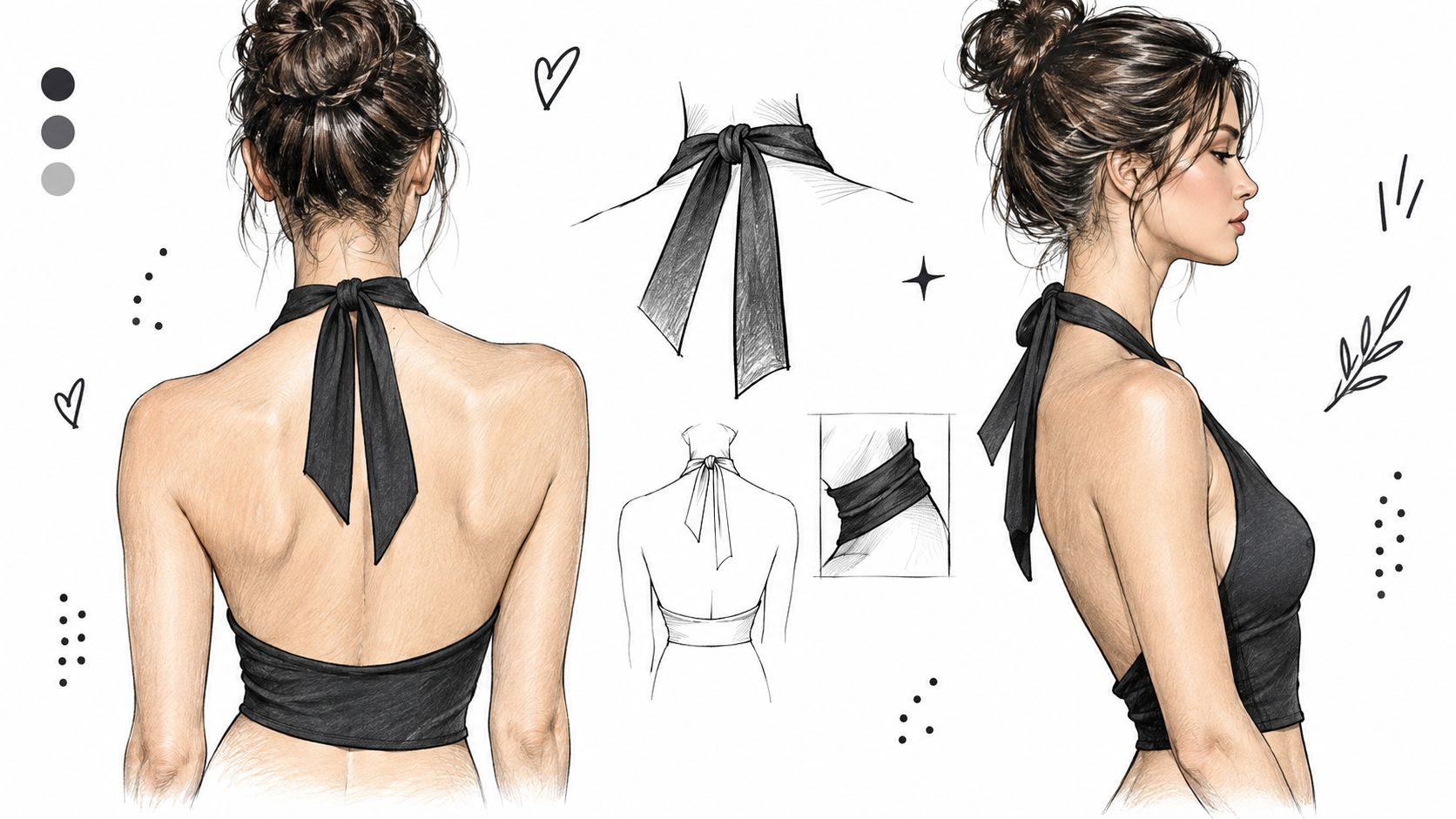
Halter neck tops became widely recognisable in the mid-20th century, although fashion historians trace the modern form to the 1930s, when it appeared as a dramatic neckline on formal gowns. By the 1940s, the style had moved into beachwear and two-piece swimsuits, before reaching a peak in the late 1960s and 1970s. This recurring history is outlined in the halter-top entry from Encyclopedia.com.
That history matters because it explains why the shape keeps appearing in British womenswear rather than behaving like a brief microtrend. Vogue UK has also highlighted high-profile halter looks worn by Marilyn Monroe in 1955 and Diana, Princess of Wales in 1994 and 1995, showing the neckline's continuing cultural visibility across at least 40 years of fashion and celebrity style. See Vogue UK's halter-neckline trend feature.
Practical rule: Judge a halter from the neck down. If the fastening is wrong, the rest of the garment can't compensate.
Browsing becomes easier once you recognise the main shapes. The classic triangle halter has two front panels that meet in a V or point above the bust, usually with a tie or clasp at the nape. It gives the familiar open-shoulder, open-back effect, but the amount of coverage can vary considerably.
A high-neck halter takes the fabric closer to the base of the jaw. It can feel more covered at the front and often has a sportier, cleaner appearance. A bandeau or straight halter runs horizontally across the bust, so the neckband and the garment's structure do most of the work in keeping it in position.
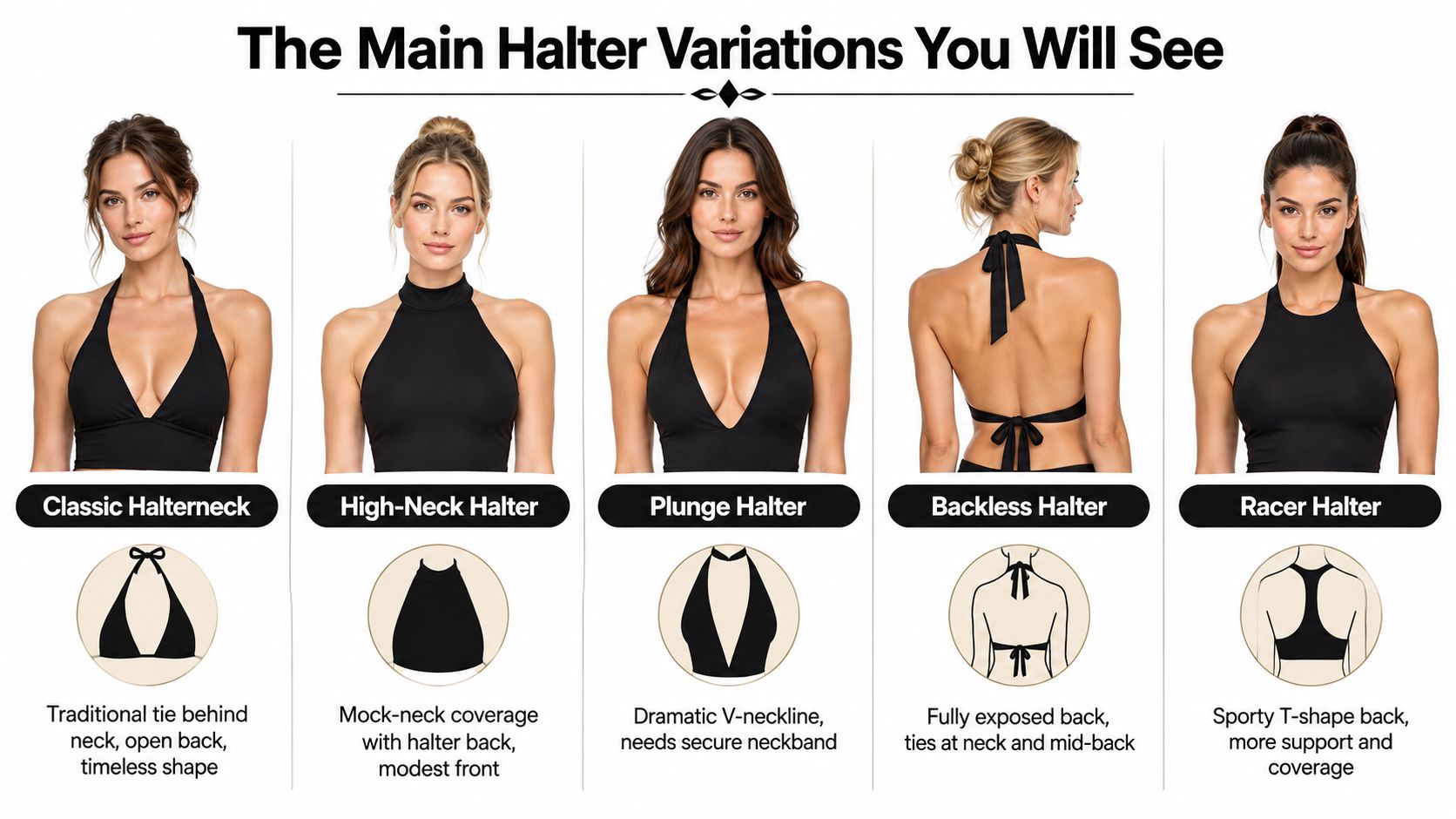
A plunging halter creates a deeper V and draws attention towards the centre front. It can look elegant, but it leaves less fabric to contain the bust, so neckband stability and bra compatibility become especially important. Racer halters send the straps in a straighter line from the neck towards the underarm, often giving a more athletic impression and hiding conventional bra straps more effectively.
The back design changes the experience too:
UK retail listings show the category stretching from light fashion pieces in satin, cotton, jacquard, linen and embellished finishes to performance styles with adjustable straps, technical fabrics and different levels of support. The current halterneck selection at Next illustrates that this is not one single garment type. Treat the neckline name as a starting point, then inspect the fastening, lining, stretch and bust construction.
A secure halter depends on neckband tension, strap geometry and bust support working together. The neckband should sit close enough to stop the top moving, but it shouldn't dig into the skin or leave you desperate to untie it after lunch. A wider band generally spreads pressure more comfortably than a narrow cord, while adjustable ties or clasps let you fine-tune the position.
Strap direction affects stability. Straps that angle inward towards the neck can draw the fabric into the body, whereas a loose or poorly placed fastening may allow the bust line to shift as you move. This is why a halter that looks perfectly secure while standing still can behave very differently when you bend, reach or walk quickly.
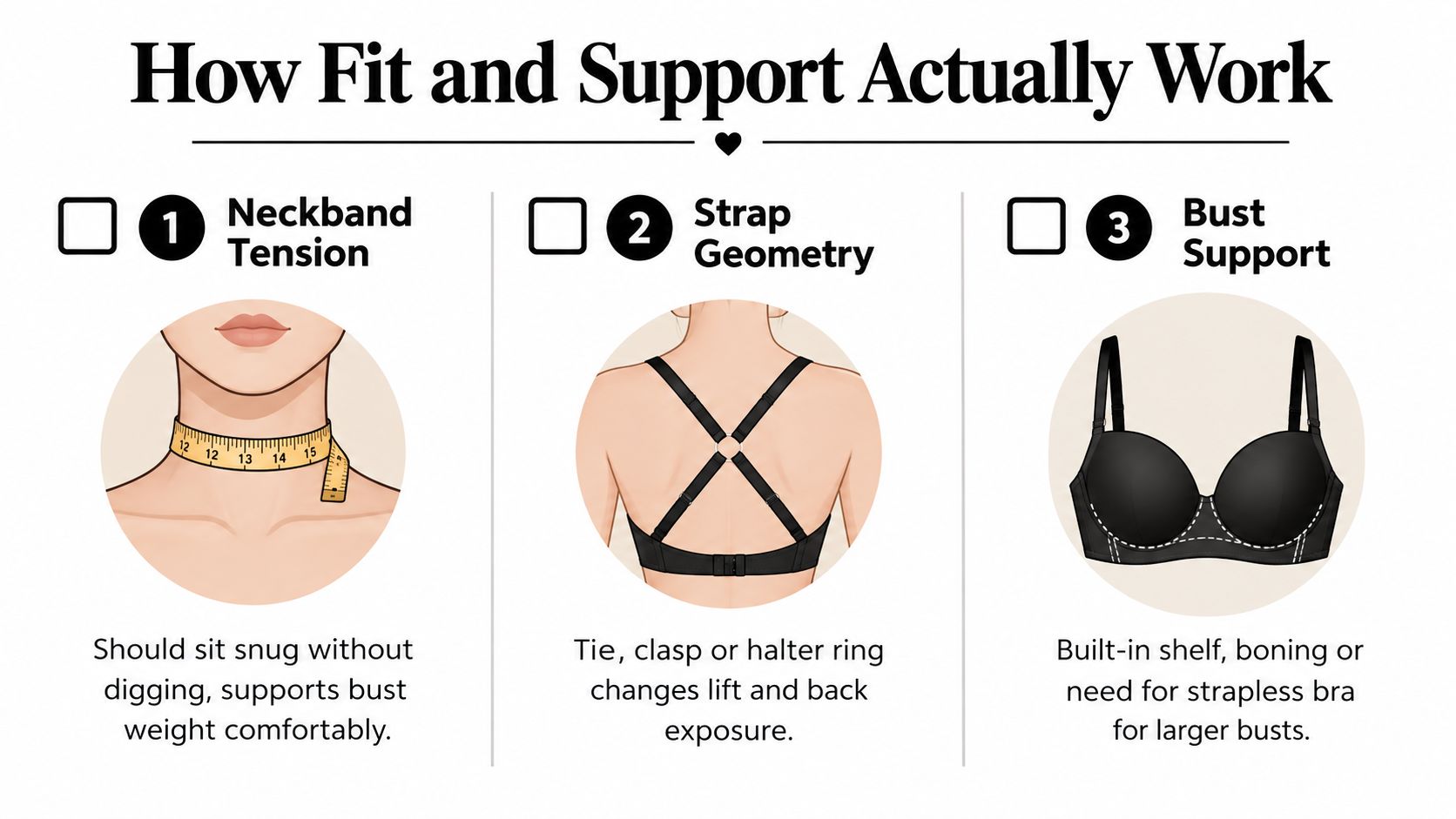
Look for signs that the top has been designed to support rather than just decorate:
UK product guidance also shows the split between fashion and performance designs. Some sportswear halters use cross-back structures, adjustable straps and technical fabrics, with support described from light to firmer levels. Specialist guidance notes that changing the neckband length and adding bust tucks can alter comfort and support, which is a useful reminder that small construction details matter. Oysho's halter-neck product category provides examples of these different approaches.
Try the move test before committing: lift both arms, bend forwards, sit down and turn your torso. If the neckband climbs, the bust fabric flattens uncomfortably or the straps slip away from the nape, the top probably won't stay pleasant during a full day.
Fabric determines whether a halter feels crisp and contained or soft and relaxed. It also affects how clearly the garment reveals strap movement, creasing and body lines, so don't choose by colour alone.
| Fabric | Drape and support | Breathability | Best for |
|---|---|---|---|
| Cotton poplin | Crisp, with useful shape retention | Good | Office-adjacent outfits and daytime layering |
| Jersey | Soft and flexible, but can cling | Moderate to good, depending on weight | Weekends and relaxed dressing |
| Satin | Fluid, polished and less forgiving of slips | Variable | Evening outfits and dressier occasions |
| Linen | Light, airy and naturally relaxed | Very good | Warm days, coastal trips and holidays |
| Technical knits | Close-fitting, with useful recovery when well made | Designed for active comfort | Travel, fitted casual looks and movement |
Cotton poplin works particularly well when you want the neckline to look neat beneath a blazer. Jersey feels kinder for casual wear, but it can follow every contour, so check that the bust area isn't stretching white or pulling sideways. Satin looks instantly evening-ready, although even a small strap or neckline shift can show clearly across its smooth surface.
Linen is comfortable in heat but will crease during a day of sitting, walking and waiting for a delayed train. Technical ribbed knits can hold a fitted holiday shape and cope well with movement, though they still need a well-designed neckband.
For a broader look at breathable fibres and everyday clothing choices, explore this guide to bamboo fabric clothing. The useful rule is straightforward: match fabric behaviour to where the top will spend its day, not just to how it looks on the hanger.
A halter neck top doesn't have to wait for a nightclub, rooftop bar or sunny holiday. The easiest way to make it work harder is to change the surrounding layers and the level of tailoring.
For a workday, choose a structured halter with a high enough front to feel like a shell top. Wear it under a slightly oversized blazer, high-waisted trousers and low block-heel courts. The jacket covers the exposed shoulders, while the halter gives a clean neckline when you remove the blazer after work.
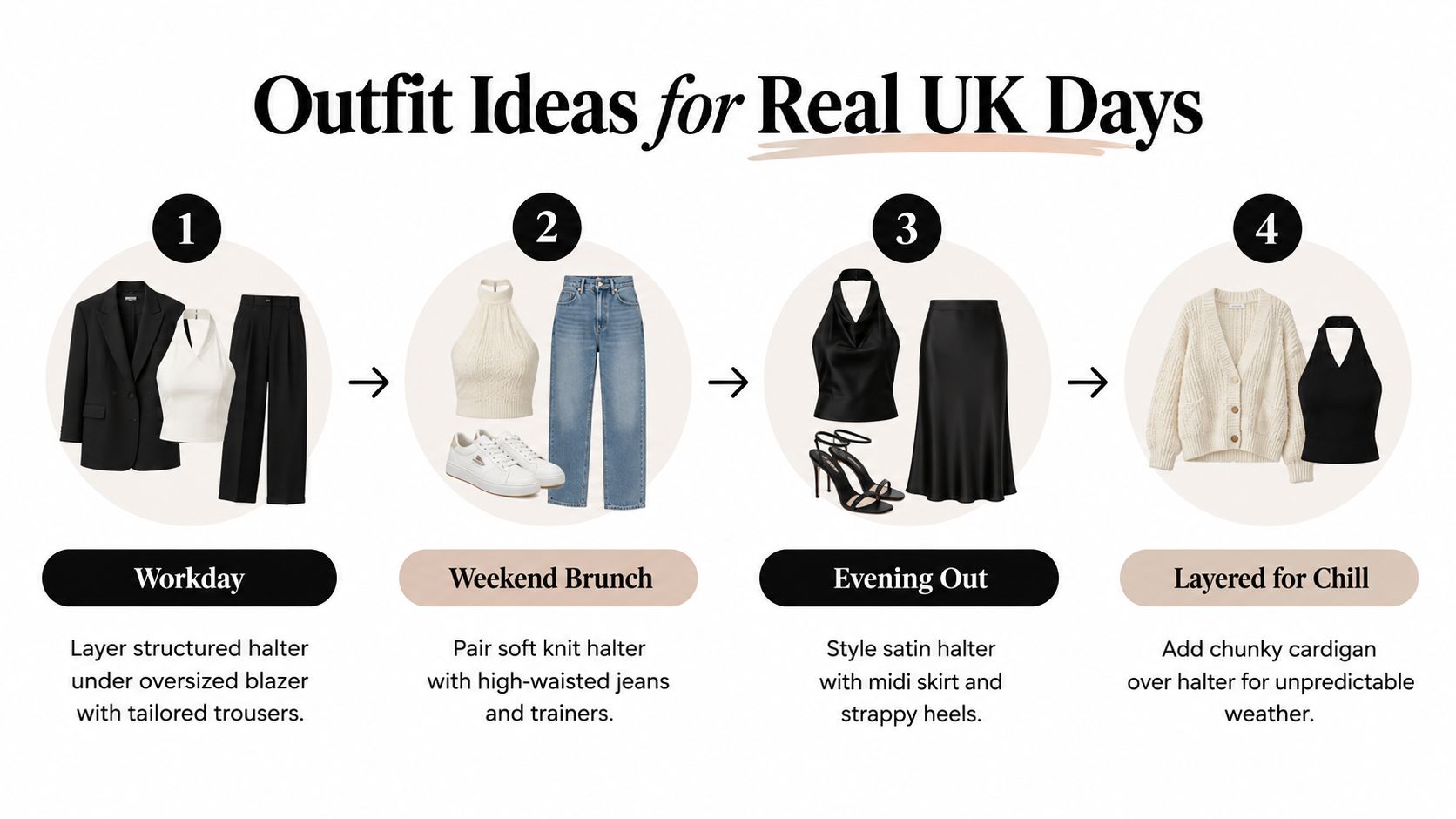
For a weekend, soften the proportions. A cotton or jersey halter with high-rise jeans, a partly tucked front hem and white trainers feels right for a pub lunch, errands or a supermarket run. A light shirt worn open gives you an easy extra layer when the temperature drops.
For an evening out, let satin provide the polish. Pair a satin halter with straight-leg trousers, statement earrings and a small clutch. You don't need a necklace competing with the neckline, and a cropped cardigan can take the edge off the chill on the journey home.
For a holiday or British coastal break, try linen or a technical halter with drawstring linen trousers, leather sandals and a raffia bag. A slip dress worn over the halter can turn it into a more covered layering piece, while a cardigan makes the same outfit workable beyond warm weather. For more relaxed combinations, see these casual outfit ideas for women.
The accompanying video offers another visual starting point:
A UK dress-size label can't tell you everything about a halter. The neckline sits differently from a standard shoulder seam, and the garment may need to accommodate your bust, neck, upper back and torso length at the same time.
Start at home with a soft tape measure and wear a non-padded bra. Measure around the fullest part of the bust, keeping the tape level and comfortably close to the body. UK size guidance commonly uses this point, and one women's chart spans bust measurements from 30 inches, or 76 cm, to 57.25 inches, or 145.5 cm, demonstrating how widely body measurements can vary across available ranges. See this halter-top size chart for the measurement approach.
Then measure torso length from the highest point near the shoulder down to your natural waist. A top that's too long may pull at the neck or create excess fabric under the bust. One that's too short can ride upwards every time you sit down. Check neck circumference just above the collarbone, then compare shoulder width and armhole placement too. Although halter straps don't rest on the shoulders, the upper back and armhole still anchor the garment.
Some retailers provide bust, waist and hip measurements for a specific halter rather than relying only on a generic UK size. For example, Peppermayo's table lists UK 4 at 29/23/33 inches, UK 10 at 35/29/39 inches and UK 22 at 50/44/54 inches for bust, waist and hips. Those measurements appear in Peppermayo's UK halter sizing table.
Before removing tags, run four checks:
A size guide that includes shoulder measurements can also reveal useful differences, such as 14.5 inches, or 37 cm, at UK 6 and 15.5 inches, or 39 cm, at UK 10 in one guide. EIVVN's clothing size guide shows why upper-body measurements deserve attention even in a shoulder-baring design. For a fuller measuring routine, use this UK women's clothing size guide.
The neckband is the garment's load-bearing area, so care should focus on protecting its recovery. Turn halter neck tops inside out, wash them on a cool 30°C cycle with similar colours, and avoid fabric softener on elastane blends. Softener can affect the feel and performance of stretchy fibres, while heat is particularly unhelpful for loops, ties and elastic sections.
While the top is damp, reshape the neck strap gently with your fingers. Don't wring it, twist it or pull it straight. Lay the garment flat on a clean towel to air-dry, rather than using a tumble dryer, because heat can leave the neck loop and back ties loose.
Use a wide hanger or fold the top flat. Clip hangers can pinch the neckline and leave marks, while a narrow hanger may concentrate weight on one small section. Satin and viscose benefit from light steaming from a distance. Avoid pressing the iron directly over the neckband.
Rotate your halter neck tops rather than wearing the same one repeatedly. Giving the elastic or stretch sections time to recover helps the garment keep its intended shape, and storing ties untangled means you won't have to tug at them before the next wear.
Halter neck tops reward a fit-first approach. Start by choosing the variation that suits the coverage and support you want, then check the neckband, back fastening and bust construction before falling for the colour. A plunging tie halter and a high-neck racer style may share a name, but they create very different demands on your bra, posture and layering.
Fabric should follow the occasion. Cotton and jersey work naturally with high-waisted denim or well-fitted trousers for everyday dressing. Satin brings a more polished finish to evening outfits, while linen fits warm-weather days and trips away. If the fabric shifts visibly during the move test, changing size may not solve the problem. You may need a different construction altogether.
Product measurements matter more than habit. Compare bust, waist, length and available fastening adjustments rather than choosing your usual dress size automatically. Some UK halter listings include body length as well as bust and waist, with examples ranging from 104.9 cm at UK 6 to 111.5 cm at UK 16, while another listing gives body lengths from 60 to 61 cm through to 62 to 63 cm across XS to XXL. These examples in Femi9's halter-neck product measurements show why torso coverage deserves a place on your checklist.
Once a top passes the support, fabric and length checks, it can earn its place beyond holidays and nights out. It can sit beneath tailoring, work with denim, handle a cardigan and still feel special at dinner.
Visit Peppervale to browse the current clothing catalogue alongside footwear, accessories, workwear and practical pieces for the wider household. Use the fit and fabric checks above while comparing halter neck tops, then choose the style that feels secure enough for real UK days, not just the changing-room mirror.


