Share:

- Women
- Men
- Kids & Baby
- Workwear
- Footwear
- Accessories
- Home & Living
- Health & Beauty
- Pet Supplies

You're halfway through the school run, it's raining sideways, and your full-length leggings are collecting Manchester's finest puddle water around the cuffs. Or you've cycled to the station in London, only to find your supposedly practical 7/8 pair rides awkwardly above your winter boots. In the UK, cropped leggings aren't just a styling choice. The right length can keep hems cleaner, work better with trainers or wellies and make a familiar outfit far more comfortable.
The difficulty is that “cropped”, “7/8” and “capri” aren't used consistently. Your height, leg proportion, hip measurement, fabric and daily routine matter more than the name on the product page. This guide cuts through that uncertainty, with practical advice for choosing cropped leggings UK shoppers can wear through school runs, commutes, gym sessions and changeable weather.
At seven on a wet Wednesday morning, a dog walker in Leeds has limited patience for trousers that drag. Full-length leggings may feel warm, but the hems can become damp before the first lap of the park is over. A cropped pair sits clear of the wet grass and works neatly with walking boots, while a longer 7/8 style may disappear into the boot shaft and bunch at the ankle.
The same choice plays out on a school run. Cropped leggings with an oversized longline top and trainers feel easy for a quick dash to the gates, particularly when the pavements are wet but the air isn't especially cold. Add a chunky jumper and ankle boots on a crisp morning, and the shorter leg gives you a cleaner break between fabric and footwear. Full-length leggings still win when you're standing around in cold wind, but they're less forgiving around puddles.
Practical rule: Choose the length for the shoes and weather you'll actually wear, not the model's height or the name printed on the label.
A London commuter may prefer a performance blend for cycling, changing temperature and carrying a bag, while a cotton-rich pair makes more sense for errands and lounging. A rain shell protects your upper half, but it won't stop a long legging cuff absorbing water. Layered knitwear adds warmth above the waist, yet it doesn't replace coverage on a cold platform.
The wider UK category is substantial. Women's tights and leggings generated USD 1,029.0 million in the UK in 2021, with a forecast of USD 1,638.8 million by 2028, equivalent to a projected 6.9% CAGR from 2022 to 2028, according to UK women's tights and leggings market data. That figure covers more than cropped leggings, but it reflects the broader demand for stretch-led, comfort-focused women's bottoms.
The rest of this guide focuses on the details that decide whether a pair earns its place in your wardrobe: inseam, body shape, fabric, care, delivery and returns. Peppervale's clothing catalogue sits alongside footwear, workwear, family clothing, home and living and other everyday categories, so the useful question isn't whether leggings look fashionable. It's whether the length works with the rest of your routine.
Retail labels are a starting point, not a measurement. In everyday UK shopping language, full-length leggings usually finish at or around the ankle, 7/8 leggings sit just above the ankle bone, and cropped leggings tend to finish higher on the lower leg. Capris are shorter again, generally landing around the mid-calf area.
Those descriptions overlap. One retailer's cropped style may look like another retailer's 7/8 pair, particularly on a petite frame. UK retail guidance also uses different short, regular and tall inside-leg options, and some catalogue pages give fixed measurements such as 74cm for regular and 89cm for tall, as shown in Next's sizing information. Check the actual product measurement whenever it's available.
Use a soft tape and measure from the crotch seam down the inside of the leg. Keep the tape straight, record the result in centimetres and compare it with the product description rather than guessing from the label. UK guidance commonly separates short or petite, regular and tall fits, so inseam gives you a more useful comparison than dress size alone, as outlined in this UK leggings size guide.
The practical bands you're likely to meet are:
| Length label | Inseam (cm) | Where it sits | Best for height |
|---|---|---|---|
| Full-length | 71–76 | Ankle or just over it | Taller frames, or anyone wanting full coverage |
| 7/8 | 63–68 | Just above the ankle bone | Average frames and trainer-led outfits |
| True cropped | 56–60 | Lower calf, depending on proportions | Petite to average frames wanting a clear ankle gap |
| Capri | 48–53 | Mid-calf or below the knee | Warm-weather wear and studio outfits |
These bands are useful buying checkpoints, not universal rules. On someone around 5ft 2, a 7/8 pair may look almost full-length, while a true cropped style could finish neatly above the ankle. On an average frame around 5ft 5, the same pair may land mid-calf. A taller shopper around 5ft 8 may find that a style sold as cropped looks closer to a 7/8 length.
Body proportions matter as much as height. A long torso with shorter legs can make cropped leggings finish higher, while long legs can turn a dramatic capri into a modest crop. Mid-calf hems can also create a visual break that some people dislike, especially with bulky boots.
Choose full-length if your wardrobe is built around winter boots, long coats and cold commutes. Choose 7/8 for trainers, Pilates, everyday errands and a cleaner ankle line. Choose cropped or capri when you want the hem away from puddles, more airflow or a deliberate warm-weather silhouette.
Fabric changes how cropped leggings feel after the first wash, not just how they feel in the changing room. Cotton, bamboo-rich jersey and performance blends each suit a different type of UK wardrobe, and none is automatically the right choice.
Cotton feels soft and familiar, with a breathable hand-feel that works well for casual wear. Pure cotton can lose shape, become baggy at the knees and recover slowly, so a little elastane usually makes a practical difference. For school runs, home days and relaxed outfits, cotton is often the sensible place to save, provided the fabric passes an opacity check.
Bamboo-rich jersey tends to feel smooth and drapey, with a slightly cooler touch. It can make a comfortable everyday legging, particularly under longer tops or knitwear. The trade-off is that opacity and surface appearance depend heavily on washing, so follow the care label and don't assume a soft new pair will behave identically after repeated hot washes.
Performance blends, often using nylon and elastane or recycled polyester, are the more convincing choice for gym sessions, cycling and busy commutes. They generally offer stronger stretch recovery, durability and sweat management, although they can feel warmer on mild UK days. Moisture-wicking construction is especially relevant for exercise because it moves sweat away from the skin, while textile testing has shown air permeability ranging from 38.5 cfm in the most breathable sample to 15.2–15.8 cfm in others, as documented in UK retailer product information on moisture-wicking fabric.
Do a squat in bright light. If the fabric turns visibly sheer at the seat, it's a poor choice for training, no matter how attractive the waistband looks. Sit down, lunge and bend at the knee to check whether the waistband digs in or rolls.
Think about your home drying routine too. Radiators, rushed wash cycles and crowded laundry baskets put more stress on stretch fabrics than a careful wash and air-dry routine. Bobbling around the inner thigh is another warning sign, especially if you plan to wear the leggings under longer tops and jackets.
| Fabric | Breathability | Opacity after wash | Stretch recovery | Best UK use |
|---|---|---|---|---|
| Cotton with elastane | Comfortable and natural-feeling | Check carefully after washing | Moderate | Casual wear, school runs and lounging |
| Bamboo-rich jersey | Smooth with a cool touch | Follow care instructions closely | Soft and flexible | Everyday wear and layering |
| Nylon or polyester performance blend | Built for sweat management, construction varies | Often dependable, but test the pair | Usually stronger | Gym sessions, cycling and active commutes |
For more context on choosing activewear by use rather than appearance, browse Peppervale's women's activewear advice. Then read the exact fabric mix on each product page. The fibre content is more useful than a vague promise of “performance” or “premium comfort”.
A size label can't tell you where the hem will finish. Take three measurements before ordering, and use your hip measurement as the main fit guide. Your waist tells you whether the waistband will feel comfortable, but the hips usually determine whether the fabric pulls, goes sheer or restricts movement.
Wear light clothing and stand relaxed. Don't hold your stomach in or pull the tape tight.
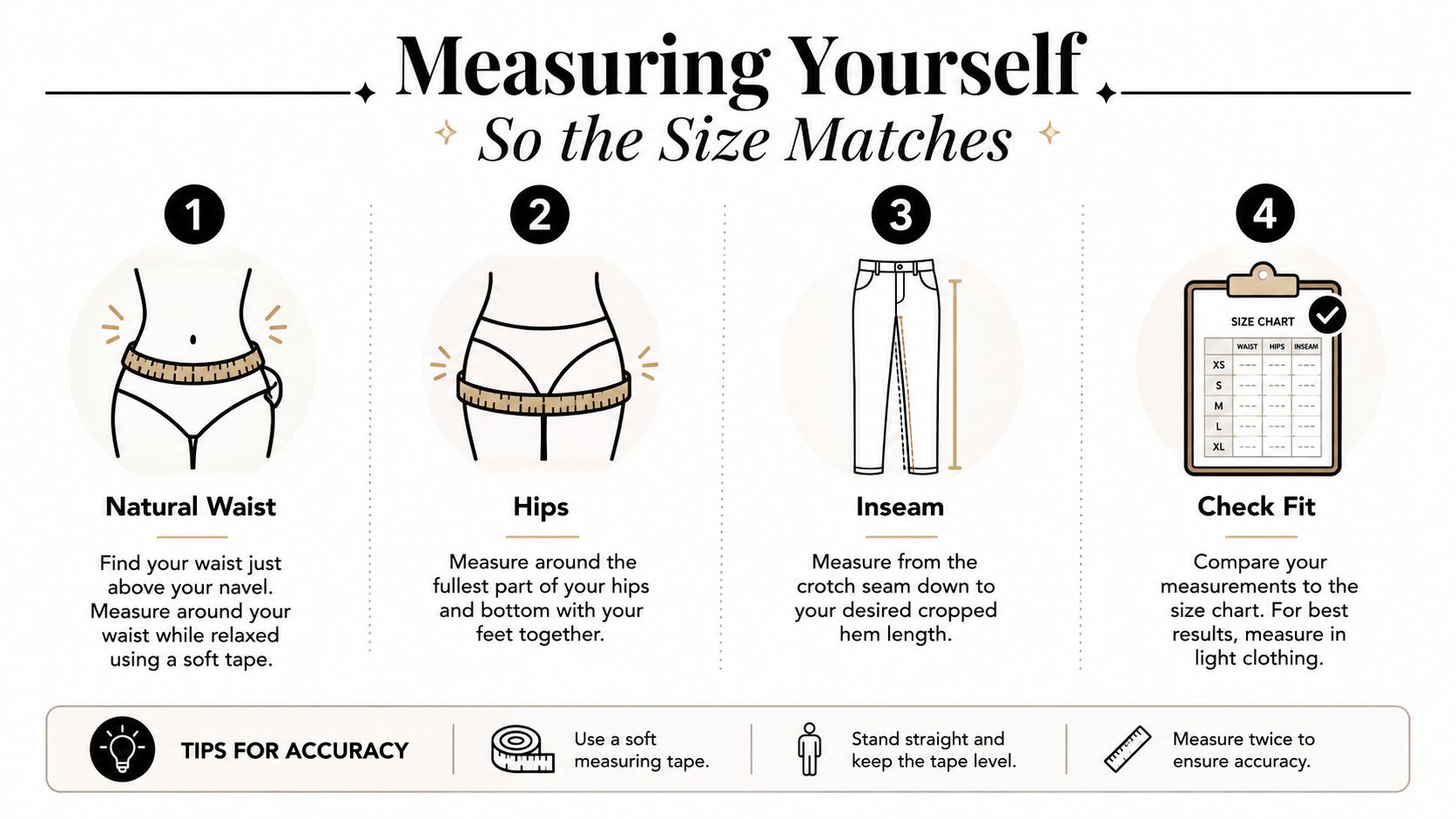
Peppervale-friendly sizing usually means comparing your measurements with the product's XS to XXL chart, rather than assuming your usual high-street size will transfer. UK charts can vary widely. For reference, a major UK clothing chart maps size 8 to a 34-inch bust, 26-inch waist and 36-inch hips, while size 12 maps to a 38-inch bust, 30-inch waist and 40-inch hips, as shown in this women's UK clothing size guide.
Allow roughly 1–2cm of tolerance for knitted fabrics, but don't use that as permission to ignore a clear mismatch. If your hips sit at the upper end of a size range and the waist is comfortably lower, prioritise the hips and assess whether the waistband has enough recovery.
For a final check, squat, lunge and sit. Look for fabric becoming transparent, seams pulling away from the body or a waistband that rolls down when you bend. If the pair fails any of those tests before you've worn it outside, it isn't the right fit.
More guidance on comparing measurements with UK clothing labels is available in Peppervale's UK women's clothing size guide.
Cropped leggings work best when the rest of the outfit respects the shorter hem. A longline top, practical jacket or deliberate shoe choice can make the look feel finished rather than as if full-length trousers have shrunk.
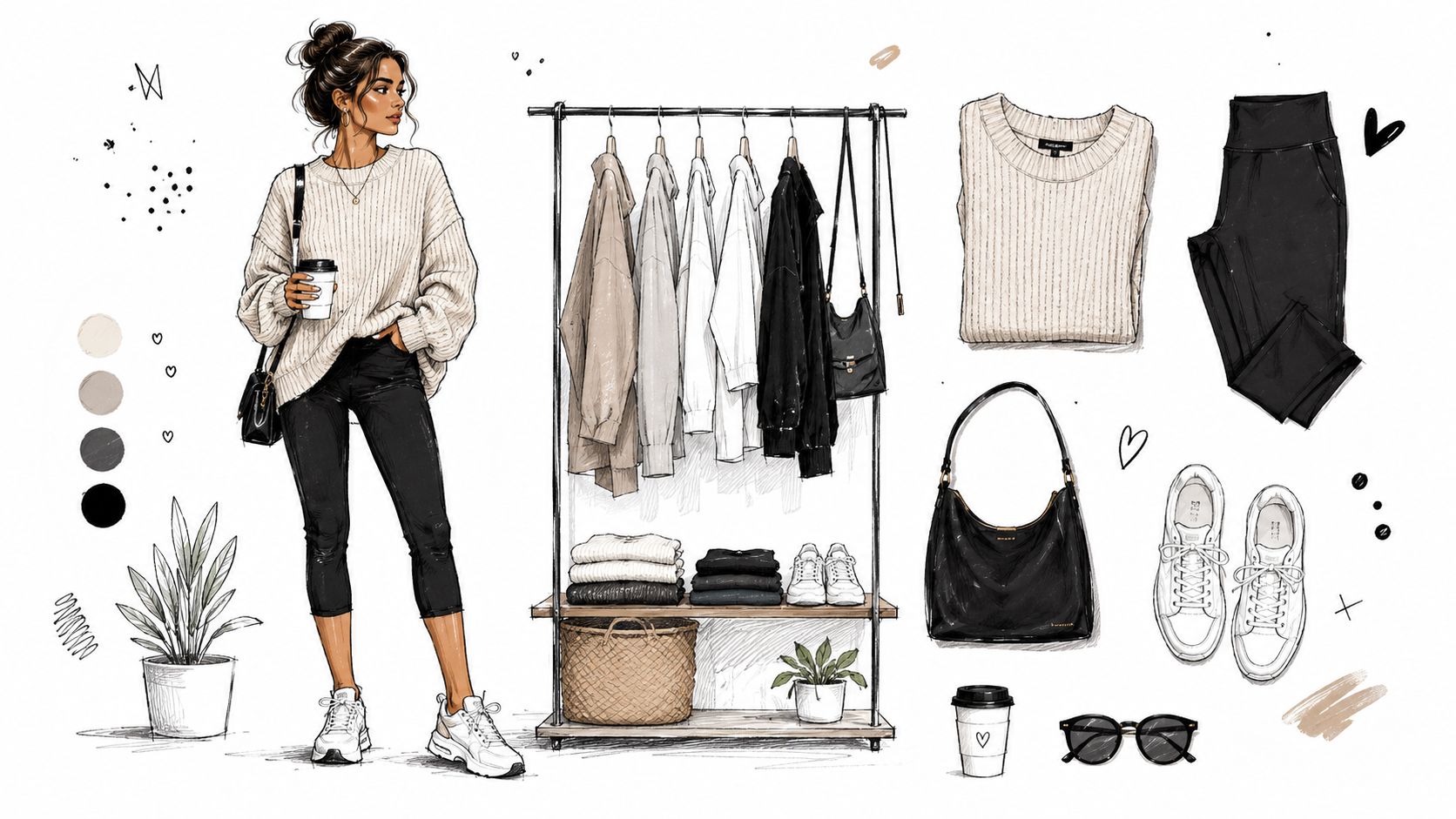
For the school run, start with black cropped leggings, an oversized cotton longline T-shirt and white trainers. The longline shape gives the outfit coverage, while the exposed ankle keeps it from looking too heavy. Add a lightweight jacket from Peppervale's women's outerwear selection if the forecast is unsettled. Cotton works for a casual day, but a performance blend is more practical if you're walking briskly or cycling.
A crisp Saturday outfit needs more warmth. Wear cropped leggings under a chunky knit jumper, then add ankle boots and a crossbody bag. The cropped hem gives the boots room, but choose a true crop rather than a mid-calf capri if you don't want the leg line interrupted too sharply. Peppervale's women's knitwear, jackets and accessories categories are the logical places to look for those supporting pieces.
My honest styling preference: A cropped hem looks most intentional when the shoe is low-profile or clearly structured. A vague gap above a bulky boot can look accidental.
For a gym commute, choose a moisture-wicking cropped legging with a cropped hoodie and crossbody bag. Trainers keep the outfit functional, and a shorter performance style avoids excess fabric around the ankle. Change into a longer layer for the journey home if the evening temperature drops.
The polished option is a longline blazer, fine-knit roll neck, cropped leggings and loafers. This only works when the leggings are opaque, the waistband lies flat and the blazer has enough length to balance the close-fitting lower half. Keep the colours restrained and let the contrast between structured outerwear and stretch fabric do the work.
For further outfit combinations, use Peppervale's guide to what to wear with leggings.
The video below is useful if you prefer to see proportions and layering in motion.
Treat cropped leggings like activewear even if you only wear them for errands. Stretch fibres recover better when you reduce heat, friction and harsh products, while careful washing helps the fabric retain its original feel and opacity.
Turn the leggings inside out before washing. Use a gentle cycle at 30°C with a mild detergent, and skip fabric softener because it can coat elastane fibres and reduce their snap-back. Avoid bleach unless the care label specifically permits it.
Air-dry the leggings flat or over a suitable airer rather than placing them directly on a hot radiator. If the care label allows a tumble dryer, use a low setting, but high heat remains the quickest route to a sagging waistband, shiny knees and tired elastic.
Don't wring the fabric. Press excess water out gently, smooth the seams and leave the pair to dry naturally. Folding is better than hanging because a hanger can pull on the waistband over time.
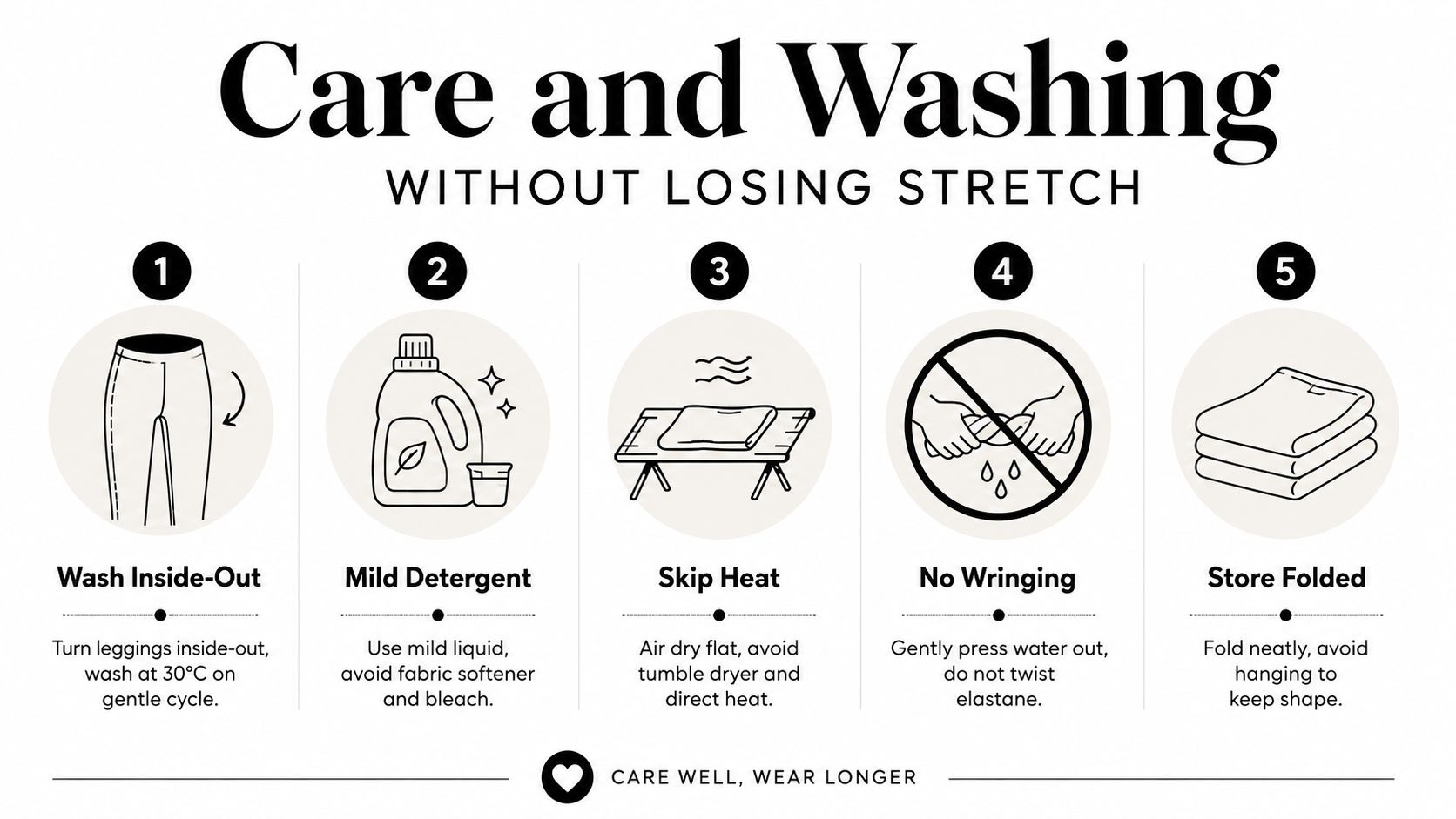
Before wearing a pair outside the house, run this quick check:
Retire a pair when the fabric becomes see-through during movement, the waistband stays stretched or a seam begins to fail. A tired pair may still work under a long jumper for light home wear, but it shouldn't be your choice for exercise or a day when you need dependable coverage.
The cheapest pair isn't always the lowest-cost option. Compare price per wear, not just the amount shown on the product page. Estimate how often you'll wear the leggings, how frequently they'll be washed and whether they'll replace another pair in your rotation. A budget cotton pair may suit light use, while a pricier performance blend can make more sense if it becomes your regular gym and commute option.
Don't assume any specific price, fabric or stock status applies until you've checked the live listing. Peppervale's current catalogue can change, so confirm the product page shows the size, colour, composition and price you want before adding it to your basket. Use the size guide and customer review filters for fit comments where they're available, then shortlist two pairs instead of buying the first attractive option.
| Criterion | Budget cotton pair | Mid-range bamboo pair | Performance blend pair |
|---|---|---|---|
| Main appeal | Soft everyday feel | Smooth drape and flexible comfort | Activity-focused construction |
| Check before purchase | Elastane content and opacity | Wash-care instructions and surface finish | Sweat management details and stretch recovery |
| Best comparison point | Cost for casual wears | Comfort across home and errands | Durability across training and commuting |
| Delivery question | Is the required size shown as available? | Are colour and size options current? | Is the chosen length clearly stated? |
| Returns question | Can you return an unworn, tagged item? | Who pays return postage? | What happens if the fit fails during movement? |
At checkout, verify the actual UK delivery options, dispatch wording, tracking availability and any free-delivery threshold that applies to your basket. Don't treat a delivery estimate as a guarantee, particularly around busy sale periods when standard post can take longer.
Returns deserve the same attention as fabric. Check the permitted window, whether leggings must be unworn with tags attached and whether return postage is deducted or paid by the customer. Try them on over clean underwear, keep the tags attached and test the squat, lunge and sitting fit before removing anything. A wishlist can help you compare two styles side by side without turning a fit question into an impulse purchase.
UK shoppers buying workplace footwear should check more than appearance. The current UK safety footwear standard is BS EN ISO 20345, the UK implementation of EN ISO 20345:2022, which sets basic and additional requirements for safety shoes, as specified in the BS EN ISO 20345:2022 standard document. Product documentation or marking should state whether the item was tested to EN ISO 20345:2011 or EN ISO 20345:2022, as explained in this UK safety trainer standards guide. That check belongs in the workwear and footwear buying process, just as inseam belongs in your leggings decision.
Visit Peppervale to compare current clothing, footwear, workwear, home and family categories in one UK catalogue. Check the live product details, measure your hips and inseam first, then choose cropped leggings that fit your actual routine rather than relying on a label alone.


