Share:

- Women
- Men
- Kids & Baby
- Workwear
- Footwear
- Accessories
- Home & Living
- Health & Beauty
- Pet Supplies

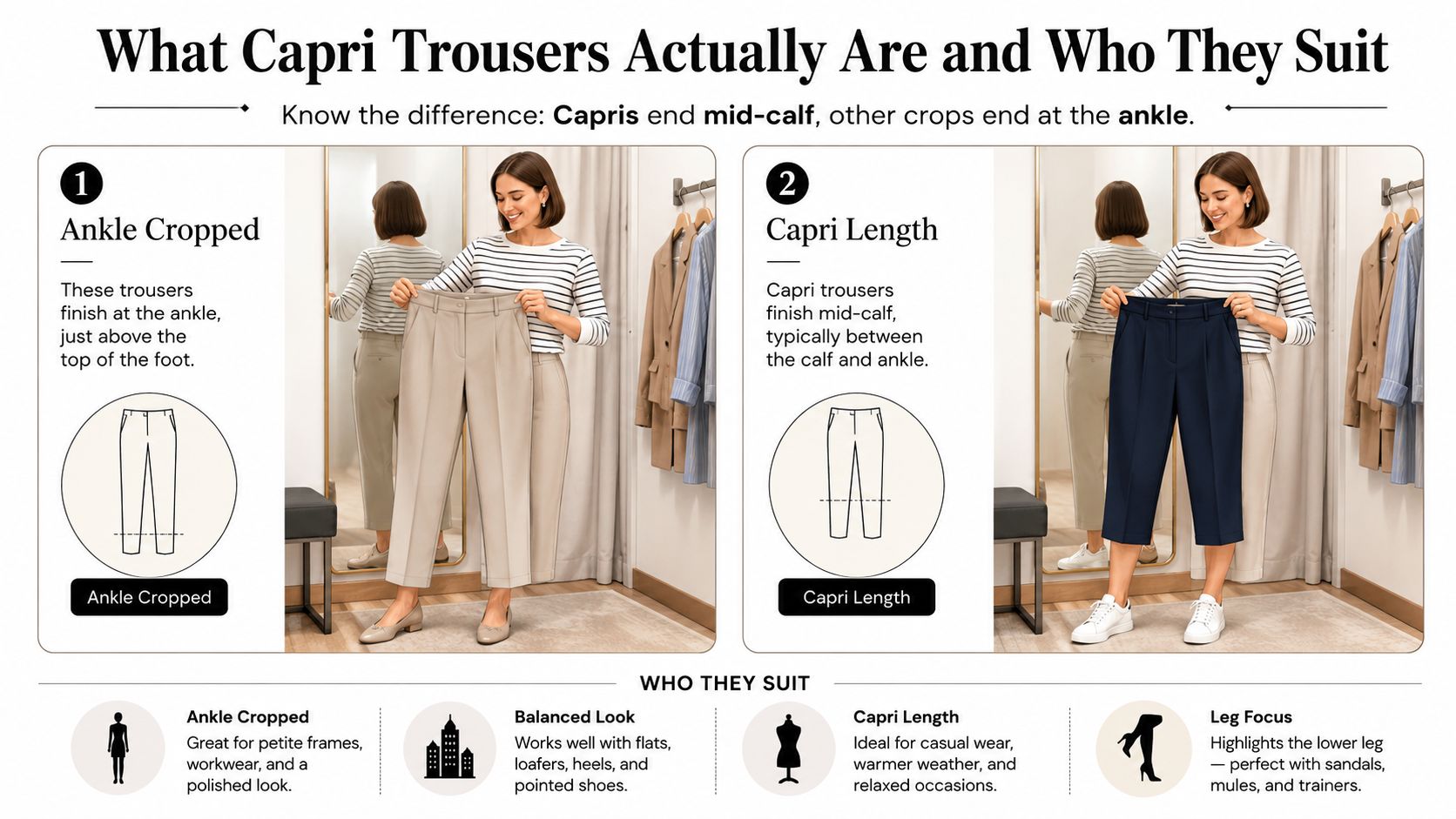
You're in a UK changing room with two pairs of cropped trousers over your arm. One finishes neatly above the ankle, while the other stops halfway down the calf. Both are labelled “cropped”, so which one is a pair of capri trousers for women, and will the hem land in the right place on your height?
The answer starts with the inside leg measurement, not the label on the hanger. Capri trousers can be comfortable, polished and useful well beyond high summer, but only when the length, fabric and cut suit the way you'll wear them. This guide takes you through those decisions in plain terms, from identifying a true capri to checking fit before ordering online.
A true capri trouser finishes between the knee and the lower calf, rather than at the ankle. Fashion references commonly place the style within an inseam band of roughly 21 to 27 inches, although brands use the word “capri” inconsistently, so the product measurement matters more than the description.
The easiest way to identify the difference on a rail is to compare the hem:
The close, leg-following cut associated with classic capris is part of why they're distinct from a wide cropped trouser. However, modern retailers also use “capri” for straight and wider silhouettes, so check the photographs and measurements together.
A slim capri can suit a pear shape when it follows the thigh without pulling across the hips. For a straighter figure, a shaped waistband or a little volume at the calf can add definition. Petite shoppers often find that a shorter trouser line feels easier to wear than a full-length style, provided the hem doesn't stop at the widest part of the calf.
Calf width also affects comfort and appearance. If a slim leg feels tight around the calf, try a straight cut or move up a size if the waist and hip still sit correctly. The hem should feel deliberate, not as though the trouser has shrunk.
Practical rule: Ignore the word “cropped” until you've checked where the hem will land on your leg.
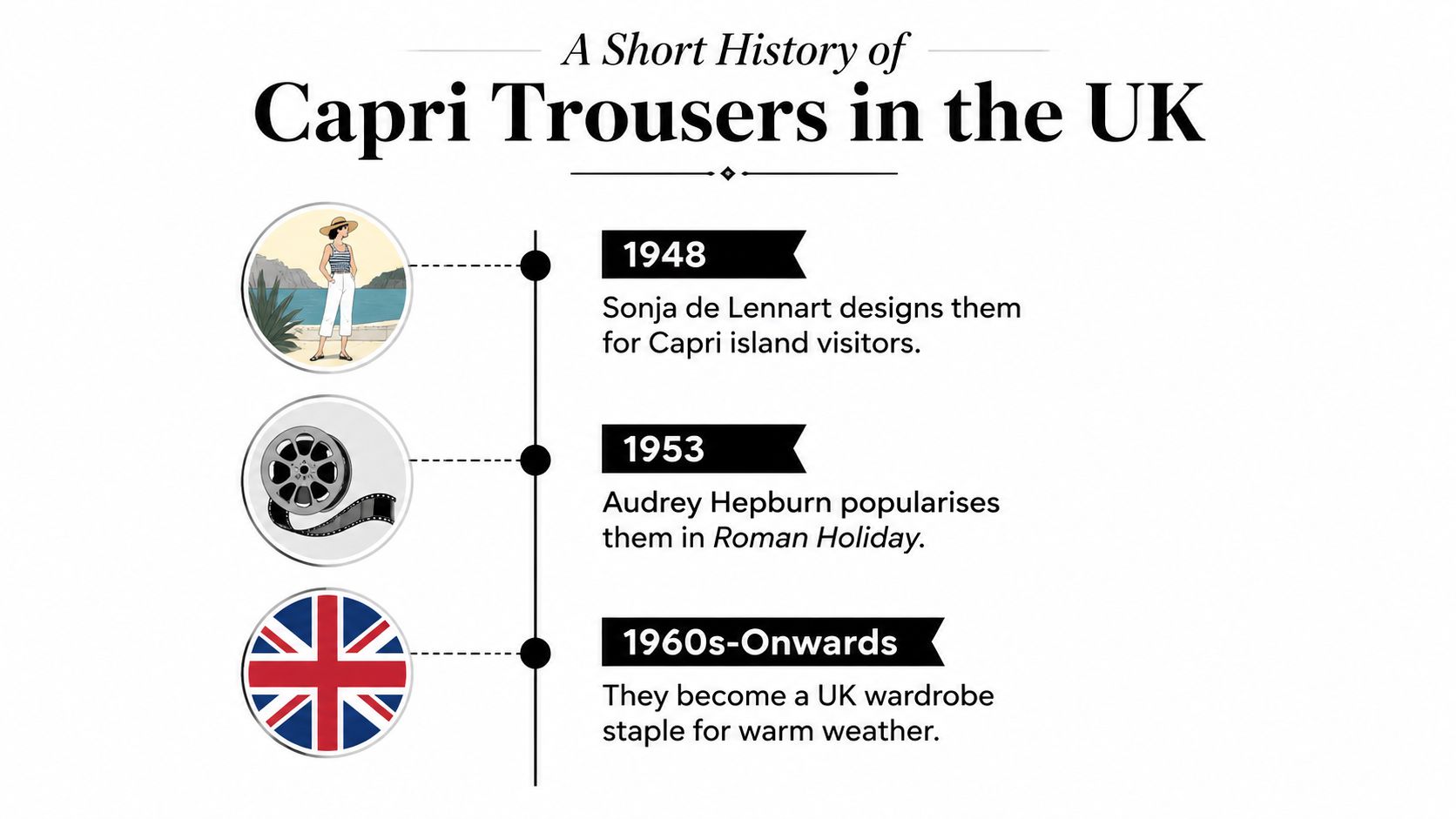
Capri trousers began with German designer Sonja de Lennart, who introduced the style in 1948. British couturier Bunny Roger later helped bring the design to wider attention in the UK after its post-war launch. According to the history of capri pants, the style's wider rise came in the late 1950s, as an avant-garde European idea became accepted casual clothing for women.
That change mattered. Women wearing trousers could still seem shocking in the 1930s, yet by the 1950s capri trousers had become acceptable casual wear for girls in Britain. The shift explains why capris have lasted: their shorter leg offered a fresh silhouette while remaining practical for everyday outfits. A pair could work with a blouse for town, or with a simple top for warmer days.
The style also gained international recognition through Audrey Hepburn. Her appearance in the 1954 film Sabrina remains closely associated with the neat, understated look that many shoppers still expect from classic capris. The UK fashion history of capri trousers records this connection alongside the garment's growing popularity.
Proportion has always shaped the look. Earlier pairs often used close cuts and firm woven cloth. Modern versions may use cotton blends, jersey or easier, more relaxed shapes, giving the garment mid-century roots while making it suitable for a year-round UK wardrobe. The fabric and inseam now matter as much as the history.
Start with an existing pair of trousers that finishes where you like. Lay it flat, measure from the crotch seam to the hem, and compare that measurement with the retailer's stated inside leg. This is more reliable than choosing a size and assuming “capri” means the same length everywhere.
UK sizing varies between brands. One UK retailer lists a women's capri inseam of 52 cm, or 20.5 inches, for UK 10, while another offers cropped and capri options in Short 27 inches, Regular 29 inches and Long 31 inches. A difference of 2 to 3 inches can move the hem from mid-calf to just below the knee, changing both the visual line and freedom of movement. (UK retailer capri inseam example)
Another UK capri guide lists inside-leg measurements from 75.5 cm to 82.5 cm across sizes 6 to 18, showing why a nominal size can't predict the finished length. (UK women's capri size guide)
A slim cut follows the leg and can work well when you like a neat outline through the thigh and calf. A straight leg gives more breathing room and is often easier if your calf is fuller or you dislike fabric clinging at the knee. A wider capri creates more movement and can balance a longer frame or a fuller hip.
The hem usually looks most intentional at a narrower point of the calf, rather than directly across its broadest area. If the trouser feels too restrictive at that point, don't force the fit. A straight leg or a slightly roomier cut will usually sit better.
| Fit style | Best for body shape | UK size 10 inseam | Waist | Hem position |
|---|---|---|---|---|
| Slim | Hourglass or athletic shapes | Check product measurement | Check size guide | Lower knee to narrow calf |
| Straight | Apple or rectangle shapes | Check product measurement | Check size guide | Mid-calf or lower calf |
| Wide | Pear shapes and taller frames | Check product measurement | Check size guide | Lower knee to mid-calf |
The table uses “check product measurement” deliberately. The available UK sizing examples show that brands don't share one standard capri length, so a made-up universal measurement would be less useful than the listing in front of you.
For a curvier figure, pay attention to the waistband as well as the leg. A contoured waistband can follow the body more smoothly than a rigid flat band, reducing the need to pull the trousers up during the day. Try sitting, bending and walking before deciding that a pair fits.
Fabric changes how capri trousers behave more than the silhouette alone. A crisp woven cotton feels different from jersey, and a small amount of stretch can make a noticeable difference when you sit at a desk, climb stairs or drive.
One UK women's capri listing uses a woven fabric made from 98% cotton and 2% elastane. Cotton remains the main fibre for a breathable, comfortable feel, while elastane adds mechanical stretch and supports recovery around the waistband and knees. For a slim or slim-leg cut, that blend can help reduce strain through the crotch, thigh and knee seams during movement. (Example of cotton and elastane capri composition)
Cotton poplin has a crisp, breathable character and works well for neat summer outfits. It can crease during a Tube journey or after sitting, but that relaxed texture is part of its appeal. Cotton with elastane is generally more forgiving for commuting and long seated days.
Linen and linen-cotton blends feel airy in warm weather and suit a loose or wide-leg capri. Look for a fabric with enough body to fall cleanly, especially if you want the cropped hem to hold its shape rather than collapse around the calf.
Jersey and ponte are useful for autumn, travel and indoor workplaces. Their stretch makes sitting and kneeling easier, but check that the fabric recovers rather than staying bagged at the knees. Before buying, look for a secure waistband, tidy inside seams and a finish that feels substantial rather than flimsy.
| Fabric | Breathability | Stretch | Crease resistance | Best UK season |
|---|---|---|---|---|
| Cotton poplin | High | Low unless blended | Low | Spring and summer |
| Cotton-elastane | High | Moderate | Moderate | Spring to early autumn |
| Linen blend | High | Low to moderate | Low | Warm summer days |
| Jersey or ponte | Moderate | Moderate to high | Moderate to high | Autumn and indoor wear |
If you're comparing natural fibres for warm-weather clothing, this guide to bamboo fabric clothing offers useful background on how fibre choice affects feel and care. Always check the individual garment label for its actual composition and washing instructions.
Capri trousers are most useful when you treat them as a practical length, not as a summer-only novelty. They leave the lower leg clear, feel less restrictive than full-length trousers in warm indoor spaces and can work with several footwear types across the year.
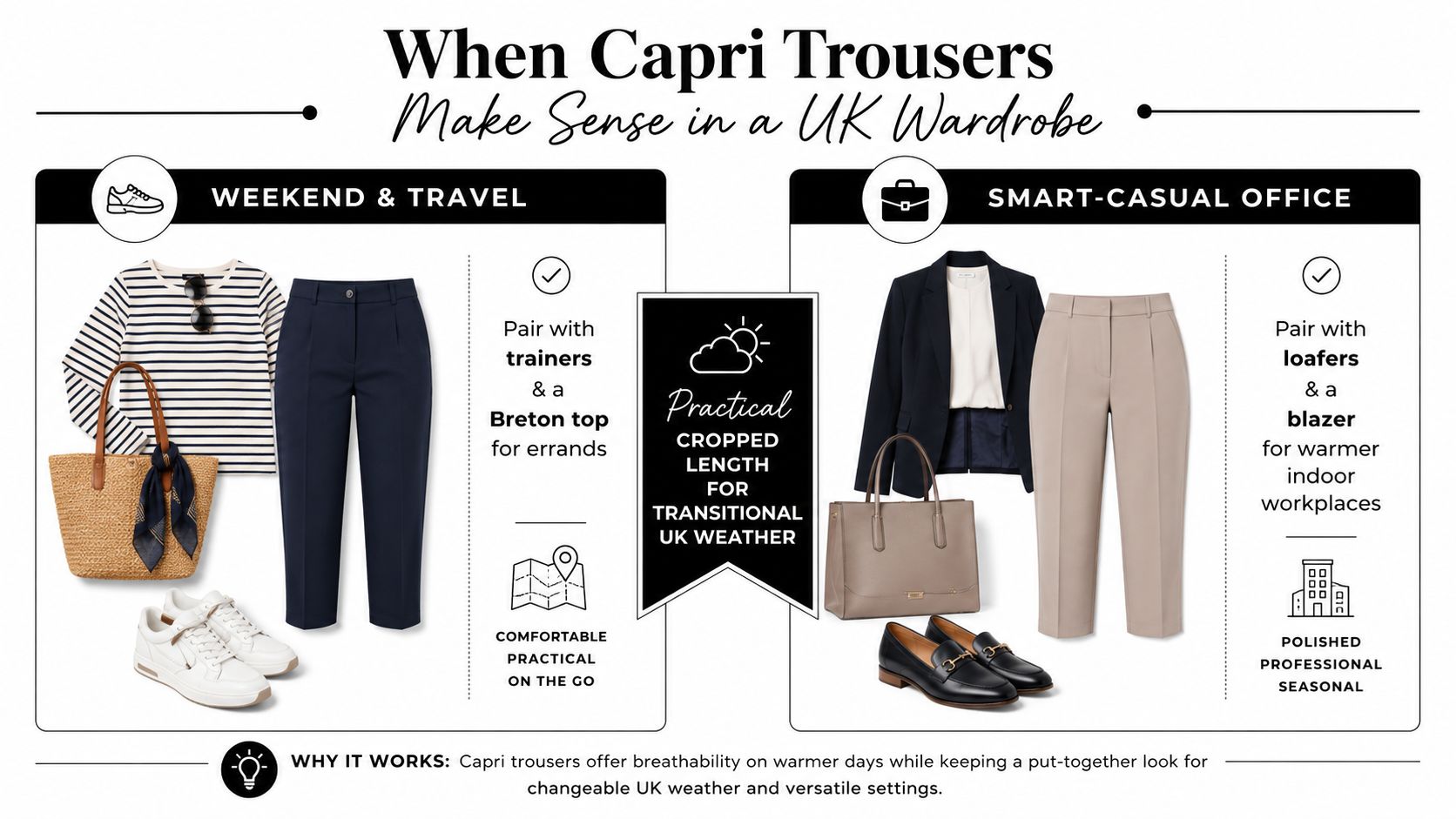
For weekend errands, a soft jersey pair with trainers and a Breton top keeps the outfit easy to move in. For a creative office, a cotton-elastane slim capri with a tucked shirt, loafers and a blazer looks more considered without becoming overly formal. A linen blend suits a Saturday market or coastal walk, especially with a relaxed knit or lightweight overshirt.
A ponte capri can work for a restaurant evening when paired with a blouse, refined bag and polished shoes. A soft pull-on pair may be more comfortable for travel or the school run, but its relaxed finish won't necessarily suit a formal workplace.
The cropped line also has practical advantages on travel days. It won't bunch around the lower leg in the same way as a long trouser, and it layers neatly with ankle boots in spring and autumn. That doesn't make every capri suitable for every journey, so consider the waistband, seat and fabric recovery before choosing a pair for a long day.
There are clear limits. Capris aren't the natural choice for a very formal meeting where a full suit is expected, deep winter weather below 5°C, or muddy hiking where a full-length trouser protects the calf. In those situations, trousers with more coverage are the sensible option.
Capris earn their place when the weather is changeable, the setting is relaxed, and you want more airflow than a full-length trouser provides.
The simplest way to style capri trousers is to balance the shortened leg with a clear shape above and below it. A tucked top defines the waist, while footwear decides whether the outfit feels relaxed, smart or summer-ready.
Start with straight-leg cotton capris, a tucked Breton stripe T-shirt and a navy blazer. Clean white trainers keep the outfit practical for walking, while the blazer gives enough structure for a creative office and an after-work drink.
Choose a low-profile trainer rather than an oversized sole if you want the trouser hem to remain the focal point. A medium-sized cross-body bag or structured tote keeps the look functional without adding bulk around the hips.
Pair wide-leg linen capris with a fitted ribbed polo, chunky loafers and substantial socks. The close-fitting top balances the extra width through the leg, while the loafers give the outfit a grounded, slightly preppy finish.
A light trench works well as the outer layer because it adds length above the shortened hem. If the calf area feels visually busy, choose socks in a similar colour to the shoes rather than introducing another strong contrast.
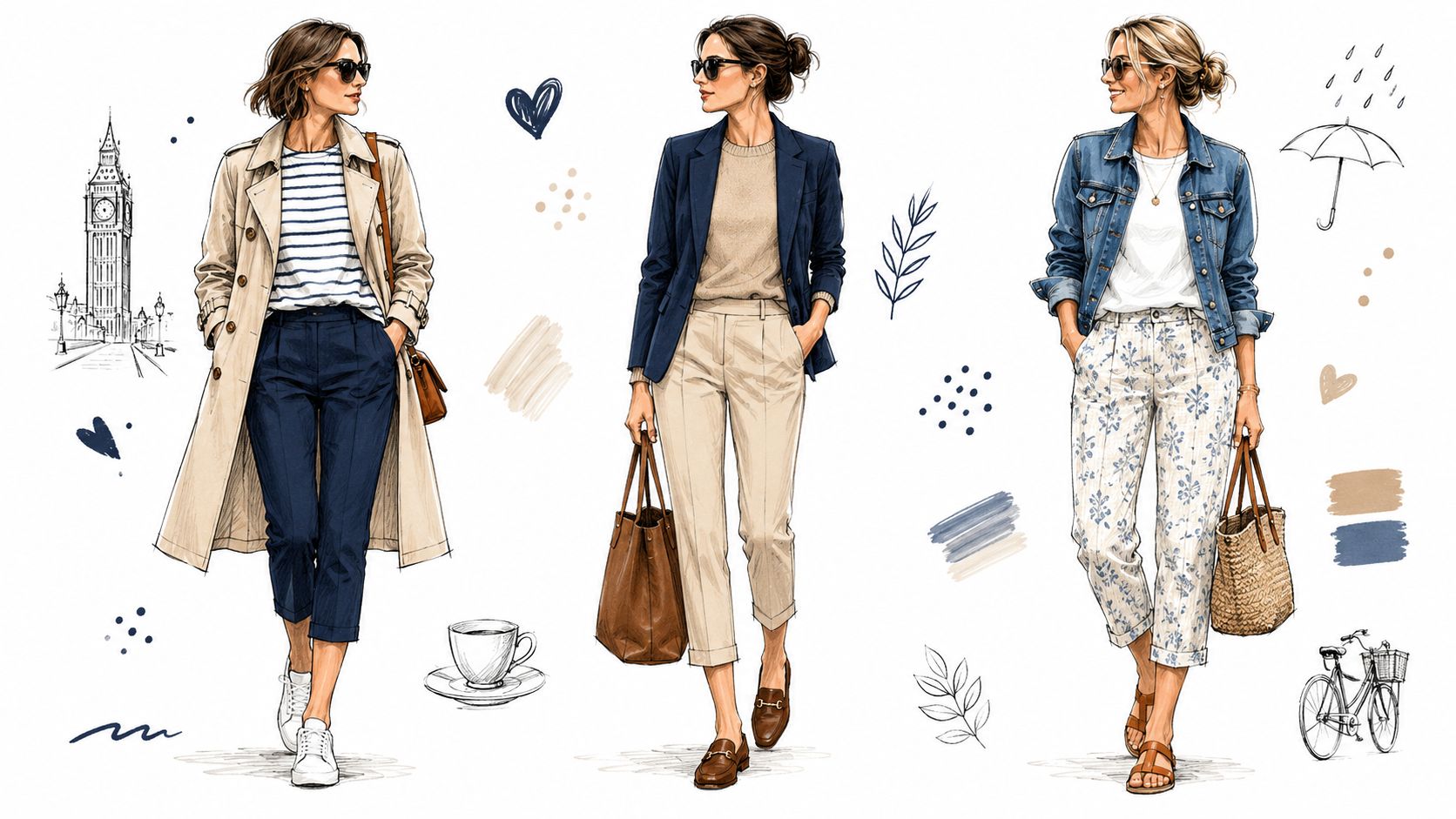
For a warmer day, wear slim jersey capris with a square-neck linen blouse, leather sandals and a denim jacket. The soft trouser suits a relaxed weekend, while the blouse prevents the outfit from looking like loungewear.
A small shoulder bag works better than an oversized rucksack if you want to keep the upper half uncluttered. When the forecast turns cool, swap the sandals for Chelsea boots and add opaque hosiery if the cut and fabric allow it. For more relaxed combinations, see these casual outfit ideas for women.
The proportion check is quick. Look at the hem, top and shoe together, then ask whether each element has a clear role. If the leg looks visually cut twice, by a low hem and a heavy ankle shoe, try a simpler shoe or a simpler top.
Online shopping becomes easier when you check the garment in a fixed order. You can make a useful decision in a few minutes without relying on the model's height or the word “capri”.
Try to compare like with like. A stretch jersey trouser may fit differently from a rigid woven pair even when the waist measurement looks similar.
UK online shoppers can usually cancel most distance purchases during a 14-day cooling-off period after receiving the goods, followed by a further 14 days to return them. Retailers must usually refund within 14 days of receiving the returned goods. Read the retailer's own process before ordering, including whether return postage is explained. (UK government guidance on returns and refunds)
Delivery deserves the same attention. If no delivery date has been agreed, goods generally must arrive within 30 days. Where delivery by a particular date was essential and that deadline is missed, the consumer can cancel and request a refund. (UK consumer delivery rights)
Look for the fibre composition, lining information and care instructions. If the listing doesn't explain whether the fabric is opaque, check customer-service information rather than guessing from a photograph. Also confirm whether the item is sold by a UK-based retailer or an overseas seller, since delivery and return arrangements may differ.
Three decisions will do most of the work. Measure the inseam first, because a capri label doesn't guarantee a particular hem. Match the fabric to the weather and routine, choosing breathable woven cloth for warmer days and a more resilient stretch fabric for commuting or long periods of sitting. Finally, dress for your actual life, not for an outfit photograph that ignores rain, walking, heating and the shoes already in your wardrobe.
A useful first pair is one you can wear in more than one setting. A straight or gently slim cut in a comfortable fabric can move from errands to a casual workplace, while a wider linen style may be better for warm weekends and holidays. If you're unsure about the waistband, sit down, bend your knees and walk around at home before removing labels.
For shoppers who prefer an easy waistband, compare the product details of these elastic-waist three-quarter capri trousers, then use the same inseam-first approach with any alternative you're considering. The right pair should sit securely, leave room to move and finish at a point that feels intentional on your calf.
The best capri trousers for women aren't defined by a trend label. They're defined by a measured length, suitable fabric and a role you'll regularly use.
Peppervale brings together practical clothing and everyday products for UK shoppers, including women's clothing, footwear, accessories, workwear, home and living, family essentials and pet supplies. Visit Peppervale to browse the current catalogue and find clothing that fits your routine as well as your wardrobe.


