Share:

- Women
- Men
- Kids & Baby
- Workwear
- Footwear
- Accessories
- Home & Living
- Health & Beauty
- Pet Supplies

You're standing in the bedding aisle, comparing a familiar cotton set with a softer-looking bamboo option. One promises the crisp feel you already know, while the other appears designed for warmer nights and a smoother finish. Then the practical questions arrive: will bamboo cope with weekly washing, is the higher price justified, and does “bamboo” tell you enough about the fabric?
The right choice depends on how you sleep, how you wash bedding and what the label really means. Bamboo sheets can feel cooler and manage moisture well, while cotton remains the dependable option for shoppers who value durability, choice and straightforward care. In UK bedrooms, where central heating, damp weather and changing seasons all affect comfort, the best answer isn't a universal winner. It's the fibre that matches your room, routine and priorities.
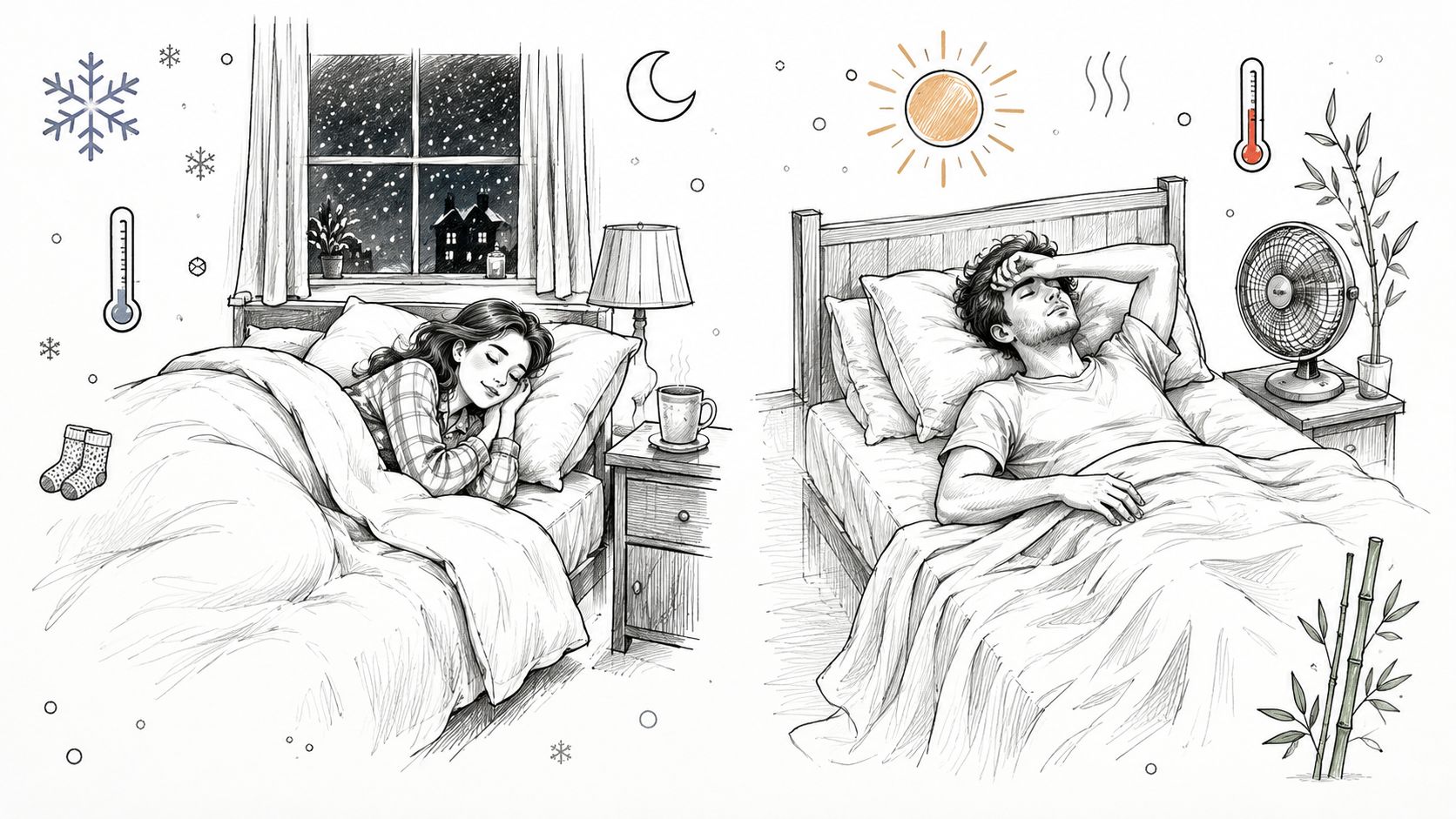
A warm summer night exposes the difference quickly. You get into bed feeling comfortable, but the room holds heat, the duvet feels heavy and the sheet starts to feel damp. Bamboo bedding is often chosen for this situation because its smooth surface and moisture management can feel less clammy than standard cotton. The distinction matters even more when two people share a bed and one sleeps noticeably warmer.
Winter creates the opposite problem. A centrally heated bedroom may feel dry rather than cold, and a smooth bamboo sheet can feel luxurious against the skin, but some sleepers prefer cotton's more familiar, substantial hand. Your choice should reflect the whole room, not just the temperature outside. The tog rating of your duvet, your mattress protector and the weave of the sheet all influence the final feel.
Practical rule: Choose the fibre that solves your most frequent sleep complaint, not the one with the most fashionable label.
The bamboo sheets vs cotton decision also involves laundry tolerance. If bedding goes through regular, strong wash cycles, durable cotton may suit your household better. If you're prepared to wash a little more gently in exchange for a silky finish and stronger moisture-wicking, bamboo becomes more compelling. The UK home textiles guide is useful background when you're considering bedding alongside other household fabrics and care routines.
The label deserves equal attention. Bamboo viscose, bamboo lyocell and bamboo-cotton blends aren't interchangeable, and the fibre name doesn't tell you everything about weave, finish or processing. A responsible comparison should therefore cover:
That approach gives you a more useful answer than calling bamboo “better” or cotton “more natural”.
Cotton is the reference point because Britain built a major textile economy around it. British cotton textiles were already worth about £600,000 by 1770, rising to about £10.5 million by 1805 and reaching about £38.8 million by 1870, as documented in this history of the British cotton industry. Those figures show how quickly cotton moved from an imported raw material to a central part of British household textiles.
By the mid-19th century, Britain produced roughly half the world's cotton cloth despite growing none of the raw cotton itself, according to the same historical summary. Mechanised spinning, weaving and established import routes made cotton familiar, scalable and comparatively easy to find. That industrial legacy still shapes what shoppers expect from a sheet today: a broad range of weaves, weights, finishes and prices, with care instructions that feel predictable.
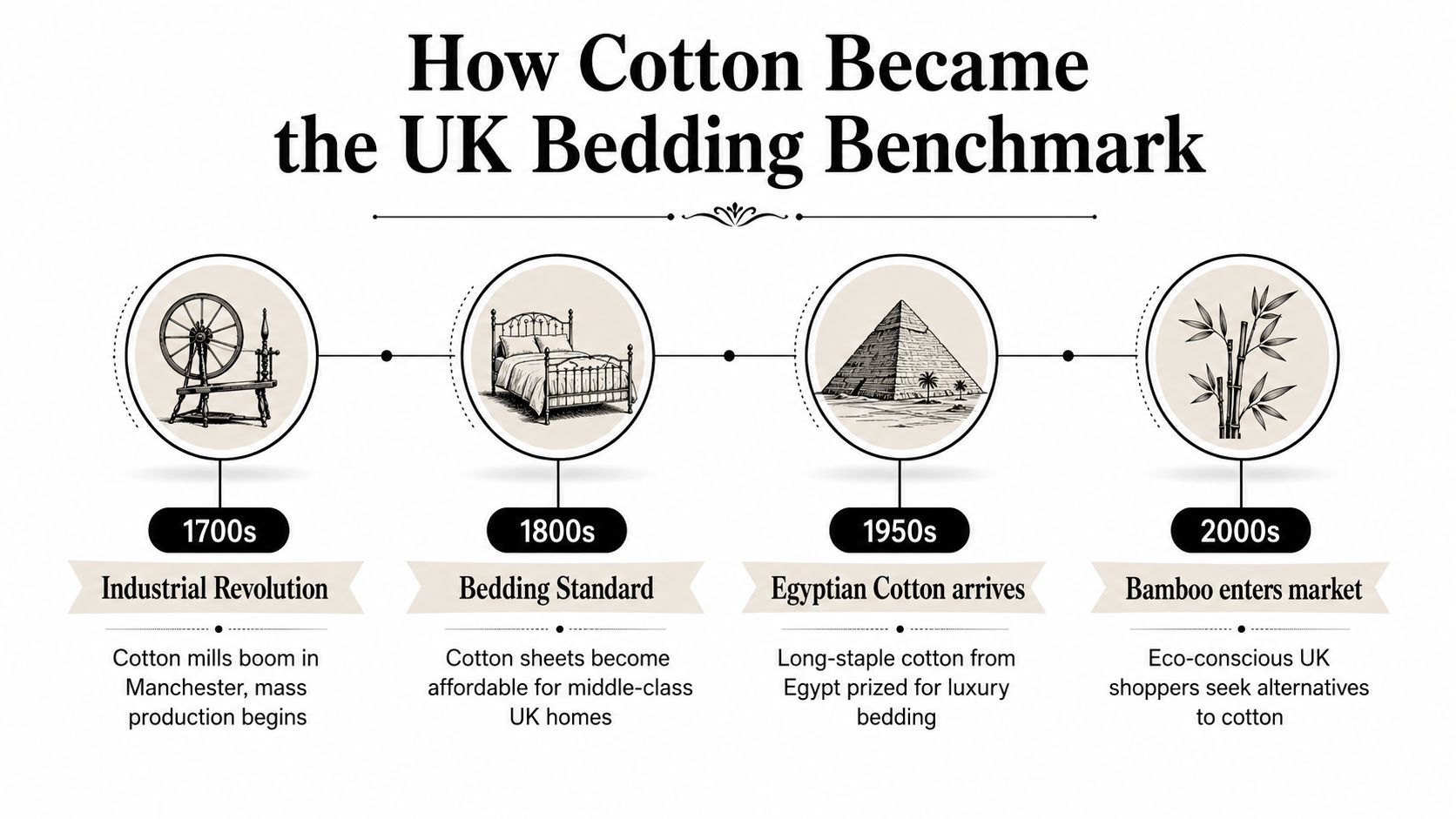
Cotton's strength isn't just history. It's the ease of comparing products. You can move between percale for a crisper surface, sateen for a smoother finish or a more substantial cotton cloth without leaving the same broad category. Product descriptions tend to be clearer, and households already know how cotton behaves in the wash.
Bamboo bedding has a much shorter UK retail history and occupies a more premium position. A current UK buying guide places bamboo at roughly 20% to 30% more upfront than alternatives, while average retail pricing for a single fitted sheet is reported to have risen from about £10 to £12 in 2020 to about £13 to £16 in 2026 in the UK bamboo sheets buying guide. These are market guide figures, not a promise about any individual product.
The same guide says the UK bedding market remains heavily import-dependent, with roughly 85% to 92% of unit consumption supplied by imports. That means neither fibre should automatically be treated as locally produced because it's sold by a UK retailer. The sensible comparison is therefore practical: what does the fabric feel like, how will you care for it, and will you use the feature that makes it cost more?
Cotton is the safe benchmark. Bamboo is the considered upgrade for shoppers who specifically want a smoother hand and stronger moisture control.
Bamboo usually wins on silky softness. It drapes closely over the mattress and feels smooth rather than crisp, which suits sleepers who dislike a slightly dry or textured cotton surface. Cotton offers more variation. A percale-style sheet can feel fresh and lightly crisp, while sateen cotton gives you a smoother, more polished surface.
Neither choice is automatically superior for every sleeper. The deciding factor is whether you prefer a sheet that disappears against the skin or one that gives a clearer, cooler textile sensation.
| Criterion | Bamboo Sheets | Cotton Sheets |
|---|---|---|
| Surface feel | Smooth, soft and often silky | Crisp, fresh or smooth, depending on weave |
| Moisture control | Can absorb up to 40% more moisture than cotton, according to Ideal Home's comparison | Absorbent and breathable, with performance varying by construction |
| Coolness | Often feels cooler to the touch and more breathable | Breathable, especially in lighter weaves |
| Best match | Hot sleepers, humid rooms and shoppers wanting a fluid drape | Classic bedding feel, varied weaves and robust everyday use |
| Washing tolerance | Usually benefits from gentler care | Durable cottons can typically withstand washes up to 60°C, as noted by Glamour's UK bedding guide |
| Overall character | Soft, smooth and premium-feeling | Familiar, versatile and easier to specify |
Bamboo's moisture advantage is most noticeable when warmth and humidity are the problem. A sleeper who wakes feeling clammy may appreciate the way bamboo handles moisture, particularly under a lighter duvet. The benefit doesn't mean the sheet will prevent sweating, and it won't compensate for an overly warm duvet or poor bedroom ventilation.
Cotton remains a strong choice for people who want airflow without a silky finish. Its wide range of constructions gives you more control over texture. A lightweight cotton sheet can suit summer, while a denser cotton option may feel more reassuring in a cooler room.
Shared beds expose personal preferences. If one sleeper runs hot and the other dislikes slippery bedding, a bamboo-cotton blend can be a sensible compromise. Pure bamboo-style fabric gives the warmer sleeper a smooth, moisture-conscious surface, while cotton in the construction can make the sheet feel less fluid and more familiar.
For skin comfort, focus on the actual product specification and washing routine rather than assuming that one plant source guarantees a particular result. A soft, well-finished sheet may feel pleasant, but claims about sensitivity or skin conditions need support from the product and an appropriate authority.
My verdict is straightforward. Choose bamboo for cool-touch softness and moisture management. Choose cotton if you prefer a crisp finish, want broader construction choices or regularly wash bedding hard.
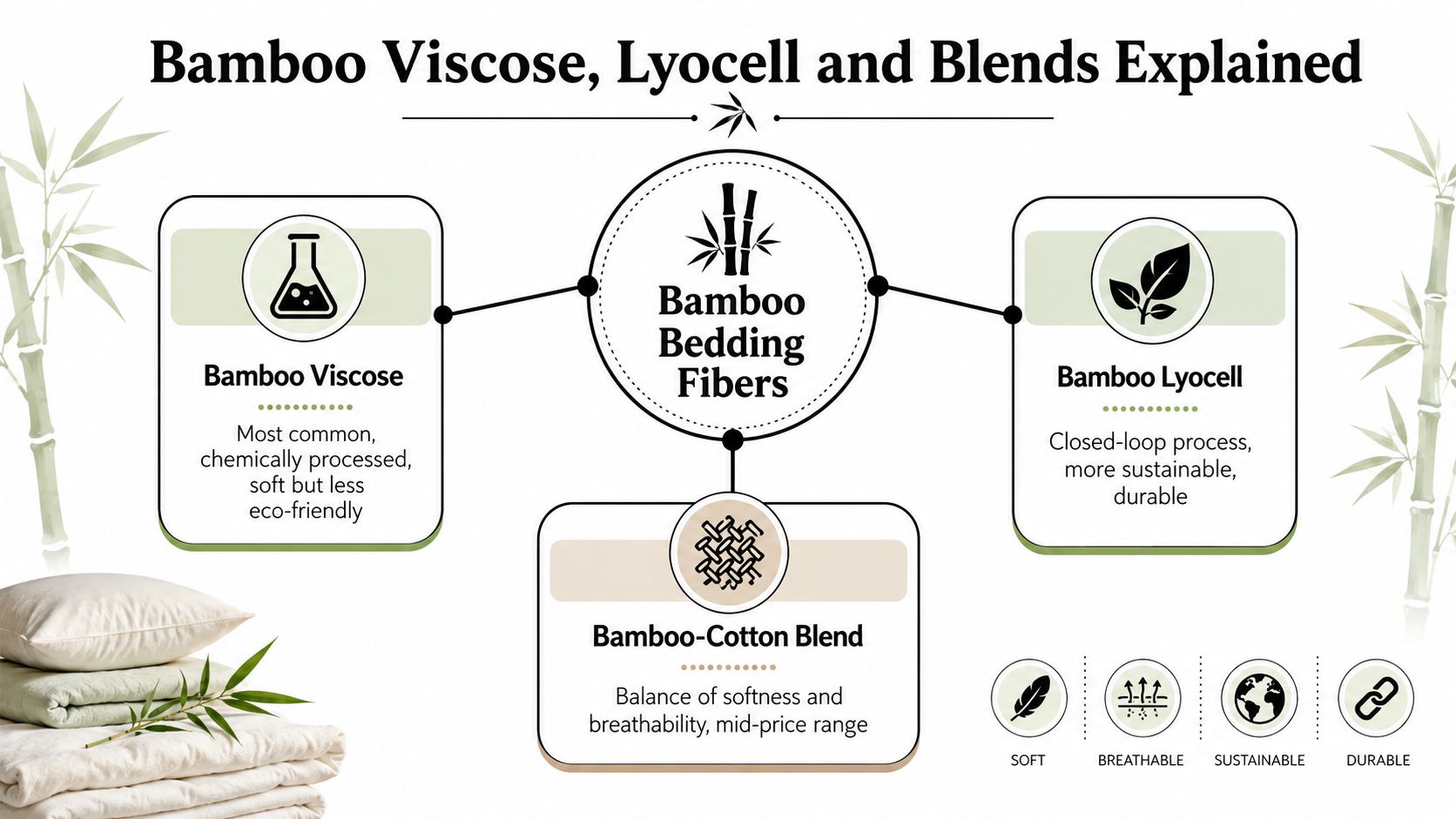
“Bamboo” is a plant origin, not a complete fabric description. The bamboo plant must be processed into a textile fibre, and the processing route changes what the finished sheet represents. That's why two products carrying a bamboo label can differ in feel, care requirements and the strength of their sustainability claims.
Bamboo viscose is widely encountered in bedding. It can produce the soft, fluid finish shoppers associate with bamboo, but the plant material is chemically processed into fibre. Don't treat the word “bamboo” as proof of a low-impact manufacturing process. Check the fibre composition, manufacturing information and any credible certification instead.
Bamboo lyocell is a different proposition. It's associated with a closed-loop processing approach, where the solvent is managed and reused within production. That doesn't make every lyocell sheet automatically sustainable, because the full picture still includes energy, water, transport, dyeing and product life. It does give you a more meaningful question to ask than whether bamboo grows quickly.
Bamboo lyocell is described as the fastest-growing natural segment in breathable sheets, rising from 12% in 2021 to 18% to 22% of volume in 2026, according to this UK breathable fitted-sheet market analysis. That trend signals growing interest, but it doesn't mean every lyocell product will outperform every cotton sheet.
A bamboo-cotton blend can offer a middle ground. One UK retailer lists a bamboo fitted sheet made from 70% bamboo and 30% cotton, with a 300 thread count sateen weave, providing a clear example of why composition and construction belong in the comparison. Thread count alone shouldn't decide your purchase, but the weave and fibre mix help explain the feel you're buying.
Use this checklist before trusting an environmental or performance claim:
Buyer's test: If a product page says only “bamboo”, keep comparing. You haven't yet been told enough to judge value or environmental credentials.
Cotton also needs scrutiny. Conventional cotton, organic cotton and long-staple cotton don't carry identical implications, and the weave can change the experience considerably. The strongest purchase is the one with a transparent composition and care label, not necessarily the one with the most attractive plant-based marketing.
Your laundry routine may decide this comparison before your fingers do. Cotton is generally the more forgiving choice for households that want straightforward washing, while bamboo's softness is better preserved when you avoid aggressive heat and handling. The correct care label always takes priority because finishes, elastics and blends can alter the recommended method.
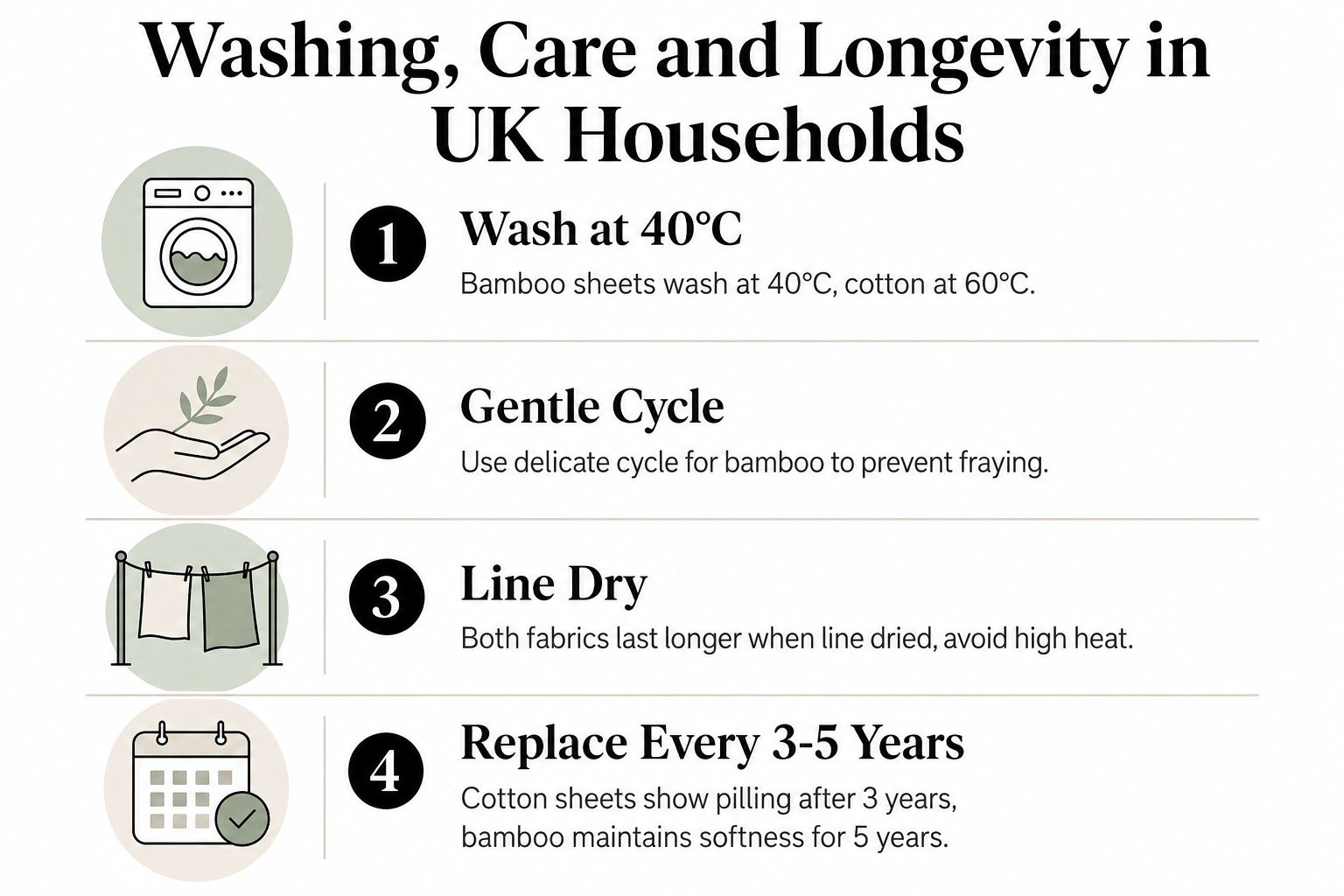
Wash bamboo sheets on the temperature and cycle stated by the manufacturer. A gentler cycle, mild detergent and moderate drying will usually put less stress on the fabric than a harsh programme, but you shouldn't override the label. Avoid filling the drum too tightly, because sheets need room to rinse properly and excessive friction can affect a smooth surface.
Line drying is a good habit where practical. It reduces exposure to high heat and gives the fabric time to dry without the repeated tumbling that can roughen delicate fibres. If you use a tumble dryer, select the appropriate low-heat setting rather than assuming that every sheet can take the hottest programme.
Cotton gives you more latitude. Durable cottons can typically withstand washes up to 60°C, as reported in the UK bedding guidance from Glamour, which makes cotton appealing when you prioritise wash tolerance. That doesn't mean every cotton sheet should be washed at that temperature. The product label remains the instruction that matters.
Durability depends on fibre quality, construction, laundering and how often a set is used. Don't accept precise lifespan promises unless the manufacturer supports them. A well-made cotton sheet may outlast a poorly made bamboo sheet, while a carefully handled bamboo sheet can retain the softness that attracted you to it.
Laundry verdict: If you want bedding that fits a demanding wash routine, choose cotton. If you value touch and will follow gentler care, bamboo can repay the extra attention.
A hot sleeper in a centrally heated flat has a different requirement from a child in a cooler north-facing bedroom. The useful answer to bamboo sheets vs cotton is therefore situational, not absolute.
For hot sleepers, bamboo is my first choice. It can hold up to 40% more moisture than cotton and may sleep 2°C to 3°C cooler, according to BellemDorm's bamboo bedding guidance. Those figures describe the reported comparison, not a guarantee for every bedroom, but they identify the features that matter most: moisture handling and temperature regulation.
For more practical advice on choosing bedding around overheating, see this guide to the best sheets for hot sleepers. Pair any sheet with a suitable duvet and breathable sleepwear, because the sheet can't control the entire microclimate of the bed.
For sleepers who prefer crispness, cotton is the safer purchase. Choose the cotton weave that matches your preference rather than assuming all cotton feels the same. A structured surface feels fresher and less slippery, which some people find more comfortable when turning at night.
For children's beds, cotton often makes practical sense because it's familiar, widely available and less demanding in the wash. Bamboo can work where softness and moisture control are the priority, but check the care label and avoid unsupported claims about allergies or skin conditions.
A guest room usually benefits from cotton's broad appeal. Guests have varied preferences, and cotton offers a neutral, recognisable feel that won't seem unexpectedly silky or slippery.
The video below offers another visual way to think about bedding comfort across changing conditions.
My seasonal verdict is simple. Buy bamboo when heat and moisture disrupt sleep. Buy cotton when easy care and a crisp, versatile feel matter more. Use a blend when you're trying to avoid an argument between two very different sleepers.
Start with your main complaint. If you wake hot, dislike clamminess and want a smooth sheet, bamboo is worth considering despite its premium position. If your priority is a familiar feel, high wash tolerance and plenty of weave choices, cotton remains the smarter buy.
Don't stop at the front-of-pack wording. Check these details in order:
My recommendation for most UK households is cotton for dependable everyday bedding, bamboo lyocell when transparent processing and moisture control are priorities, and a bamboo-cotton blend when you want a compromise. Bamboo viscose can still feel excellent, but the label shouldn't receive an automatic sustainability pass.
For a closer look at what to check before buying, use this guide to the best bamboo sheets. Then compare the live specifications, composition and care details of the bedding available to you rather than buying on fibre name alone.
Explore Peppervale for current home and living products, including bedding and bedroom essentials, and use the fibre, weave and care guidance above to narrow your choice. Browse the live catalogue alongside practical household items, so you can choose bedding that fits the way your home works.


