Share:

- Women
- Men
- Kids & Baby
- Workwear
- Footwear
- Accessories
- Home & Living
- Health & Beauty
- Pet Supplies

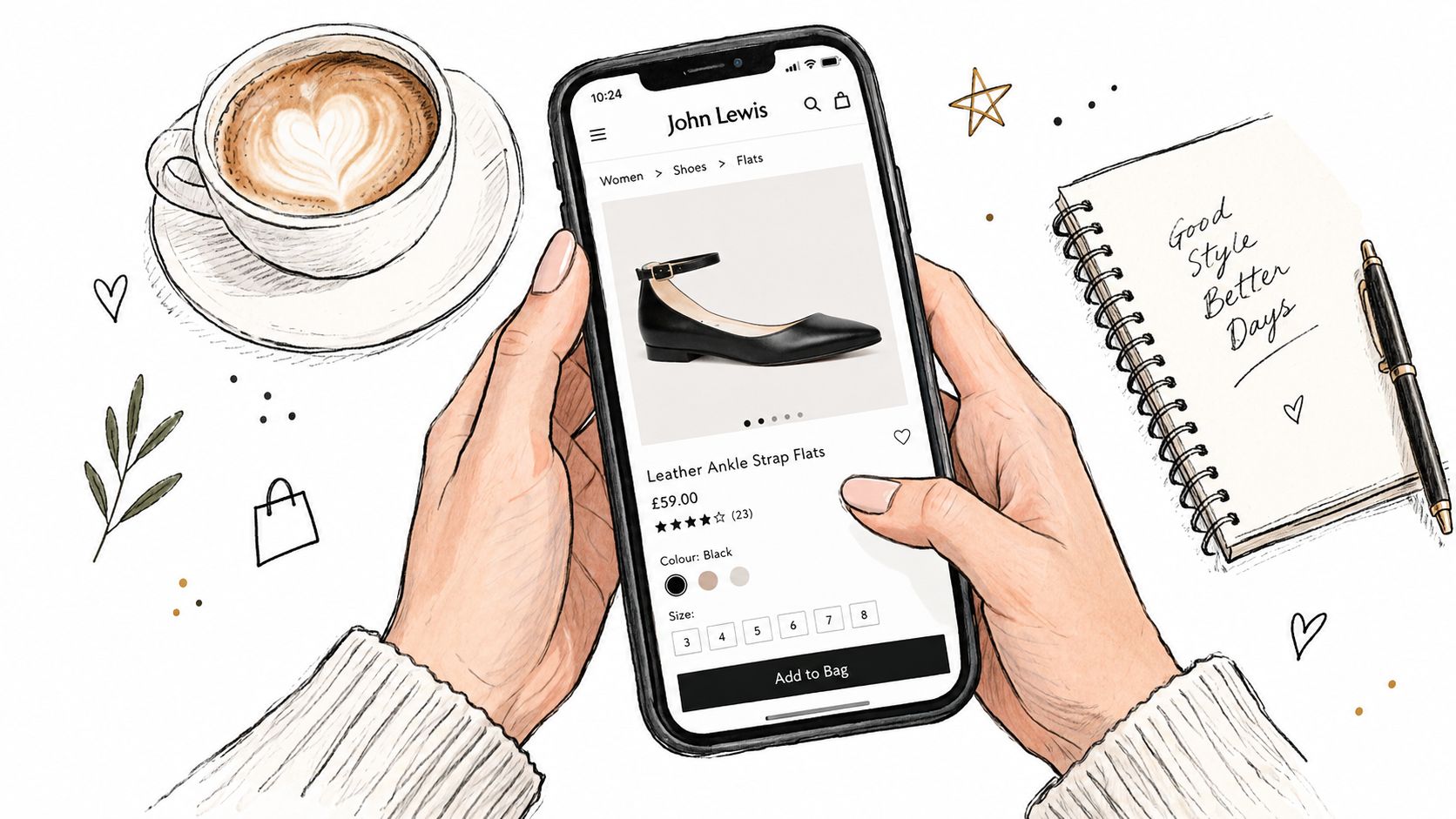
You're scrolling a high-street site at lunchtime, looking for a pair of flats that won't make your outfit feel unfinished. Then you spot them: black ankle strap flat shoes, polished enough for the office, relaxed enough for jeans, and apparently secure enough for a full day out. They look like the sensible choice. The problem is that a flattering photograph can't show whether the strap will bite, whether your heel will slip, or whether the shoe will still feel right after your feet have changed through the day.
The right pair can be one of the most useful shoes in a UK wardrobe. The wrong pair becomes an expensive return. This guide focuses on the decision that matters most, not just how ankle strap flats look, but whether their fastening improves the fit for your feet and your routine.
Ankle strap flats have a useful middle ground. They look more considered than a plain ballet flat, but they don't carry the formality of a court shoe or the weight of a loafer. That makes them easy to reach for with straight-leg jeans, midi dresses and well-cut trousers, particularly when you want a neat finish without adding height.
Their appeal also has practical roots. The British Footwear Association's account of strap-fastened women's shoes describes how women's footwear in the UK became simpler and flatter by the end of the 1790s, with ribbons used around the ankle to help keep shoes on. Shoe buckles introduced in 1660 remained in use in the UK until 1791. The modern ankle strap isn't a random decorative detail. It belongs to a long shift towards footwear that combines a lower profile with a more reliable hold.
The style also gained a clear mid-century foothold. SATRA's UK footwear history coverage notes that ankle straps appeared in fashionable 1950s evening and daywear, helping lighter shoes stay on while preserving a more revealing look. The same source identifies the “flatty” as a popular 1950s style, with sales peaking after Audrey Hepburn said they were her favourites.
On British pavements, office floors and uneven streets, a fastening can feel reassuring. It may stop the foot sliding forwards and reduce the need to grip with the toes. NHS podiatry guidance recommends an adjustable fastening, such as laces, straps or Velcro, to help keep the foot secure, as explained in this NHS footwear guidance.
But the look is more reliable than the fit. A strap that sits directly over the ankle bone can create a pressure point, while a fixed strap may leave no room for natural changes in foot volume. That's why I'd never buy this style on appearance alone. The shoe needs to hold your heel without asking the ankle fastening to do all the work.
Start with length, then solve width and retention. An ankle strap can fine-tune how securely a shoe sits, but it can't turn a short shoe into a longer one or make an unsuitable toe box comfortable.
Measure both feet in the evening, standing upright, with your heel against a wall. Record the heel-to-toe length in millimetres, then use the individual brand's conversion chart. Feet can differ, so use the larger measurement when deciding which size to test.
UK listings show that ankle strap flat sandals are commonly offered in standard and wide fits, while some product pages provide True-to-Size guidance and adjustable fastening details. Some styles also use a low heel stack of around 10 mm, which gives you a useful reference when comparing a flat sole with a minimally raised one. You can see an example of this approach in the Marks & Spencer Go Walk Flex ankle-strap flat sandal listing.
Check the width label before you look at colour. A wide foot in a regular-fit shoe may feel cramped at the forefoot even when the length seems correct. Conversely, a narrow heel can move inside a wide shoe, and tightening the ankle strap may create pressure without fixing that movement.
Look at the back of the shoe as well. A heel that sits securely before you tighten the strap is a better starting point than one that relies on maximum tension. The toe shape, sole flexibility and the position of the rear edge relative to your ankle bone all affect whether the shoe feels stable or rubs.
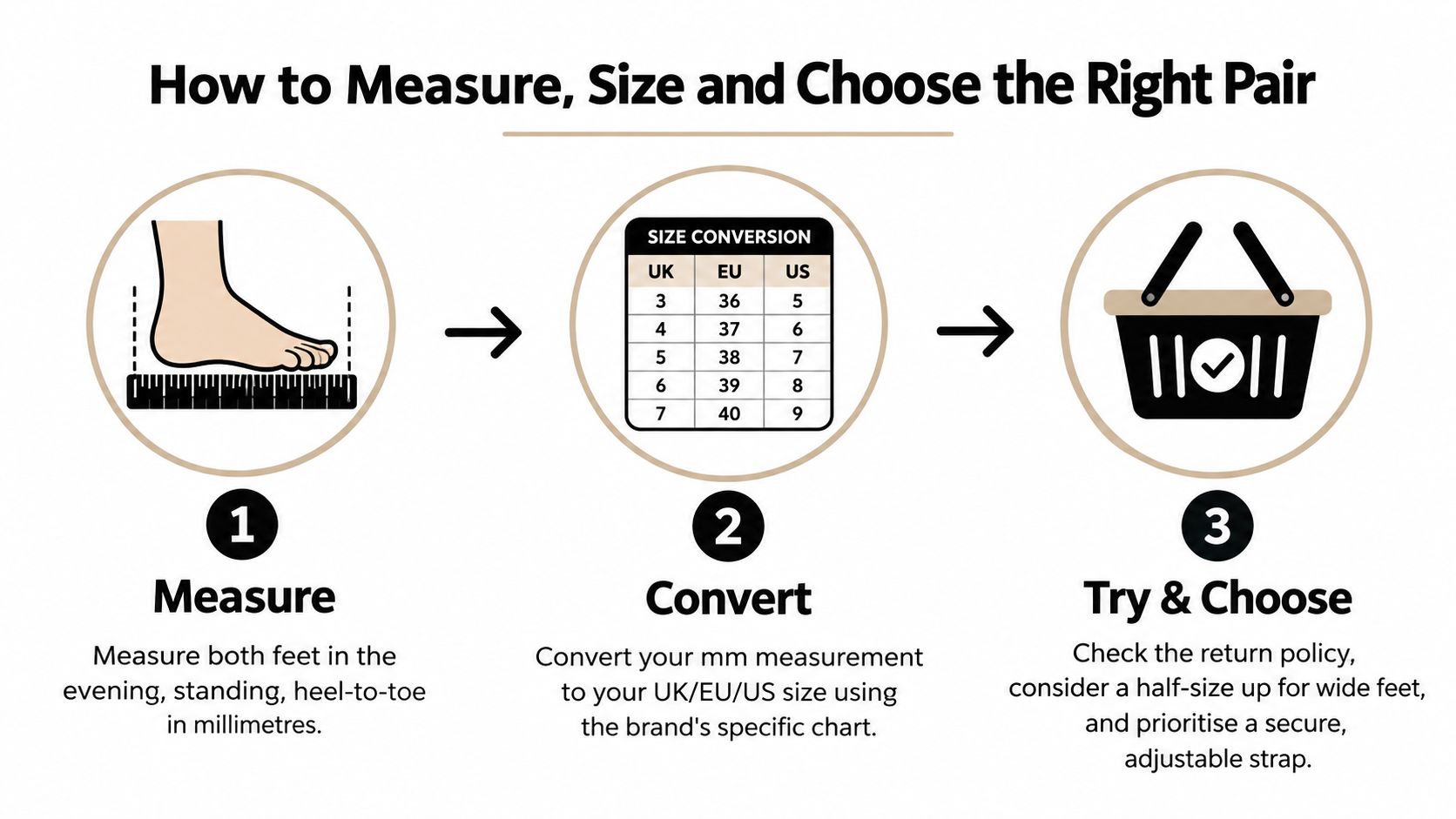
Buying rule: Don't order two sizes up to solve a tight strap. You'll usually create excess length, heel movement and toe blisters instead of fixing the original pressure point.
Online returns make this decision worth taking seriously. A British Footwear Association member survey reported a median online footwear return rate of 19%, with responses ranging from 2% to 31%. KPMG also found that 13% of UK shoppers who buy clothes or footwear online usually order multiple sizes and return the rest, as reported in the KPMG coverage of online shopping behaviour. A careful measurement routine is less frustrating than guessing and repacking.
For more help with UK sizing, use Peppervale's women's clothing size guide alongside the footwear brand's own chart. Clothing and shoe measurements aren't interchangeable, but the same principle applies, check the stated measurements rather than assuming every UK size fits identically.
The ankle strap version isn't automatically the superior flat. It solves one problem, secure retention around the heel and ankle, while creating another, a fastening that may rub or visually interrupt the leg. Ballet flats, slingbacks and mules each make a different compromise.
| Feature | Ankle Strap Flats | Ballet Flats | Slingbacks |
|---|---|---|---|
| Grip | Strongest when the strap is correctly adjusted and the heel already fits | Depends heavily on a snug heel and forefoot fit | The back strap helps retain the heel, but the front can still move |
| Formality | Polished without looking too dressy | Casual to softly feminine | Usually the dressiest of the three |
| Comfort range | Good for feet that suit the strap position and width | Comfortable when the shape matches, but toe gripping can become tiring | Can feel light and open, but the rear strap may rub |
| Styling versatility | Works with jeans, dresses and tailored trousers | Easy with casual outfits and soft dresses | Strong with office and occasion dressing |
| Main drawback | Strap pressure or a shortened-looking leg line | Slipping, toe gripping and limited adjustment | Less midfoot support and possible heel instability |
Ballet flats have the cleanest silhouette and the easiest slip-on routine. They're particularly effective with relaxed denim, flowing dresses and cropped trousers when you want the ankle left visually uncluttered. Their weakness is that they need the shoe itself to fit closely. If the heel is loose, or the forefoot doesn't hold the foot securely, you may compensate by curling your toes or gripping through the arch.
Slingbacks expose more of the foot and can look sharper with a fitted outfit. They're a good option if you dislike a strap crossing the ankle, but the single rear strap doesn't provide the same sense of containment. On uneven ground, it may shift, and a poorly positioned edge can rub the Achilles area.
Choose ankle strap flats when you want a visible fastening and a more anchored feel. Skip them in favour of ballet flats when a clean leg line matters most, or choose slingbacks when you want a dressier open shoe and already know the rear strap suits your heel. For many people, the best choice comes down to whether the strap improves security without becoming the most noticeable thing they're wearing.
Ankle strap flats tend to suit slim to medium-width feet, defined ankles and average-to-narrow heels. They're especially helpful when the forefoot isn't dramatically wider than the ball of the foot, because the shoe can hold the foot evenly rather than forcing the ankle strap to compensate for movement elsewhere.
They make sense for office days with mostly seated meetings, brunches, city walking on reasonably even pavements, and weddings where you'll spend a defined portion of the event seated. They can also be a sensible holiday choice for cobbled streets, where a shoe that stays attached to the foot is more useful than a delicate slip-on.
The style becomes less convincing when the ankle fastening has to fight the shape of your foot.
For these situations, look at adjustable slingbacks, elasticated Mary Janes or supportive loafers instead. NHS heel and footwear guidance recommends a fastening that stabilises the heel, and Suffolk NHS footwear advice gives 2.5 cm as a maximum heel height for low flat-style footwear. Bradford District Care also highlights adjustable fastening for heel stability, while Wrightington, Wigan and Leigh NHS guidance says heel height should generally be no higher than 4 cm and that the fastening should sit across the top of the foot near the ankle to work properly.
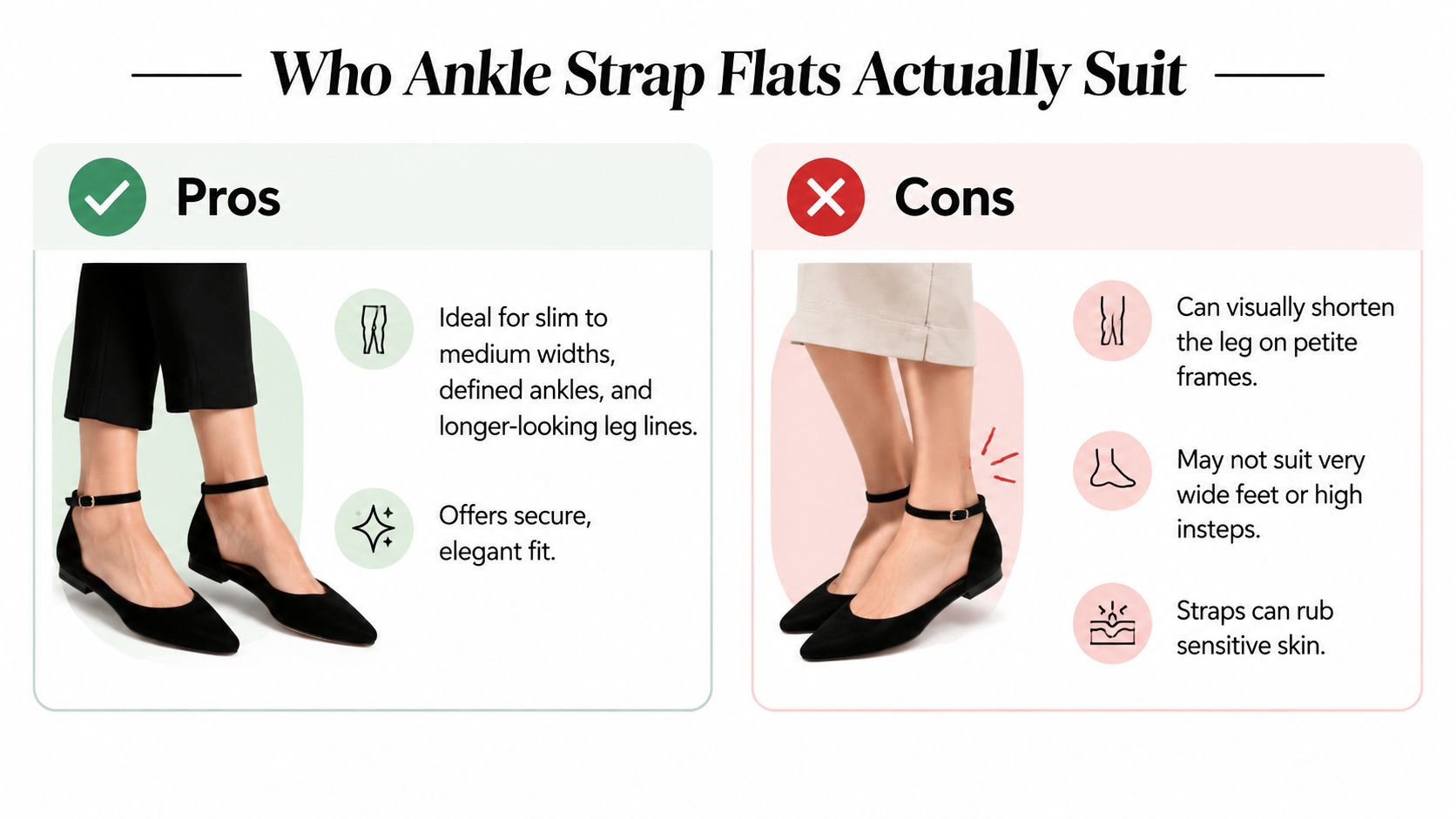
Try both shoes. Walk ten paces, then stand on a slight slope. If the strap bites, shifts or leaves a strong mark, leave them behind. A shoe can look elegant and still be the wrong purchase.
Ankle strap flats work best when the rest of the outfit gives them room to be seen. With straight-leg jeans, a tucked Breton top and a trench coat, the fastening adds a small polished detail without making the outfit feel overdone. For a smart-casual evening, try a midi wrap dress with a leather jacket, then keep the jewellery simple so the shoe remains part of the look rather than competing with it.
Cropped trousers are more divisive. They show the strap clearly, which can look deliberate with a fine knit and well-fitted coat, but the horizontal line may make the leg appear shorter. If that bothers you, choose trousers that finish close to the ankle bone and keep the shoe and trouser colours related.
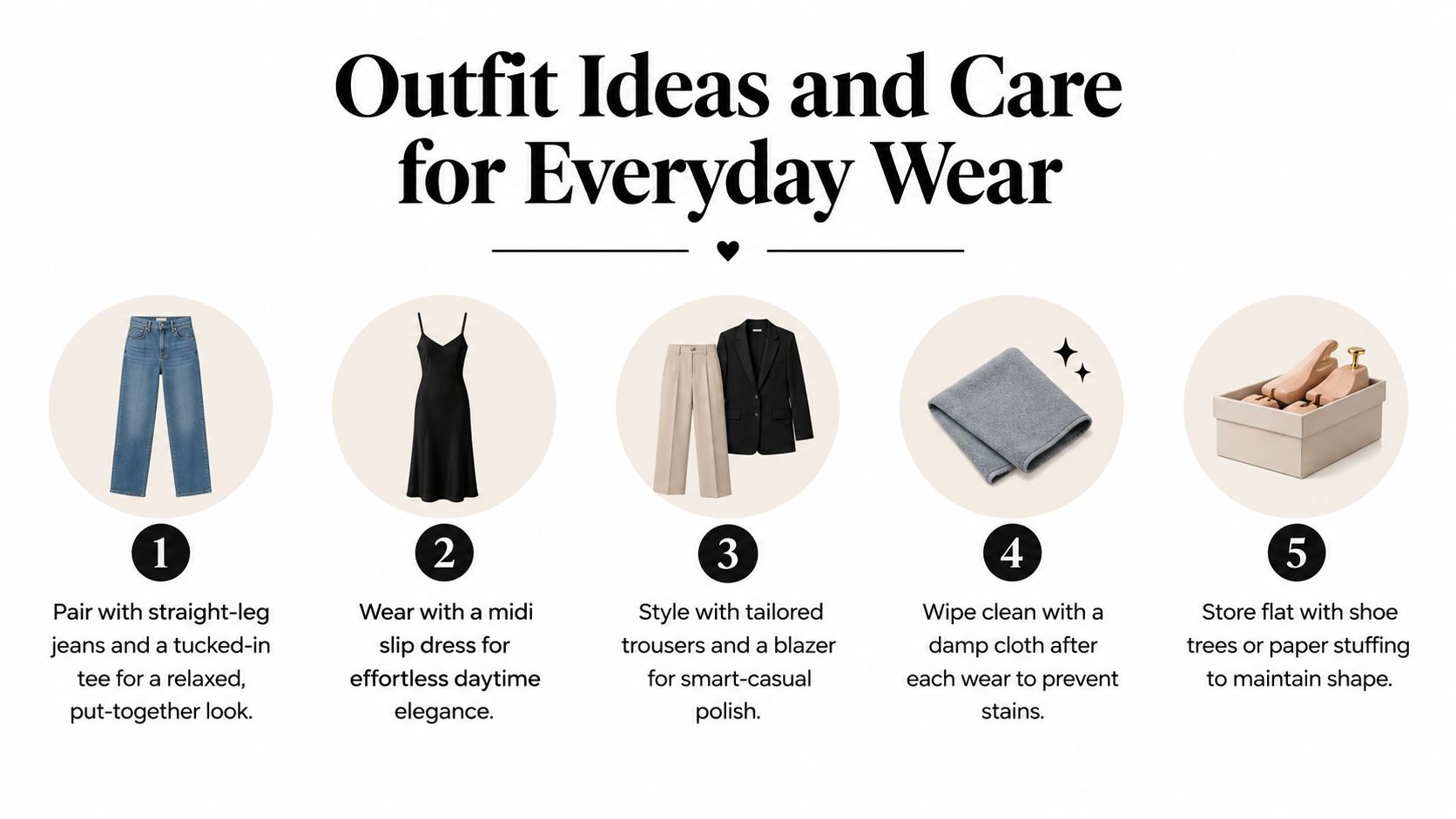
Brush away grit after each wear. For leather, use a slightly damp cloth, then apply a neutral cream every four to six weeks to keep the surface conditioned. Don't saturate the shoe, and test any product on an inconspicuous area first.
Treat suede with a protective spray before the first outing, then use a suede brush to lift the nap afterwards. If rain catches you, air-dry the pair away from radiators. Stuff them with paper or use shoe trees to support the shape, especially around the toe.
Rotate between at least two pairs so the soles and straps can recover between wears. Inspect the heel tab regularly, as it often takes the most repeated contact when you put the shoes on and remove them.
For wardrobe foundations that make these outfits easier to build, browse Peppervale's women's basics collection.
Use this list before you commit to a pair. It separates a suitable shoe from one that only works in a product photograph.
For broader online shopping decisions, Peppervale's UK online clothing store guide offers a useful reminder to compare product information carefully before adding anything to your basket.
Try both feet in the afternoon. Walk ten paces on a flat surface and then on a slight slope. Check whether the heel stays put without relying on tight strap tension, slide a finger behind the strap, and inspect the stitching and sole bonding.
Take a quick photograph with the outfits you expect to wear. Set a budget ceiling based on likely wears rather than the pair's price alone, and keep a simple shoe diary with the date and brand so you can spot repeat fit problems.
If the strap leaves a red line within five minutes, send them back.
Peppervale brings together footwear, clothing and accessories in one UK online shop, so you can compare ankle strap flats with the wardrobe pieces you'll wear them with. Visit Peppervale to browse the current catalogue and choose your next pair with fit, outfit and everyday use in mind.


