Share:

- Women
- Men
- Kids & Baby
- Workwear
- Footwear
- Accessories
- Home & Living
- Health & Beauty
- Pet Supplies

You're standing in a fitting-room cubicle with two animal print tops over one arm. One looks sharp, grown-up and easy to wear with the jeans you came in wearing. The other makes you feel like you're auditioning for a themed night out you never agreed to attend. That's the whole problem with buying an animal print top. The gap between chic and try-hard is small, and most product pages are useless at explaining it.
My take is simple. Animal print works best when you treat it like a neutral, not a stunt. Think of it the same way you'd think about denim, a Breton stripe or a black loafer. It should slot into your wardrobe and do some work, not demand a full personality change.
That's also why this isn't about catwalk fantasy. It's about the choices UK shoppers make. Does the print look expensive or cheap? Will the fabric cling in the wrong places? Is that satin blouse going to wear better in photos than in real life? Will you still like it after a wash? And can you get enough outfits out of it to justify the spend?
Animal print has real staying power in British fashion. Scholarly work on Victorian Britain shows animal-derived commodities shaped taste and status in the 19th century, and the V&A notes animal prints stayed popular through the 20th century. A key modern milestone came in 1947, when Christian Dior put leopard print on the catwalk, a moment widely used in UK fashion history to mark its move into high-fashion womenswear (Victorian Britain research and fashion history context).
So yes, an animal print top can absolutely earn its place. You just need to buy the right one. The winners usually come down to four things: print scale, fabric blend, fit, and whether the top suits the life you lead. Get those right and you walk out of the cubicle knowing exactly which one deserves your money.
Shopping for an animal print top often happens backwards. It starts with whether the print looks fun, then trying to force it into a wardrobe later. That's how tops end up hanging unworn for months.
Start with the job instead. Do you want a blouse for work with trousers? A relaxed tee for denim and trainers? A cami that layers under a cardigan? Once you decide the role, half the bad options drop away immediately.
Practical rule: If you can already name three things in your wardrobe you'd wear it with, it's probably a smart buy.
An animal print top should earn its keep the same way a plain black top does. It should work under jackets, with knits, tucked into trousers, and left loose over jeans. If it only works with one exact outfit, skip it.
The first difference is contrast. Softer, muddier prints usually read more expensive and easier to wear. Very bright tan, hard black outlines and glaring white backgrounds can look harsh fast.
The second is scale. Small to medium motifs are more forgiving. Giant spots or thick, dramatic stripes make the top feel louder before you've even added shoes or jewellery.
The third is fabric attitude. Matte fabrics settle into an outfit. Very shiny polyester satin often shouts. It can look great for evening, but for daytime it often does too much.
Here's the shortlist I'd use in a fitting room:
Worth it: a top that acts like a reliable neutral, flatters your usual bottoms, and doesn't need special styling tricks every time.
Not worth it: a novelty print in a difficult shape, or a shiny fabric in a print so bold it limits the rest of your outfit.
That's the shift that makes shopping easier. You stop asking “Is animal print too much?” and start asking “Is this versatile?” Once you think that way, the choice gets far less messy.
Animal print isn't one thing now. UK trend coverage has moved well beyond basic leopard, with editors treating animal print as a wardrobe constant and often styling it as a neutral within black, white and brown palettes (UK trend coverage on animal print as a neutral). Search interest backs that up. In recent UK data, cow print rose 188% over the last two months, with leopard up 8%, zebra up 45%, snake up 38% and tiger up 30%. FashionUnited also reported a 329% rise in cow-print searches over the past year (UK animal print search growth data).
That doesn't mean every print is equally useful. Some are wardrobe staples. Some are side characters.
| Typical Colours | Outfit Energy | Best UK Season | Pairs Well With | |
|---|---|---|---|---|
| Leopard | Taupe, brown, black, cream | Easy, classic, versatile | All year | Black, indigo denim, camel |
| Zebra | Black and cream or white | Graphic, cleaner, sharper | Autumn to spring | Black, bright colour blocks, grey |
| Snake | Grey, beige, brown, muted metallic tones | Polished, slightly dressy | Autumn, winter, evening wear year-round | Black trousers, faux leather, ecru |
| Croc effect print | Usually tonal browns, greys or blacks | Sleek, dressier, more fashion-led | Autumn and evening | Black skirts, tailored trousers |
| Tiger | Rust, tan, black | Warmer, bolder, seasonal | Autumn | Dark denim, chocolate, black |
| Cheetah | Pale tan, black, softer brown | Lighter, playful, casual-smart | Spring and autumn | Blue denim, tan, soft cream |
| Cow | Brown and white or black and white | Casual, trend-led, novelty | Spring, summer, casual autumn layering | Denim, ecru, simple trainers |
| Dalmatian | Black and white or cream | Neat, light, less heavy than leopard | Spring through autumn | Black tailoring, denim, camel |
Leopard is still the safest buy. It's the default for a reason. Smaller or slightly blurred leopard spots look more grown-up than very sharp, high-contrast versions. If you want one animal print top that behaves like a basic, pick leopard.
Zebra is better than many people think. In monochrome, it acts like a graphic neutral. It looks especially strong with black trousers, grey knitwear, or one block of colour like cobalt or red.
Snake is useful when you want something dressier without sequins or fuss. It often comes on satiny or slinkier fabrics, which suits dinners, drinks and smarter office looks.
A good example of a wearable everyday route is this brown leopard cami swing vest top. The softer brown family keeps it approachable, and that's exactly why leopard still outperforms most novelty motifs for repeat wear.
Tiger and cheetah can work well, but they're warmer and more directional. That's great with autumn layers, less useful if your wardrobe leans cool-toned or minimal.
Cow and dalmatian are where I'd be stricter. They're fun, but they aren't core wardrobe builders. They work best as casual accents, not as your only printed top. If you like cheetah beyond clothing, this guide to a cheetah print lunch bag for busy women is a handy example of how the motif can look stylish in daily life without taking over an outfit.
Softer prints integrate. Sharper prints dominate. That's usually the difference.
One last warning. Polyester satin prints often photograph brighter than they wear. Product shots can make them look luxe, but in daylight they may read shinier and louder than expected. If you want an everyday animal print top, matte usually wins.
Fabric decides whether the top skims, clings, breathes, creases or turns sweaty halfway through the day. If you ignore the label, you're guessing.
UK retailers often use blends for this category. One Wallis animal print top is listed as 59% polyester, 40% viscose and 1% elastane, while another UK listing shows 95% polyester and 5% elastane (example of UK animal print top fibre blends). That mix tells you a lot before you even touch the garment. Polyester helps with shape and crease resistance, viscose adds drape and breathability, and elastane improves recovery.
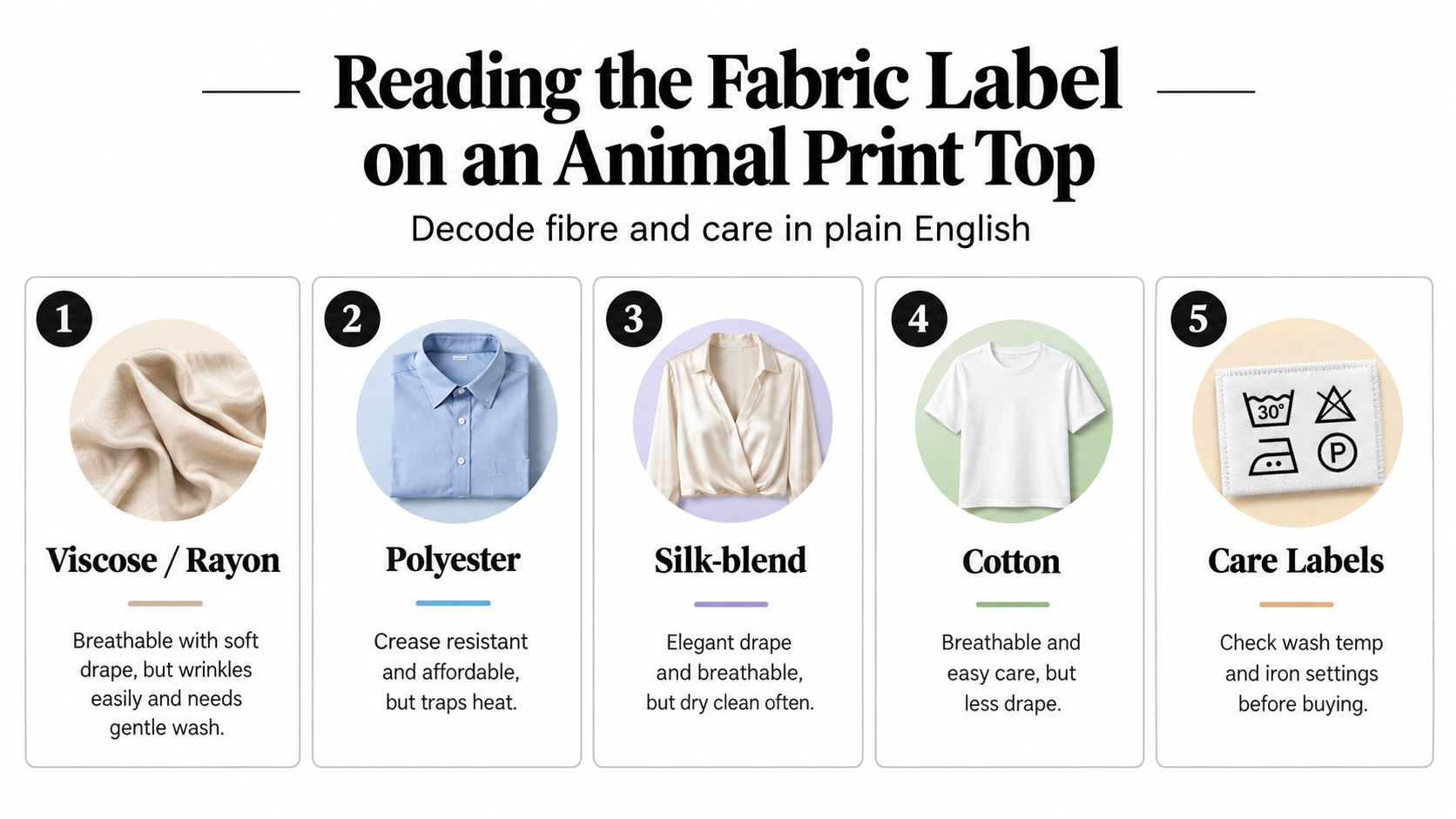
Viscose or rayon usually feels soft and fluid. It hangs well, which is why it flatters blouses and looser shirts. The downside is simple. It can wrinkle, and it often needs gentler washing.
Polyester is practical. It resists creasing, holds colour well and keeps its shape better in many budget and mid-price tops. The trade-off is that cheap polyester can trap heat and look shiny.
Cotton is the easy everyday option. It's breathable, matte and usually less fussy. It won't always give you that slinky drape, but for tees and casual animal print tops it's often the easiest to live with.
Silk or satin-feel fabrics look smarter straight away. They also show snags, sweat marks and washing mistakes faster. Buy them when you want a specific dressier use, not because they look fancy on a hanger.
A little elastane can save a fitted top. In body-skimming shapes, it helps the fabric bounce back rather than bagging out by lunchtime.
Jersey and woven matter too:
Fabric truth: If you hate ironing, don't buy a top whose nicest feature is a delicate drape that creases on sight.
You'll also notice that some prints sit flatter and sharper than others. Polyester often gives a cleaner, crisper printed surface. Viscose tends to look softer and more fluid. Neither is automatically better. It depends whether you want polish or ease.
The best label is the one that matches your habits. If you want throw-on convenience, buy for washability first. If you want movement and a nicer drape, accept that you may need to treat the garment with more care.
Fit changes the entire mood of an animal print top. The same leopard fabric can look office-ready in one shape and strictly Sunday-only in another.
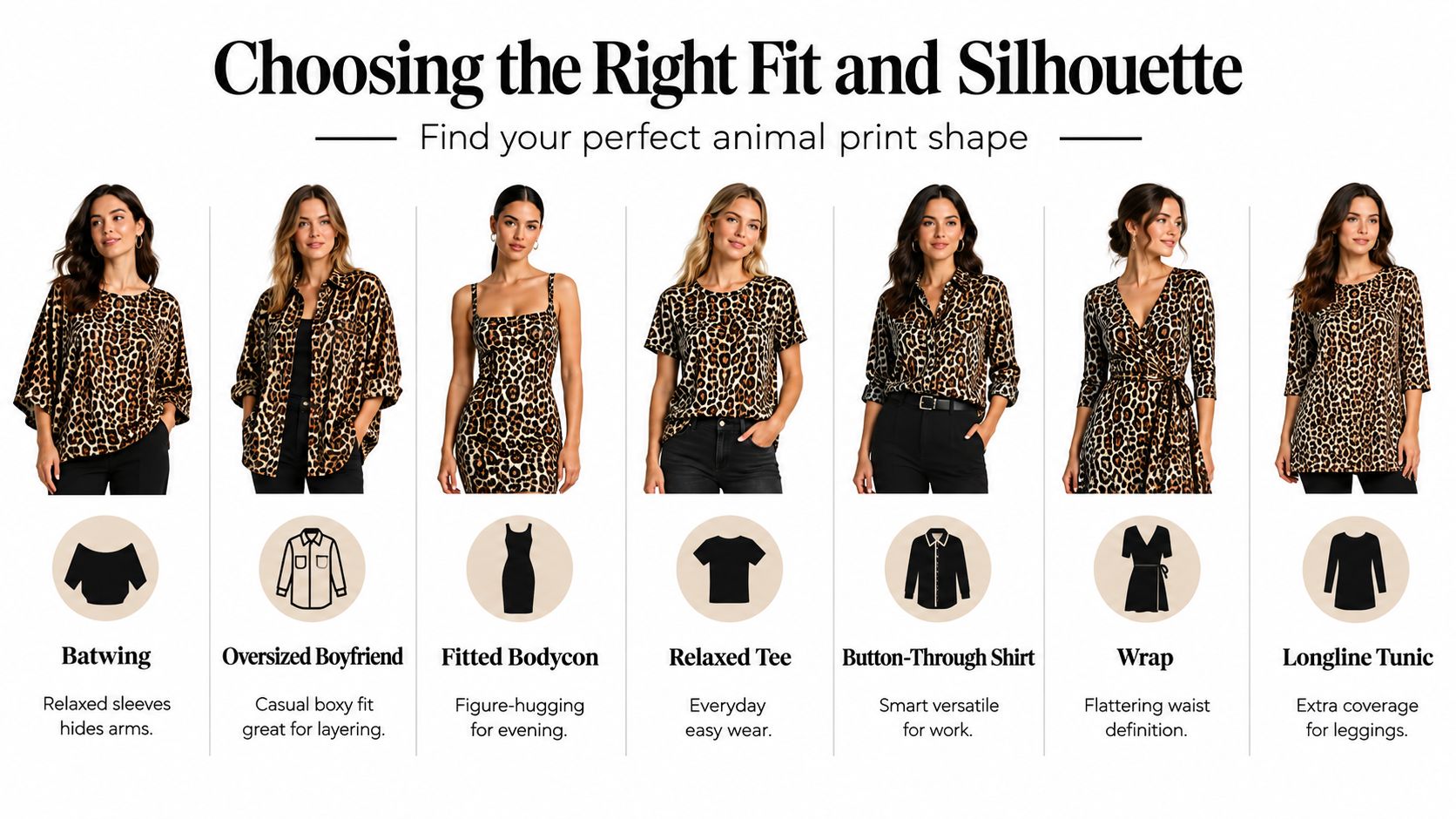
Batwing tops are forgiving through the upper arm and bust, and they work nicely if you like ease without full oversize volume. They're strong with slim trousers or straight jeans, but they can swamp you if the hem is long and the fabric is heavy.
Oversized boyfriend shirts look modern when the print is restrained. They suit broader shoulders and straighter body shapes especially well. If you're curious why that shape hangs the way it does, this piece on oversized blouse sewing at B-Sew Inn is a useful visual reference for the construction.
Fitted bodycon animal print tops are easiest to overdo, but they can work brilliantly with structured pieces. Keep the print smaller and the rest of the outfit simple. That's where they look sleek rather than loud.
Relaxed tees are the safest casual option. They suit most wardrobes because they don't ask much from the wearer. Denim, trainers, cardigan, done.
Button-through shirts are the best all-rounders for work and smart-casual use. They tuck well, layer neatly and make almost any print feel more polished.
Wrap tops give shape quickly and are especially good if you want waist definition without a tight fit everywhere else. They're one of the most flattering options for mixed proportions because they let you adjust the fit.
Longline tunics are useful with leggings or slim trousers, but they need care. If the print is large and the length is long, they can feel dated fast.
For a fuller bust, viscose-heavy blouses often look lovely until they pull across the front. That's where checking measurements matters more than automatically sizing up. Going bigger can fix the bust but ruin the shoulder line.
If sizing charts usually confuse you, use a proper UK women's clothing size guide as a cross-check before you buy.
Match the top to the bottom you wear most. If you live in straight-leg jeans and trousers, buy a top length and shape that works with those first.
The right silhouette should make the print feel easier, not harder. If the shape already feels like a compromise before you style it, leave it behind.
The easiest way to stop overthinking animal print is to use one top four different ways. A leopard silk-blend blouse is a good test case because it can go smart, casual or dressy without much effort.
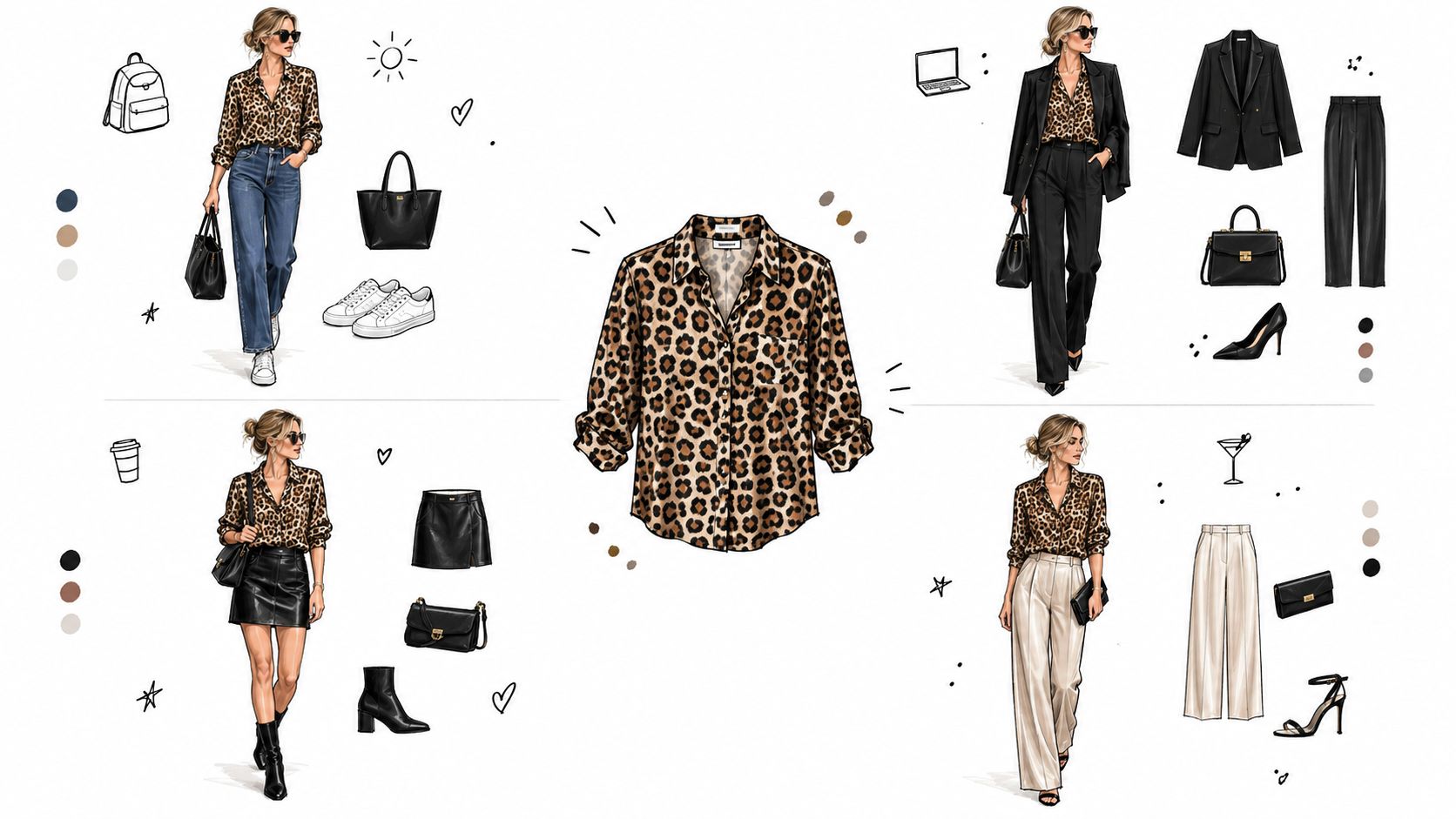
Wear it with straight-leg indigo jeans, white trainers and a soft grey cardigan. The neutral idea earns its keep. The blouse adds interest, but the cardigan and denim calm everything down.
If the outfit starts looking too stark, swap optic white denim or brilliant white trainers for ecru or cream. Softer whites sit better with most leopard tones.
Tuck the blouse into high-waisted camel trousers. Add a fine black knit underlayer if the blouse is lightweight or slightly sheer, then finish with loafers.
This works because every other piece is plain and structured. The print becomes the texture in the outfit, not the entire event.
Keep jewellery simple. Gold hoops, a watch, maybe one ring. Animal print doesn't need a supporting cast.
Wear it loose over leather-look leggings with a denim jacket and ankle boots or clean trainers. This is one of the best ways to make a smarter animal print top feel less precious.
The denim jacket matters here because it breaks up the print and makes the whole thing feel grounded. Without that extra plain layer, a dressier blouse can look too “done” for daytime.
A quick styling demo helps if you're still unsure how much pattern your outfit can handle:
Pair it with a black slip skirt, heels and gold hoops. Keep the bag plain. An animal print top proves it can replace a plain black going-out top without making the outfit fussy.
The trick is restraint. Let the print be the only obvious pattern. That includes accessories.
A little print mixing can work, but only if one element stays quiet.
If the whole outfit feels costume-like, fix the background first.
That's why I call animal print a neutral. When the colours are sensible and the styling is clean, it behaves far more like a stripe than a gimmick.
Buying an animal print top online is mostly about filtering out disappointment before it reaches your door. Ignore the model shot. Read the page like a sceptic.
For a broader sense of what to check when comparing clothing pages, this guide to an online clothing store in the UK is a useful starting point. Then get stricter with prints, because poor quality shows faster on patterned fabric than it does on plain black.
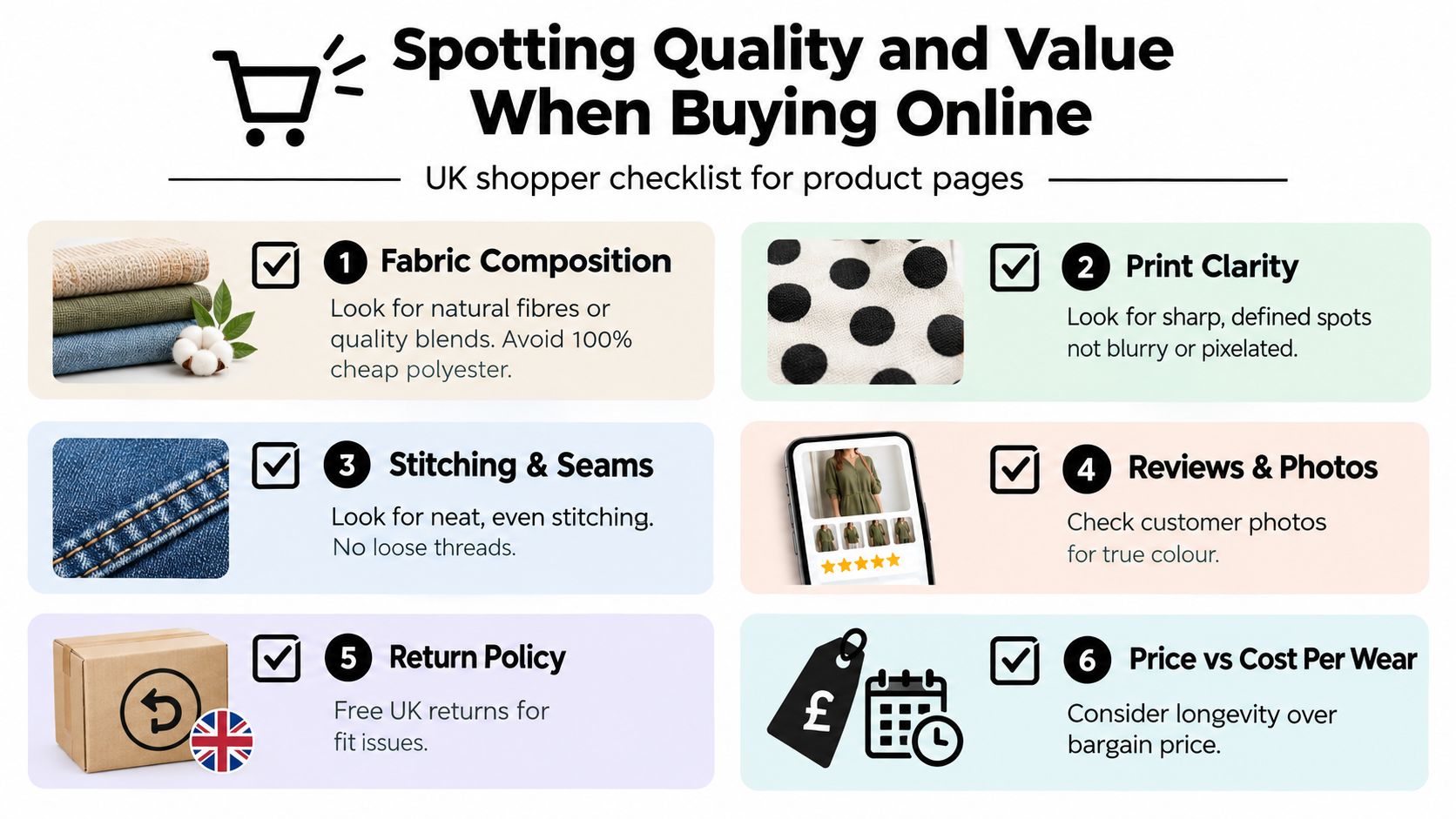
Look at the fabric composition first. That gives you the best clue about drape, heat, stretch and maintenance. A top can look lovely in a photo and still feel unpleasant to wear if the fabric is cheap and overly shiny.
Then zoom in on the print alignment. If the pattern jars badly at the shoulder seam or side seam, the garment often looks lower quality in person. Perfect matching isn't realistic at every price point, but obvious carelessness is a bad sign.
Also inspect the hem and neckline in close-up images. Uneven stitching and puckering around the collar usually mean the piece won't hang well once washed.
Cheap animal print rarely looks subtle. If you're buying on a budget, spend your money on a calmer print and a better fabric finish, not a louder motif.
I'm also suspicious of tops that rely on heavy filters, awkward close crops or only one front-facing image. Good listings usually show the print from enough angles for you to judge scale, shine and shape.
The best-value animal print top isn't the cheapest one in your basket. It's the one you'll reach for without having to build an outfit around its flaws.
If you want the print to stay sharp, stop washing it like an old gym tee. Patterned tops need a bit more care, especially when the print contrast is high, because fading and surface wear show up faster.
UK textile testing for print durability focuses on the exact issues shoppers notice later: colour change, cracking, peeling and delamination after repeated laundering. Industry guidance also notes that accelerated wash testing may use hard tap water, standard detergent, and temperatures set 10°C above the garment care label to predict wear in home washing (UK guidance on print durability testing). That tells you something important. Washing mistakes matter.
Turn the top inside out before washing. Use a gentle cycle at 30°C with similar colours, and skip the tumble dryer if you can. Dry it away from direct sunlight so the print doesn't fade unevenly.
Silk-blend and delicate satin-feel tops need the most caution. Viscose also deserves gentler treatment because it can lose its nicest drape if handled roughly. Cotton options are usually easier, but they still benefit from cooler washing and sensible drying.
Storage matters more than people think:
For family wardrobes, especially if clothes move between nursery, school and clubs, good labelling habits save hassle. This advice on how to keep daycare clothes safe is useful if you're managing children's clothing alongside your own.
UK rules are clearer than many shoppers realise. If you buy online, retailers must offer a refund if you tell them within 14 days of receiving the item that you want to cancel. You then get another 14 days to send it back, and the retailer must refund within 14 days of getting the item back (UK government guidance on returns and refunds). The wider Consumer Contracts guidance sets out the same distance-selling cancellation framework for online purchases (Consumer Contracts guidance for distance sales).
That's the legal baseline. Some retailers offer longer return windows, but don't assume it. Check before you order.
A simple habit makes returns easier. Photograph the item when it arrives, keep tags attached until you've tried it properly, and save the packaging until you're sure. If the print looks duller, shinier or harsher than the listing suggested, you'll have a cleaner refund conversation.
Buy carefully, wash gently, and keep the paperwork until you know the top has earned its place.
Peppervale is handy if you want to shop across more than one part of your life at once, not just tops in isolation. You can browse fashion, footwear, accessories, workwear and practical home buys in one place, which makes it easier to build outfits and everyday wardrobes that work. Have a look at Peppervale if you want sensible options without trawling half the internet.


